
















Mobile Eye Clinic Equipment: Building a Portable Exam Kit That Travels
Mobile eye clinic equipment, station by station: refraction, slit lamp, fundus camera and lensmeter, plus batteries, cases, data export and service.

A mobile eye clinic is only as good as the kit that comes off the van, out of the suitcase or onto a nursing-home table. Whether you run a 39-foot bus or one optometrist with two rolling cases, the hard questions are the same: which instrument covers each exam station, what powers it when there is no outlet, how it survives the trip, and how the data gets back to the office. This guide walks through mobile eye clinic equipment station by station, using the published specs of the portable instruments we carry, and adds the logistics that spec sheets leave out.
Everything referenced here sits in our portable eye-care equipment collection. Product figures are quoted from each product page; vehicle and power figures come from the builders and programs cited inline.
Shopping for Browse portable eye-care equipment? US Ophthalmic is a direct provider of Browse portable eye-care equipment to eye care practices across the US. Tell us how your lane is set up and we will come back with the configurations that fit, plus current availability and lead times.
First decide what “mobile” means for your program
“Mobile eye clinic” covers three very different setups, and the right kit depends on which one you run:
- A clinic on wheels. A purpose-built van, truck or trailer with fixed exam rooms. Odulair, a mobile clinic builder, offers sizes from vans and 18, 24 and 30 ft trucks up to 53 ft trailers, and says a vehicle “can include anywhere from 1 to 3 exam rooms, depending on the size of the mobile vehicle.” UCLA’s program runs “a 39- foot-long bus specially outfitted with eye examination equipment.”
- A carry-in kit. Instruments packed into cases and set up on whatever table the school, senior living community or community center provides. This is where weight, batteries and cases matter most.
- A hybrid. A van that carries the kit, with some instruments used on board and others carried inside to residents who cannot come out.
Staffing shapes the kit too. A Richmond, Virginia school program described its mobile clinics as “staffed by an optometrist and at least one licensed optician,” with students receiving their glasses “about two weeks after the clinic.” Two people can run several handheld stations in parallel. One person needs instruments that set up fast and hand off data without retyping.
Mobile eye clinic equipment, station by station
Here is the core kit for a mobile eye exam day, with the portable options we carry for each station. Use it as a checklist when you request a quote.
| Station | Portable option we carry | Power (from the product page) | Data out (from the product page) |
|---|---|---|---|
| Objective refraction | Ezer ERH-770 handheld autorefractor; Adaptica 2WIN | ERH-770: not stated; 2WIN: rechargeable battery | ERH-770: Bluetooth printer; 2WIN: Wi-Fi, USB, microSD card |
| Subjective refraction and acuity | Ezer ETR-770 digital refraction system (van or fixed room) | AC100–240V, 75VA (mains) | USB, LAN, RS232; Wi-Fi and Bluetooth |
| Anterior segment | Ezer ESH-770 portable slit lamp; Ezer ESL-700; MiiS portable slit lamp | ESH-770: AA batteries; ESL-700: rechargeable lithium, 2.5 h | Not stated (ESH-770, ESL-700) |
| Retinal imaging | MiiS fundus camera | Rechargeable lithium, 1.5–4.5 h | Bluetooth, mini USB, micro HDMI; Wi-Fi image transfer |
| Lensmetry | Luxvision LM-45 portable lensmeter | 2 AA batteries | Not stated (manual reading) |
Two stations do not appear in the table. We do not currently carry a US-sellable portable tonometer, so plan that station with your own instrument. And there is no standalone portable acuity tablet in our catalog; the ETR-770 includes its own chart system.
Objective refraction: handheld autorefraction
Refraction is usually the busiest station on a mobile eye exam day, and handheld autorefractors are what make it portable. The Ezer ERH-770 is a Shack-Hartmann handheld with a spherical range of -20D to +20D, a 2.80 inch touch screen and Bluetooth printer output. Ezer states it delivers “precise refractive results in less than 2 seconds per eye” and positions it for “home visits, and screening programs.”
The Adaptica 2WIN works binocularly from 1 m. Adaptica’s own spec sheet lists it at 840 g and 165 × 130 × 98 mm, with a rechargeable battery, Wi-Fi, USB and microSD data interfaces, and an optional metal case. Our product page adds a USB and infrared (IrDA) printer interface and lists a supplementary battery and portable wireless printer as options.
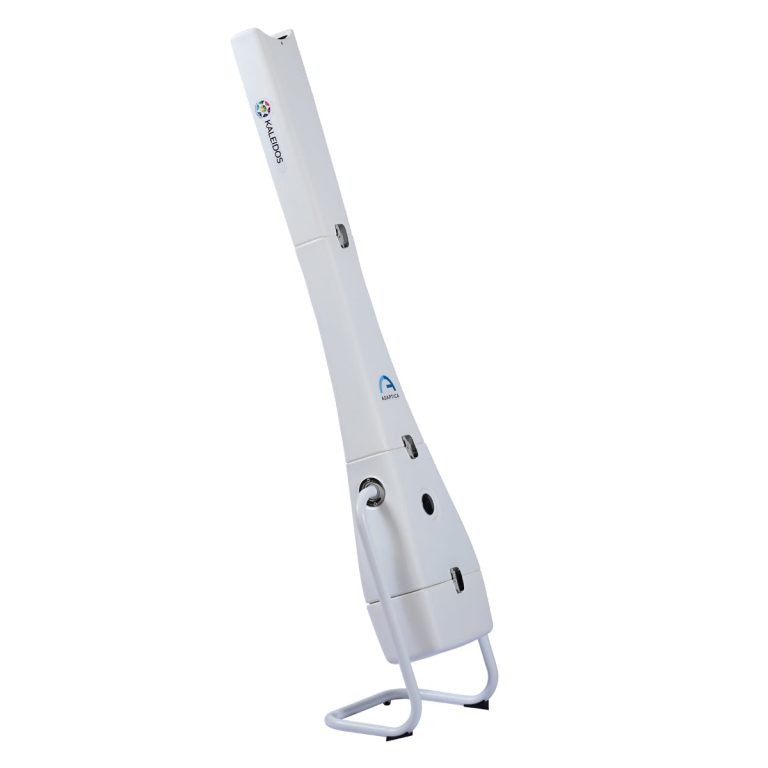
We compare these two, plus the Adaptica Kaleidos, in depth in our handheld autorefractor buyer’s guide, so we won’t repeat that here. For the kit, the questions that matter are battery spares, how results print or export, and whether the case fits in the van’s storage.
Subjective refraction: the “portable phoropter” question
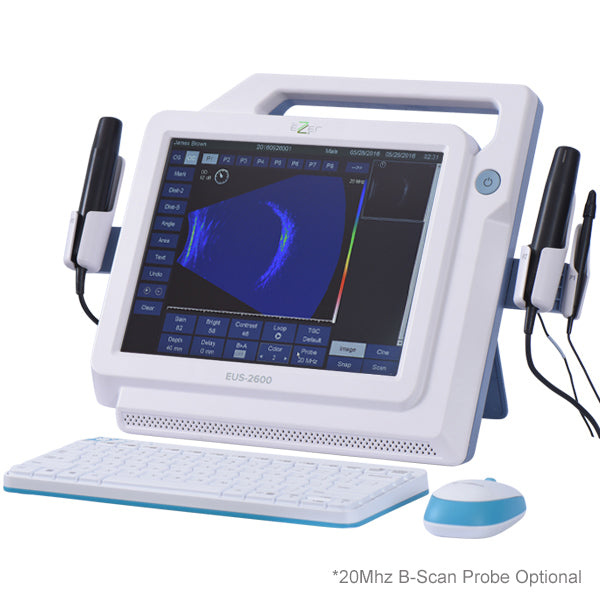
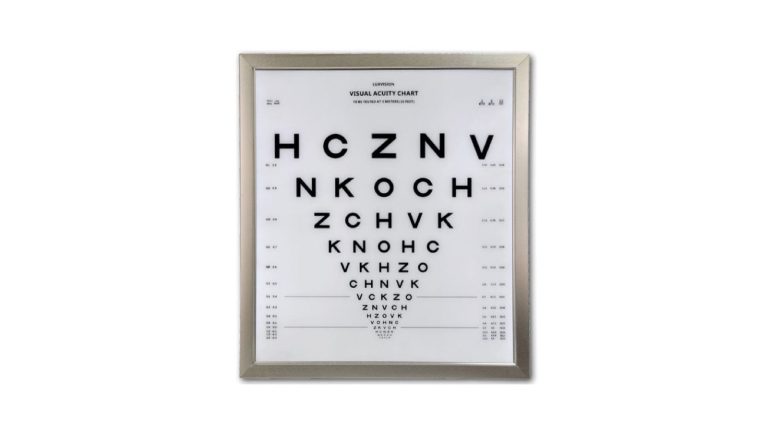
Buyers search for a portable phoropter, but a manual phoropter is heavy, needs a stand and assumes a full-length lane. Our catalog has no hand-carry phoropter. What we offer for tight spaces is the Ezer ETR-770 digital refraction system. Ezer’s page says there is “No need for a 5-meter room”: the unit simulates a standard 5 m testing distance in a compact footprint, carries 33 distance and 7 near chart tables, and drives everything from a 5.7-inch color touchscreen.
It is the van-and-fixed-room answer, not the suitcase answer. The ETR-770 runs on mains power (AC100–240V, 75VA) and measures 450 × 555 × 470 mm. In return it brings the strongest data path in this kit: USB, LAN and RS232 outputs, Wi-Fi and Bluetooth, two RS-232 ports that connect directly to an autorefractor and a lensometer, and support for remote refraction in telemedicine programs. If your vehicle has an exam room with shore power or an inverter, it turns that room into a full refraction lane.
Anterior segment: portable slit lamps
For carry-in days, the Ezer ESH-770 portable slit lamp is the lightest option in this kit: 0.94 kg, 9.06 × 4.72 × 9.06 in, with 10X and 16X magnification and LED illumination. It runs on AA batteries, so a pack of spares is the whole power plan. Ezer lists it as suitable for “mobile eye care units.”
The Ezer ESL-700 uses a rechargeable lithium battery with “a runtime of 2.5 hours with regular use,” which means one charge covers a morning but not a full day. Plan a midday recharge or a second instrument for long sessions. If your program also does retinal imaging, the MiiS portable slit lamp is an attachment that turns the MiiS fundus camera into a slit lamp, so one control unit covers two stations.
For a ranked comparison of handheld slit lamps, see our portable slit lamp buying guide.
Retinal imaging: a handheld fundus camera
The MiiS fundus camera is the imaging station that fits in a case. Our product page lists 450 g, 201 × 90 × 203 mm, a 45 degree field of view, a 5MP sensor and a 3.5″ capacitive touchscreen. Its rechargeable lithium battery gives 1.5 to 4.5 hours of operating time depending on the lens used, with a 4 hour charge. The page also notes that “By connecting it via mini USB, you can keep the device running while the battery charges,” which matters on a long day with a power bank or van outlet nearby.
On data, the camera lists Bluetooth, mini USB and micro HDMI output, and the page describes Wi-Fi transfer of images to a computer, tablet or smartphone. Images save as JPEG and video as H.265.
Lensmetry: reading the glasses people already wear
The Luxvision LM-45 portable lensmeter is the simplest instrument in the kit. It weighs 360 g, measures 156 × 26 × 118 mm, and “Operates on standard AA batteries, eliminating the need for electrical connections.” Luxvision describes it as “compact and well-packaged for travel.” It covers a vertex power range of -15.00 D to +15.00 D. It reads manually, with no data output listed, so plan to record readings on the exam form.
Power: batteries first, then the van
The best way to simplify a mobile eye clinic is to keep as much of the kit as possible off the wall outlet. Sort your instruments into three groups before the first trip:
- Disposable batteries: ESH-770 (AA) and LM-45 (2 AA). Carry a sealed pack of spares for each.
- Rechargeable: ESL-700 (lithium, 2.5 h), MiiS fundus camera (lithium, 1.5–4.5 h, 4 h charge), 2WIN (rechargeable; Adaptica lists a supplementary battery as an option). Charge them the night before and know which ones need a midday top-up.
- Mains only: ETR-770 (AC100–240V, 75VA). This one needs shore power, a generator or an inverter.
If your vehicle carries mains-powered instruments, size the electrical system for the whole day, not just the instruments. As one reference point outside eye care, a mobile medical consulting van documented by Victron Energy used a 3000W 120V true sine wave inverter/charger, two lithium batteries, three 100 W solar panels and a second alternator. It was “specified to ensure all-day power for lights, AC and heater, basic medical equipment, and the wheelchair lift.” Your builder will spec your own vehicle; give them the power rating of every instrument you plan to run on board.
Cases, transport and setup time
Equipment that travels takes knocks it never gets in a fixed lane. A few rules keep a mobile kit working:
- Give every instrument its own hard case. Adaptica offers a metal case for the 2WIN. Our portable collection also lists Ezer EZ-Horus semi-hard and full carrying cases; confirm fit for your specific instrument when you request a quote.
- Pack by station, not by size. Each case should hold one station’s instrument, its charger, spare batteries and printer paper, so setup at the site is “open case, power on.”
- Time a dry run. Builders like Odulair say a vehicle “can be set up and fully operational within hours.” A carry-in kit should take much less. Set up the full kit once in your office and time it before the first site visit.
- Plan for the room you get. Schools and senior living communities rarely offer a dark room with a 6 m wall. The 2WIN works from 1 m, and the ETR-770 avoids the long-lane problem, but you will still want a way to dim the light for the slit lamp and fundus camera stations.
Data: get results back to the office without retyping
A mobile day can generate dozens of records. Before you buy, map how each station’s result gets into your EHR:
- Print at the station: ERH-770 (Bluetooth printer), 2WIN (USB or infrared printer).
- Store and transfer: 2WIN (Wi-Fi, USB, microSD), MiiS fundus camera (Wi-Fi transfer, Bluetooth, mini USB).
- Connect devices to each other: ETR-770 (RS-232 links to an autorefractor and lensometer, plus USB, LAN, Wi-Fi and Bluetooth).
- Write it down: LM-45 and the slit lamps list no data output.
Decide in advance whether results travel on the device, on a laptop, or over a hotspot, and who uploads them after the clinic. Telemedicine programs should ask specifically about the ETR-770’s remote refraction setup.
Service when you are off-site
A fixed practice can wait a day for a technician. A mobile clinic that loses an instrument on site loses the rest of the day. That changes how you should buy:
- Buy from a provider with in-house service. US Ophthalmic builds the Ezer line and runs an in-house technical and spare-parts department, so batteries, chargers and cases for Ezer instruments come from the same team that sold them.
- Carry the consumables. Spare batteries, a spare charger for each rechargeable instrument, printer paper and lens cleaning supplies.
- Keep a backup for the busiest station. For most programs that is refraction. A second handheld autorefractor is cheaper than a cancelled site visit.
- Ask about warranty terms for mobile use when you request a quote, in writing.
A starter mobile eye exam kit by program type
| Program | Core kit | Why |
|---|---|---|
| One OD, carry-in visits (senior living, home visits) | ERH-770 or 2WIN, ESH-770, LM-45, MiiS fundus camera | All battery-powered, all case-sized, one person can carry them in two trips |
| School vision days with an optician | 2WIN or ERH-770, LM-45, ESH-770 | Fast objective refraction plus lensmetry for frames already in use; optician handles dispensing follow-up |
| Van or bus with an exam room | ETR-770 on board; handhelds for walk-in or curbside use | Mains-powered refraction lane inside, battery instruments for anyone who cannot board |
| Telemedicine outreach | ETR-770 plus MiiS fundus camera | Remote refraction support and Wi-Fi image transfer |
Ready to price a kit? Send us your program type, staffing and power setup through our Request a Quote form, and our team will put together the instruments, cases and spares for your mobile eye clinic. Financing is available, and you can ask about open-box units if budget is tight.
Ready to spec your Browse portable eye-care equipment?
Send us your requirements and our equipment specialists will come back with a configuration built around how your practice actually works — including availability and lead time. US Ophthalmic is a direct provider to eye care practices nationwide.
See all Browse portable eye-care equipment from US Ophthalmic →
Frequently asked questions
What equipment do you need for a mobile eye clinic?
Plan one instrument per exam station: a handheld autorefractor for objective refraction, a subjective refraction and acuity system, a portable slit lamp, a handheld fundus camera, a portable lensmeter and a tonometer. Add hard cases, spare batteries, chargers and a printer or data-transfer plan.
Is there a portable phoropter?
A manual phoropter is not built to travel. For tight spaces and vehicles, a compact digital refraction system such as the Ezer ETR-770 simulates a 5 m testing distance without a 5-meter room. It runs on mains power, so it suits a van exam room rather than a suitcase kit.
How do you power equipment in a mobile eye clinic van?
Run as many instruments as possible on batteries, then size the van’s electrical system for the mains-powered ones. One documented mobile medical van used a 3000W inverter/charger, lithium batteries, solar panels and a second alternator for all-day power. Give your vehicle builder the power rating of every instrument.
Can mobile eye exam equipment run on batteries?
Much of it can. The Ezer ESH-770 slit lamp and Luxvision LM-45 lensmeter run on AA batteries, the Ezer ESL-700 slit lamp has a 2.5 hour lithium battery, the MiiS fundus camera runs 1.5 to 4.5 hours per charge, and the Adaptica 2WIN uses a rechargeable battery.
How do you get exam data back to the office?
Check each instrument’s output before you buy. The ERH-770 prints over Bluetooth, the 2WIN exports over Wi-Fi, USB or microSD, the MiiS camera transfers images over Wi-Fi and USB, and the ETR-770 offers USB, LAN, RS232, Wi-Fi and Bluetooth.
Should I buy refurbished mobile eye clinic equipment?
US Ophthalmic sells new equipment and does not sell refurbished or used instruments. If budget matters, ask about open-box units and financing when you request a quote.