















Best Ophthalmic Transilluminators in 2026
The Ezer EZ-TRI-2600 is our top ophthalmic transilluminator for 2026. Compare it with HEINE, Welch Allyn, Keeler and Neitz Finoff and pen lights.

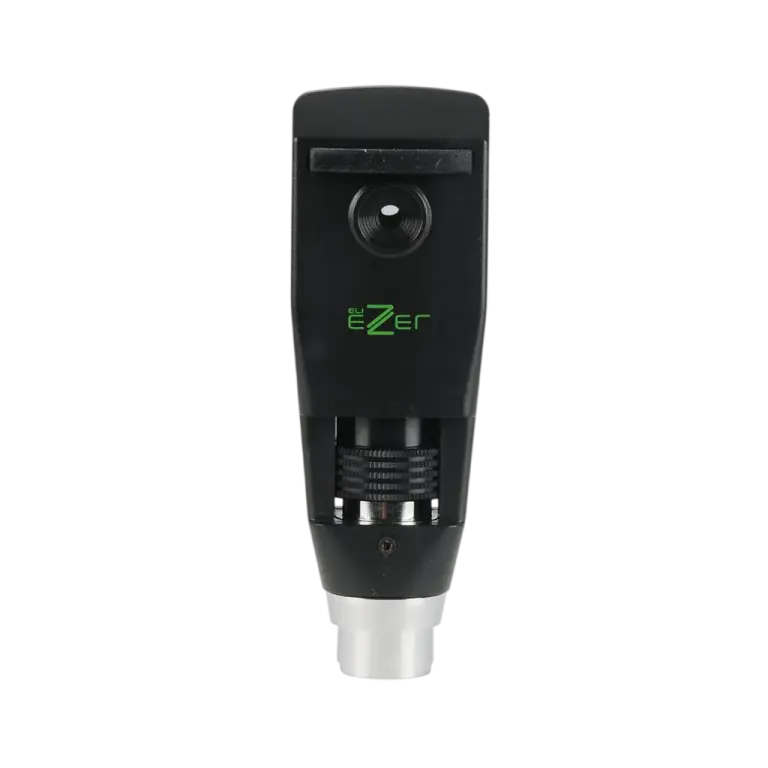
Our top pick for 2026 is the Ezer EZ-TRI-2600, a 3.5V fiber-optic transilluminator that is fully sterilizable with steam, water, gas or solutions and is backed directly by US Ophthalmic's in-house technical and spare-parts departments. For most optometry and ophthalmology practices that want one dependable transillumination head for pupil checks, iris and scleral transillumination and general exam-room use, it is the most practical buy on this list.
The category covers two kinds of tools. Finoff-style transilluminators are handle-mounted heads that put a concentrated cone of light against the globe or lid, used for iris transillumination defects and scleral transillumination. Exam penlights are self-contained, battery-powered pocket lights used for pupil responses, fixation targets, motility and anterior-segment screening. Many practices keep one of each. Note that this guide is about clinical eye-exam transilluminators, not the gel-imaging transilluminators used in laboratories.
We compared four models US Ophthalmic carries (Ezer and Neitz) with the best-known Finoff heads from HEINE, Welch Allyn and Keeler, plus a basic ophthalmic penlight from Gulden. Every spec below comes from the manufacturer's own page or from our product pages; where a figure could not be verified, we left it out.
Shopping for transilluminators? US Ophthalmic is a direct provider of transilluminators to eye care practices across the US. Tell us how your lane is set up and we will come back with the configurations that fit, plus current availability and lead times.
How to choose an ophthalmic transilluminator
- Instrument type: Finoff head or penlight: A Finoff head mounts on a battery or rechargeable handle and is the tool for iris and scleral transillumination. A self-contained penlight is faster for pupil reactions, fixation and motility. Decide which jobs you need covered before comparing models.
- Handle and voltage compatibility: Handle-mounted heads are voltage- and system-specific (for example 2.5V vs 3.5V, or a maker's own battery handles). Confirm the head matches the handles already in your exam lanes so you are not buying a second power system.
- Light source and output control: LED sources generally run cooler and longer, halogen gives a warm, familiar light. Look for features that let you keep intensity low, such as a boost mode you can switch off, apertures or aperture caps, since manufacturers advise using the lowest intensity that gives a clear view.
- Apertures and filters: A small aperture concentrates light for scleral work, and a cobalt blue filter lets one instrument handle fluorescein checks. Check whether these are included, optional or not offered.
- Reprocessing between patients: Instruments that touch the globe or lids need a reprocessing method your clinic can actually follow. Check whether the maker states steam, gas or solution sterilization, or provides a reprocessing guide.
- Size, weight and bulb replacement: For penlights, length, diameter and weight decide whether it lives in a coat pocket. Replaceable bulbs and an included spare reduce downtime.
- Service and parts in the US: A transilluminator is a small purchase, but a dead bulb or broken switch still stops a lane. A provider with in-house repair and spare parts keeps it running.

#1 · EZ-TRI-2600 Transilluminator (Ezer)
Best overall: a sterilizable 3.5V fiber-optic transilluminator from US Ophthalmic's own house brand, with direct US service and parts.
The Ezer EZ-TRI-2600 is a 3.5V transilluminator designed to deliver controlled, focused transmitted light during clinical examinations. Fiber-optic transmission carries the light to the tip for a concentrated beam in the examination area, which is what you want when transilluminating the iris through the pupil or checking the sclera in a darkened room. The 3.5V power source is intended to keep illumination consistent through a full clinic session. Just as important for a tool that contacts the eye or lids, Ezer states the instrument is fully sterilizable with steam, water, gas or solutions, so it fits into most practices' existing reprocessing workflow. Ezer is US Ophthalmic's own manufactured brand, which means technical support, repairs and spare parts come from US Ophthalmic's in-house departments rather than a third party, and new units carry a US warranty. If you are equipping several exam lanes or replacing aging heads, it is a straightforward, well-supported choice. Ask for a quote to confirm the handle configuration that suits your lanes.
Pros: 3.5V power source for consistent output · Fiber-optic light transmission for a focused beam · Fully sterilizable with steam, water, gas or solutions · House brand with in-house repair, spare parts and US warranty
Considerations: Lamp type, dimensions and filter options are not published on the product page; confirm with US Ophthalmic · Handle-mounted, so it needs a compatible 3.5V power source
Best for: Practices that want a sterilizable 3.5V transilluminator with direct US service and parts support
#2 · Transilluminator TI (LED) (Neitz)
Best LED option for fixation, motility and binocular vision testing, with a boost mode and long LED life.
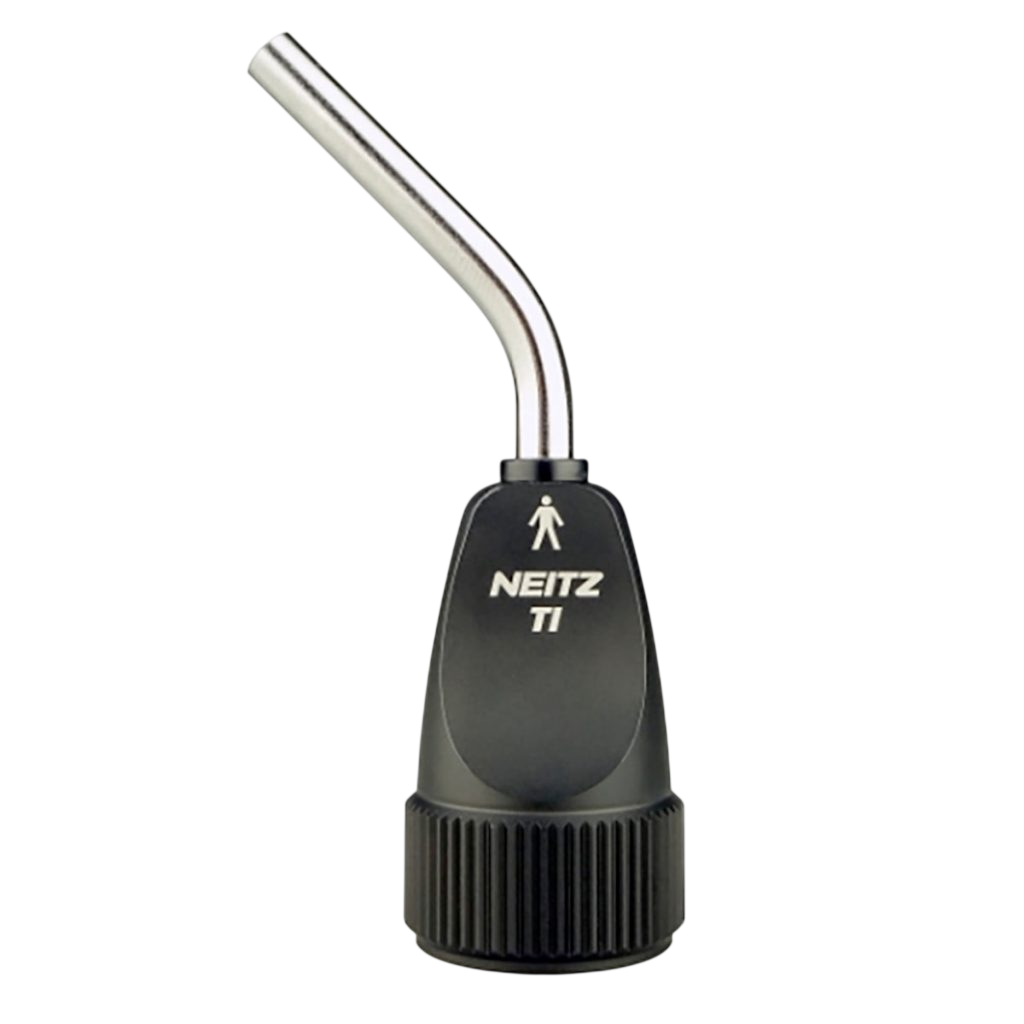
The Neitz TI is an LED transilluminator head designed for fixation tests, ocular motility examination and binocular vision assessment. Neitz rates its LED (bulb L-104) at a lifespan of over 50,000 hours, which practically removes bulb changes from the maintenance list. A boost mode adds brightness when you need it, and an optional aperture cap reduces both illuminance and illumination field, useful when you want a smaller, gentler target. Maximum power consumption is below 2 W. The TI is a head, not a sealed penlight: Neitz offers it for its AA-battery and C-cell battery handles, which are sold separately, so it can share a handle system with other Neitz hand instruments. The head itself is about 80 mm long and weighs approximately 35 g including the LED bulb. US Ophthalmic carries the TI and supports it through its in-house technical and spare-parts departments.
Pros: LED rated for over 50,000 hours · Boost mode for extra brightness · Optional aperture cap to shrink the field and lower intensity · Works with Neitz AA and C-cell battery handles
Considerations: Battery handle is sold separately · Aperture cap is optional, not included as standard
Best for: Optometrists and orthoptists doing fixation, motility and binocular vision work who prefer LED

#3 · Finoff Transilluminator (HEINE)
A strong scleral-transillumination head with an LED illuminant and a detachable cobalt blue filter aperture.
HEINE's Finoff Transilluminator is a handle-mounted head intended for general transillumination of intact tissue and specifically for scleral transillumination. Its instructions list an LED illuminant, a standard aperture and a detachable aperture with cobalt blue filter, so the same head can also be used to illuminate the eye for fluorescence examinations. It is offered for 2.5V (HEINE BETA battery handle) and 3.5V (HEINE BETA rechargeable handle and wall transformer) systems, and HEINE sells it as a head or in sets with the BETA 4 NT rechargeable handle. HEINE's instructions are explicit about technique: work in a darkened room, anesthetize the ocular surface before scleral transillumination, always use an aperture for scleral work, and keep intensity as low as possible, with transient use at maximum intensity of under 60 seconds followed by a 15-minute break. It is a well-documented choice for practices already standardized on HEINE handles.
Pros: LED illuminant · Standard aperture plus detachable cobalt blue filter aperture · 2.5V and 3.5V versions for HEINE handle systems · Detailed instructions for scleral technique and exposure limits
Considerations: Tied to HEINE BETA handles or wall transformer · Strict exposure guidance at maximum intensity
Best for: Practices already using HEINE BETA handles that need scleral transillumination and a blue filter

#4 · 3.5V Fiber-Optic Finnoff Transilluminator (41100) (Welch Allyn)
The familiar 3.5V halogen Finnoff attachment for practices on Welch Allyn handles and wall systems.
The Welch Allyn 41100, now sold through Baxter, is a fiber-optic transilluminator attachment for 3.5V Welch Allyn power sources. Welch Allyn describes it as a general fiber-optic examination light for checking pupil reflex and examining the frontal and maxillary sinuses, so it doubles as an ENT tool in multi-specialty settings. A Halogen HPX lamp is stated to provide 30% more light output for true tissue color, and fiber-optic transmission delivers cool light at the tip. Welch Allyn says it is fully sterilizable with steam, water, gas or solutions, and an optional cobalt blue filter is available. For a clinic whose exam rooms already run on Welch Allyn 3.5V handles or wall transformers, it drops straight into the existing setup. The trade-offs are a halogen source rather than LED and a design aimed at general examination as much as at ophthalmic transillumination.
Pros: Fits Welch Allyn 3.5V power sources · Halogen HPX lamp with stated 30% more light output · Fiber optics for cool distal light · Fully sterilizable; optional cobalt blue filter
Considerations: Halogen rather than LED · Cobalt blue filter is optional, not included · Requires a Welch Allyn 3.5V handle or wall system
Best for: Clinics standardized on Welch Allyn 3.5V handles or wall transformers
#5 · Finoff Transilluminator (Head Only) (Keeler)
A classic Finoff 'muscle light' head in 2.8V or 3.5V for Keeler handle users.
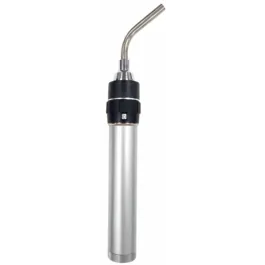
Keeler's Finoff Transilluminator (item 2903-P-7001) is sold as a head only and is available as 2.8V or 3.5V, so it suits practices already using Keeler handles. Keeler describes it as a transilluminator or 'muscle light' for use when intraocular tumors are suspected in patients with cloudy media: the Finoff head illuminates the fundus through the sclera, and any mass in the light path dims the normally bright red reflex seen through the pupil. Keeler directs users to its IFU library for cleaning and reprocessing instructions. Keeler's US product page does not publish the light source, filters or dimensions, so confirm those details before ordering. It is a sensible choice when you want to stay within one handle ecosystem for your ophthalmoscope, retinoscope and transilluminator.
Pros: 2.8V and 3.5V versions · Classic Finoff design for scleral illumination of the fundus · Matches existing Keeler handle systems
Considerations: Head only; handle not included · Light source, filters and dimensions not stated on Keeler's US page
Best for: Practices that already run Keeler 2.8V or 3.5V handles

#6 · Medico Spot MS-H (Halogen) (Neitz)
Best focused-spot penlight: an adjustable 40 to 100 mm halogen spot at 15 cm, self-contained on AA batteries.
The Neitz MS-H is a self-contained halogen spotlight penlight with a lens system that projects a bright, uniform, highly focused spot. The illumination field is easily adjustable, from 40 mm to 100 mm in diameter at a distance of 15 cm, so you can keep the spot tight for pupil responses or widen it for a general anterior look. The light turns on by pressing the switch halfway, a small detail that helps with quick on-off pupil checks. It runs on two AA batteries (included) and uses an L-64 bulb (3V, 2W). The metal body measures 17.5 mm in diameter by 160 mm long, and Neitz lists the weight at 92 g. Neitz also includes a pupil diameter sticker for quick pupil size estimates. It needs no handle or charger, so it is easy to keep one in every lane or coat pocket, and US Ophthalmic supports it with in-house service and spare parts.
Pros: Adjustable focused spot, 40 to 100 mm at 15 cm · Half-press switch for quick pupil checks · Self-contained, runs on two AA batteries · Pupil diameter sticker included
Considerations: Halogen bulb rather than LED · Not a Finoff head, so not designed for scleral contact work
Best for: Pupil testing and anterior screening with a controllable, focused spot
#7 · Doctor Light DL Pen Light (Neitz)
Best compact reusable penlight: a 50 g metal pen light with a two-element lens and pocket-clip switch.
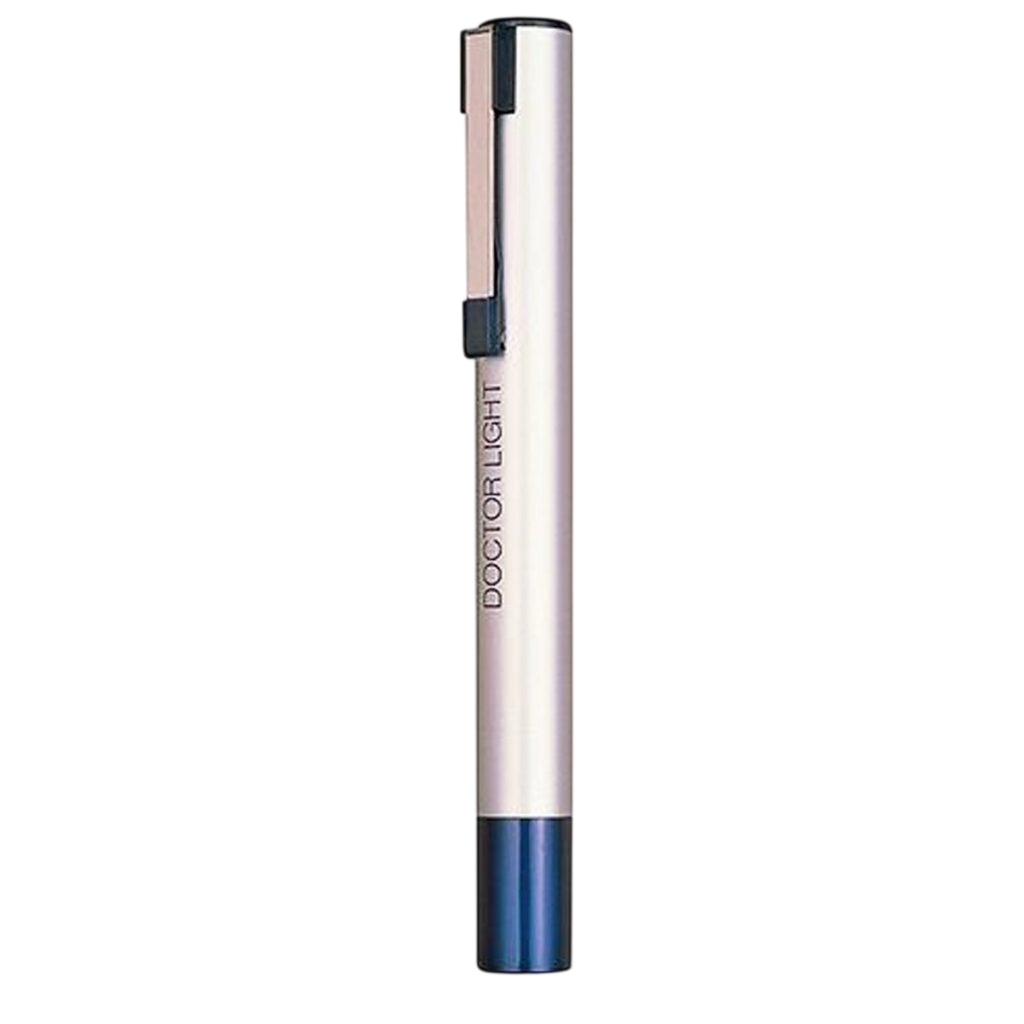
The Neitz Doctor Light (NTZ-DL) is a reusable metal pen light for everyday pupil and screening work. A two-element lens system produces an even, bright beam, which gives cleaner pupil reflexes than an unfocused disposable light. The finely finished metal body weighs only 50 g and measures 130 mm long by 14 mm in diameter, slightly longer than a disposable penlight, and the sensitive pen-clip switch turns it on and off while keeping it secure in a shirt pocket. It runs on two AAA batteries and ships with a spare L-37 bulb (3V, 0.9W), so a burned-out bulb does not take it out of service. Specifications here are from US Ophthalmic's product page. For clinicians who want something sturdier and more even than a throwaway penlight without carrying a handle-mounted head, the DL is an easy upgrade.
Pros: Two-element lens for an even beam · Light 50 g metal body, 130 x 14 mm · Pocket-clip on/off switch · Spare L-37 bulb included
Considerations: Fixed beam, no spot adjustment or filters · Incandescent bulb rather than LED
Best for: Clinicians who want a durable everyday pupil penlight
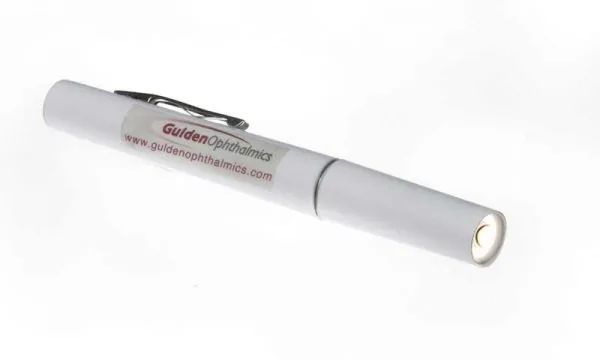
#8 · Gulden Penlight (15116) (Gulden Ophthalmics)
A simple, low-cost pocket penlight for basic pupil checks.
Gulden Ophthalmics, a US maker of ophthalmic tools, does not list a dedicated Finoff transilluminator on its site, so we included its basic exam penlight for comparison with the pen-style options above. The Gulden Penlight (product number 15116) uses its pocket clip as the switch and runs on two AAA batteries, which are included; Gulden notes that the batteries should last many months between changes. It is a straightforward light for pupil responses and quick screening, and it is easy to stock in bulk for multiple lanes or for students. Gulden does not publish beam, bulb or dimension specifications for it, so it is best viewed as an entry-level light rather than a precision transillumination instrument. Practices that want a focused spot, an adjustable field or replaceable bulbs will be better served by a model like the Neitz MS-H or DL.
Pros: Pocket clip doubles as the switch · Runs on two AAA batteries, included · Easy to stock for several lanes
Considerations: No published beam, bulb or size specs · Not a transilluminator head; no apertures or filters
Best for: Budget-conscious practices and students who need a basic pupil light
Feature comparison
| Rank | Model | Brand | Type | Light source | Power | Apertures / filters | Size / weight | Reprocessing stated |
|---|---|---|---|---|---|---|---|---|
| 1 | EZ-TRI-2600 | Ezer | Fiber-optic transilluminator | — | 3.5V | — | — | Steam, water, gas or solutions |
| 2 | Transilluminator TI | Neitz | Transilluminator head | LED (L-104), over 50,000 h | Neitz AA or C-cell handle; below 2 W | Optional aperture cap; boost mode | Head approx. 80 mm long; approx. 35 g | — |
| 3 | Finoff Transilluminator | HEINE | Finoff head | LED | 2.5V or 3.5V HEINE BETA handles | Aperture; detachable cobalt blue aperture | — | Reprocessing guide published |
| 4 | 41100 Finnoff Transilluminator | Welch Allyn | Fiber-optic transilluminator attachment | Halogen HPX | 3.5V Welch Allyn | Optional cobalt blue filter | — | Steam, water, gas or solutions |
| 5 | Finoff Transilluminator 2903-P-7001 | Keeler | Finoff head (head only) | — | 2.8V or 3.5V | — | — | See Keeler IFU |
| 6 | Medico Spot MS-H | Neitz | Spot penlight | Halogen L-64 (3V, 2W) | 2 x AA | Adjustable spot 40-100 mm at 15 cm | 17.5 x 160 mm; 92 g | — |
| 7 | Doctor Light DL | Neitz | Pen light | L-37 bulb (3V, 0.9W) | 2 x AAA | Two-element lens | 14 x 130 mm; 50 g | — |
| 8 | Penlight 15116 | Gulden | Penlight | — | 2 x AAA | — | — | — |
Why it’s our top pick
US Ophthalmic manufactures the Ezer line, including the EZ-TRI-2600, and carries Neitz transilluminators and penlights alongside it. That lets a practice cover both jobs, Finoff-style transillumination and everyday pupil and motility testing, from one US provider, with one quote and one point of contact for service.
Our in-house technical department and spare-parts department support what we sell, and new equipment comes with a US warranty. For small instruments that get dropped, bulbs that burn out and handles that need matching, that direct support is often worth more than a minor spec difference.
Ready to spec your transilluminators?
Send us your requirements and our equipment specialists will come back with a configuration built around how your practice actually works — including availability and lead time. US Ophthalmic is a direct provider to eye care practices nationwide.
Frequently asked questions
What is an ophthalmic transilluminator used for? In eye care, a transilluminator is a concentrated light source used to transilluminate the iris through the pupil, to illuminate the sclera and fundus (Finoff technique), and for general exam-room tasks such as pupil responses. Penlight-style transilluminators like the Neitz TI are also used for fixation, ocular motility and binocular vision testing.
What is a Finoff transilluminator? A Finoff (also spelled Finnoff) transilluminator is a handle-mounted head that directs a narrow cone of light at the eye. Keeler, for example, describes using it to illuminate the fundus through the sclera: a mass in the light path dims the red reflex seen through the pupil. HEINE's Finoff is intended for scleral transillumination and adds a cobalt blue filter aperture.
Do I need a Finoff head or a penlight? Most practices benefit from both. A Finoff head on a 2.5V, 2.8V or 3.5V handle is the tool for scleral and iris transillumination, while a self-contained penlight such as the Neitz MS-H or DL is faster for pupils, fixation and screening. If you only buy one, match it to the procedures you do most.
Will a transilluminator head fit my existing handles? Only if the system and voltage match. HEINE offers its Finoff in 2.5V and 3.5V for BETA handles, Keeler offers 2.8V or 3.5V heads, Welch Allyn's 41100 is for 3.5V Welch Allyn power sources, and the Neitz TI fits Neitz AA and C-cell handles. The Ezer EZ-TRI-2600 runs on a 3.5V power source; ask US Ophthalmic to confirm the right configuration for your lanes.
LED or halogen: which is better for transillumination? LED models such as the Neitz TI (rated over 50,000 hours) and the HEINE Finoff reduce bulb changes, while halogen models like the Welch Allyn 41100 and Neitz MS-H give a warm light many clinicians are used to. Whichever you choose, manufacturers advise keeping intensity as low as possible for a clear view and limiting exposure time.
How do I clean a transilluminator between patients? Follow the manufacturer's instructions. Ezer and Welch Allyn state their fiber-optic transilluminators are fully sterilizable with steam, water, gas or solutions, HEINE publishes a separate reprocessing guide for its Finoff, and Keeler provides cleaning instructions in its IFU library.
Where can I buy an ophthalmic transilluminator in the US? US Ophthalmic supplies the Ezer EZ-TRI-2600 and Neitz transilluminators and penlights to practices across the US on a quote basis, with in-house service, spare parts and a US warranty on new equipment. Request a quote on the product page or call the toll-free number listed there.
The verdict
For most practices, the Ezer EZ-TRI-2600 is the best all-round ophthalmic transilluminator in 2026: a 3.5V fiber-optic instrument that is fully sterilizable and supported directly by its manufacturer's US service and parts departments. If your work leans toward fixation, motility and binocular vision testing, the LED Neitz TI is the better companion, and the Neitz MS-H and DL cover quick pupil checks without a handle.
If your exam lanes are already standardized on HEINE, Welch Allyn or Keeler handles, those makers' Finoff heads are reasonable choices that fit what you own. Otherwise, pairing an EZ-TRI-2600 with a Neitz penlight gives you full coverage of transillumination and pupil work from a single US provider.