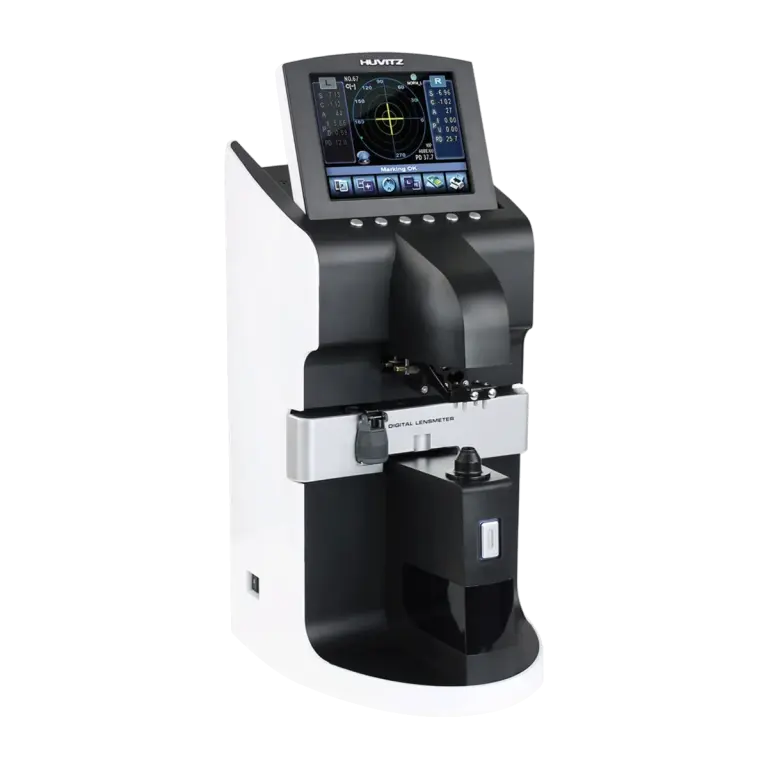
Digital Lensmeters (Auto-Lensmeters)
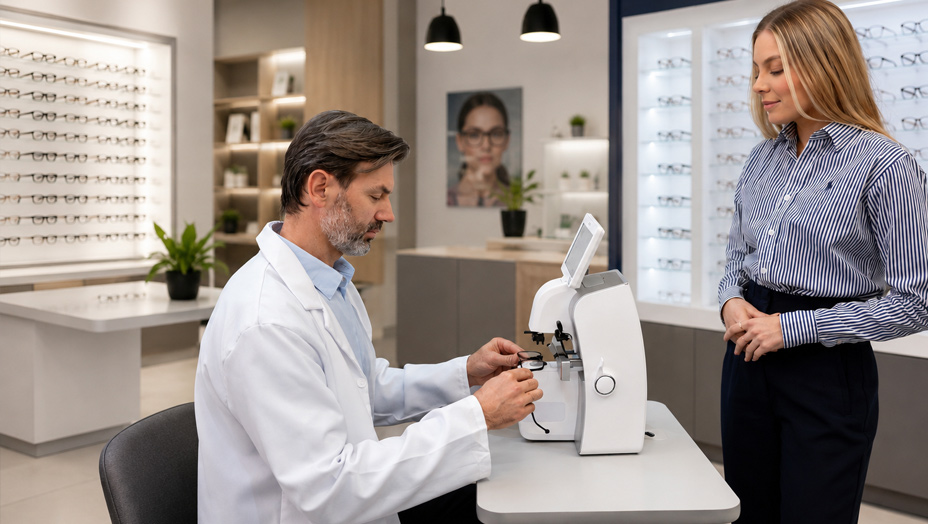
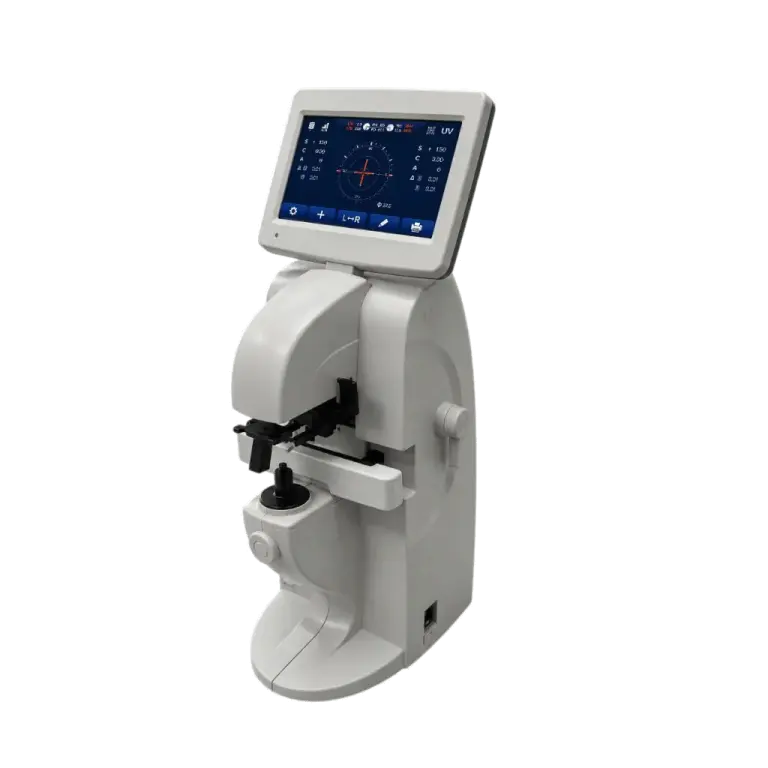
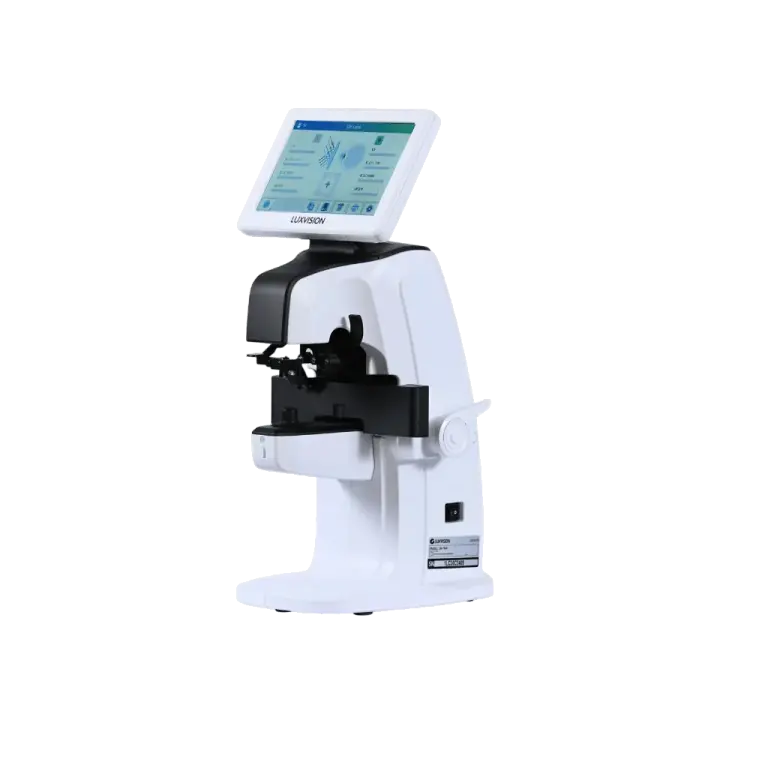
A digital lensmeter, also called an auto-lensmeter or automatic focimeter, is the instrument that reads exactly what is ground into a lens. Place a spectacle or contact lens on the nosepiece and it returns sphere, cylinder, axis, add power, and prism in a fraction of a second, then flags the optical center and pupillary distance for accurate frame fitting. Modern units use a green-LED source and Hartmann wavefront sensing to capture readings across many measurement points at once, so they lock in progressive, bifocal, and trifocal lenses automatically instead of hunting for a single fixation spot. That speed and repeatability is why digital lensmeters have become the verification backbone of both exam lanes and finishing labs: they confirm incoming Rx, check finished jobs before dispense, and read UV and blue-light transmittance so you can validate protective coatings.
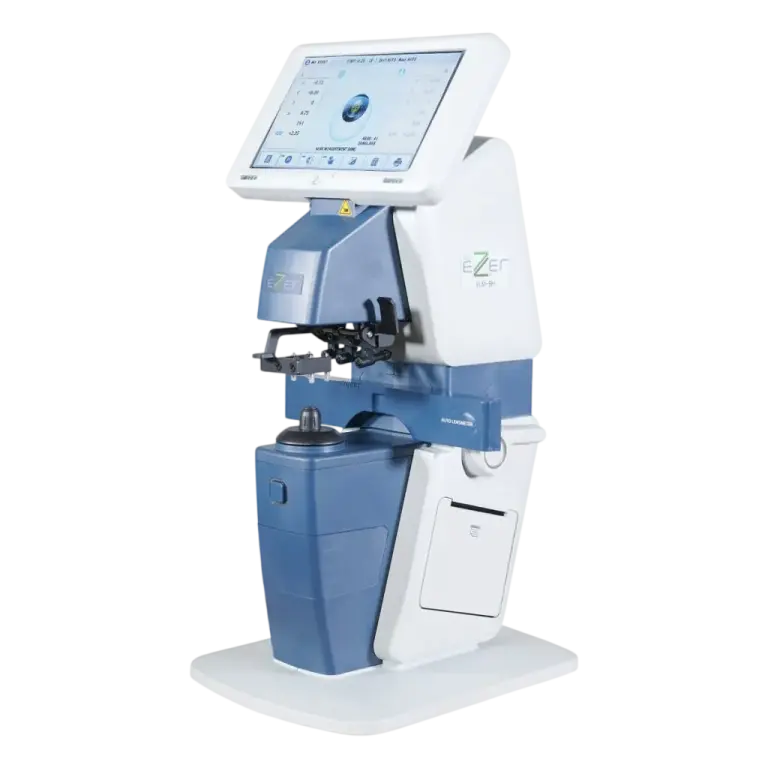
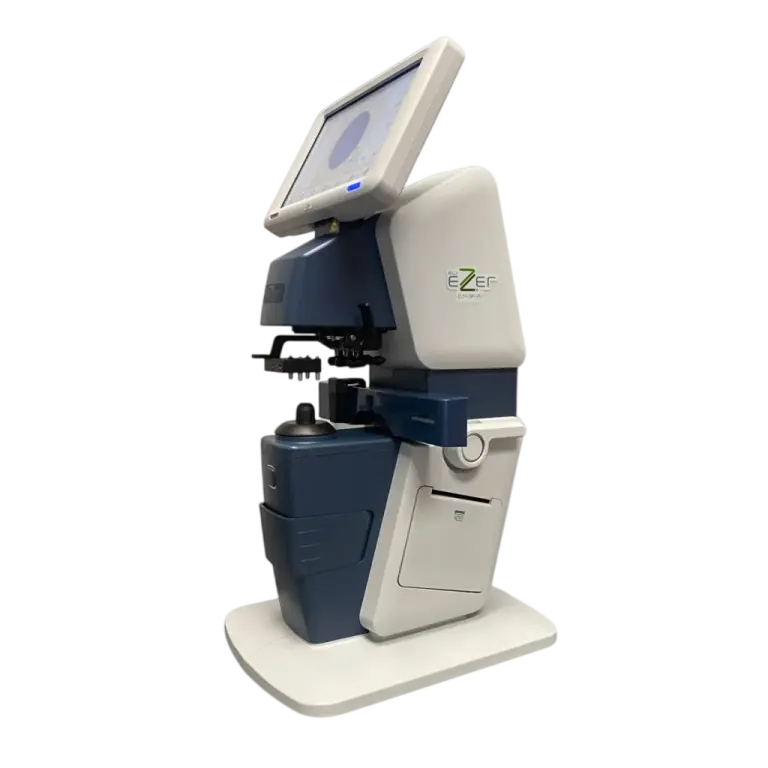
At US Ophthalmic we build and support the digital lensmeters we sell rather than simply moving boxes. Our house brand, Ezer, gives practices a premium wavefront platform backed by a US warranty, and we carry proven lines from Huvitz and Luxvision so you can match the instrument to your volume and budget. Every unit is supported by our in-house technical and repair department with genuine spare parts on hand, so calibration, service, and uptime are covered long after the sale. Whether you are equipping a single lane or a high-throughput lab, our team can help you specify the right lensmeter and keep it accurate for years.
How to choose a digital lensmeter
- Lens types you actually dispense: Confirm the meter handles everything you fit: single-vision, bifocal, trifocal, progressive (freeform included), and both soft and hard contact lenses. Progressive handling is the real differentiator, so favor models that auto-recognize lens type and map the progression corridor without manual mode switching.
- Measurement technology and accuracy: Green-LED wavefront sensing (Hartmann-type, multi-point) removes the need for Abbe-number compensation across different index materials and captures high-curve and multifocal lenses more reliably than older single-point optics. More measuring spots generally means steadier, more repeatable readings on tough jobs.
- UV and blue-light transmittance: If you dispense sunwear, photochromics, or blue-light-filtering lenses, choose a unit that measures UV and visible/blue-light transmittance. It lets you verify that a protective coating is really doing its job before the patient leaves.
- PD and pupil-height measurement: Built-in PD sensing (total and monocular) plus pupil height streamlines frame fitting and cuts remakes. This is worth prioritizing for dispensing-heavy practices; a pure verification lab may weight it less.
- Workflow, display, and connectivity: A responsive touchscreen, clear alignment graphics, an integrated auto-cutting printer, and RS-232/Wi-Fi output for EMR or edger hand-off all reduce clicks per patient. Ergonomics matter when the device runs all day.
- New or open-box, warranty, and service: A digital lensmeter is a long-life precision instrument, so factory calibration, warranty coverage, and parts availability matter as much as the spec sheet. We sell new units, not refurbished; new Ezer units ship with a US warranty. Our open-box units can lower entry cost; contact us about open-box availability and confirm the warranty term on the specific unit. Either way, buy from a provider with in-house repair and genuine spare parts so recalibration is never a bottleneck.
Digital lensmeter models we carry
The lineup below spans our Ezer house brand and carried Huvitz and Luxvision lines, from value verification units to premium wavefront platforms with blue-light and UV testing. All model names are the instruments we stock and service; contact us for a quote and current configuration.
| Model | Brand | Best for |
| ELM-BH | Ezer (house brand) | Premium wavefront platform with UV and blue-light transmittance and auto lens-type detection |
| Ezer ELM-770 | Ezer (house brand) | Feature-rich mid-range unit: multi-point reading, PD and pupil height, UV/green-light testing, touchscreen |
| HLM-9000 | Huvitz | High-end labs and dispensaries needing blue-light-blocking and precise UV measurement on high-curve lenses |
| HLM-7000 | Huvitz | Busy practices wanting built-in PD, dual prism modes, UV, and reliable small-progressive reading |
| HLM-1 | Huvitz | Standard, budget-conscious verification with progressive recognition and full prism measurement |
| LM-7800 | Luxvision | Value auto-lensmeter covering SPH/CYL/axis, auto PD, UV, and progressive mode for everyday use |
Frequently asked questions
What is the difference between a digital lensmeter and a manual one? A manual lensmeter requires the operator to focus a target by eye and rotate dials to read power, which is slower and more variable between users. A digital (automatic) lensmeter reads the lens electronically in about a second, auto-detects lens type, and displays sphere, cylinder, axis, add, and prism directly, so readings are faster and far more repeatable across staff.
Can a digital lensmeter measure progressive and freeform lenses? Yes. The models we carry auto-recognize single-vision, bifocal, trifocal, and progressive (including freeform) lenses. Wavefront and multi-point units are especially good at mapping the progression corridor and reading the distance and near zones without you having to guess the lens design.
Do I need UV and blue-light transmittance measurement? If you dispense sunwear, photochromic, or blue-light-filtering lenses, it is very useful. Transmittance testing lets you verify that a protective coating actually blocks UV or blue light before dispensing. Premium units like the Ezer ELM-BH and Huvitz HLM-9000 include this; entry and value models may measure UV only or omit blue-light testing.
Should I buy new or refurbished? We sell new lensmeters, not refurbished or certified pre-owned units. New Ezer lensmeters ship with a US warranty and the latest firmware and are ideal when uptime and long-term support are priorities. To lower the entry cost for a second lane or a startup practice, contact us about open-box availability: open-box units are inspected and function-checked by our technicians; confirm the warranty term on the specific unit.
How is calibration and service handled after purchase? Digital lensmeters are precision instruments that benefit from periodic calibration. Because US Ophthalmic maintains an in-house technical and repair department and stocks genuine spare parts, we can calibrate, service, and repair the lensmeters we sell, and our Ezer instruments are backed by a US warranty rather than an overseas-only support chain.
REQUEST QUOTE →
Manual Lensmeters
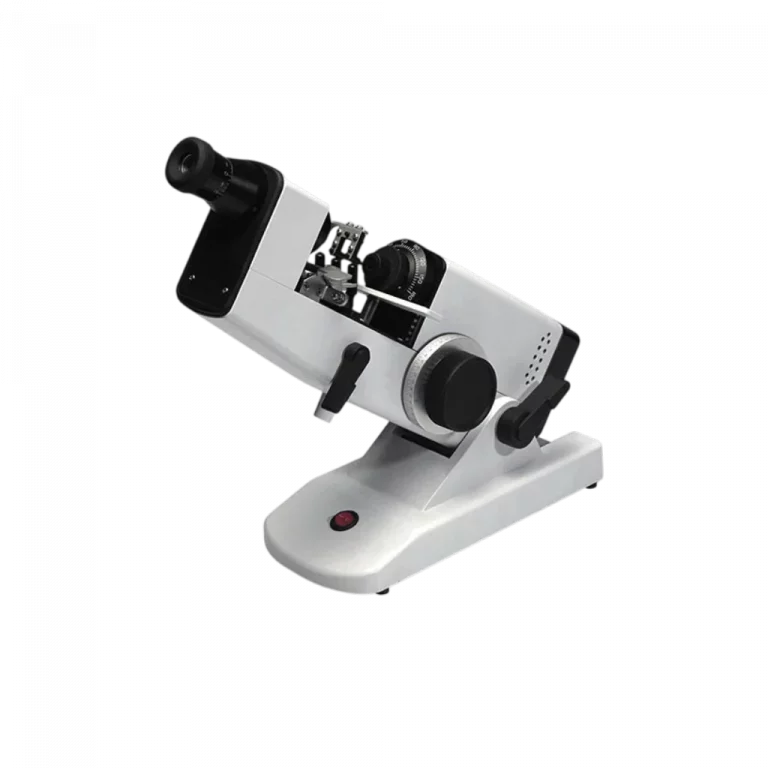
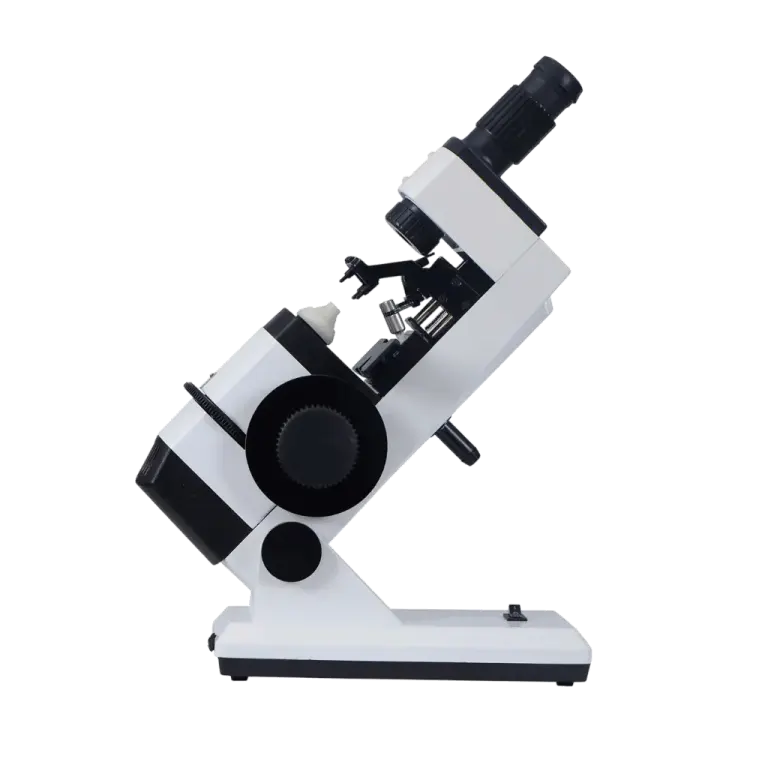
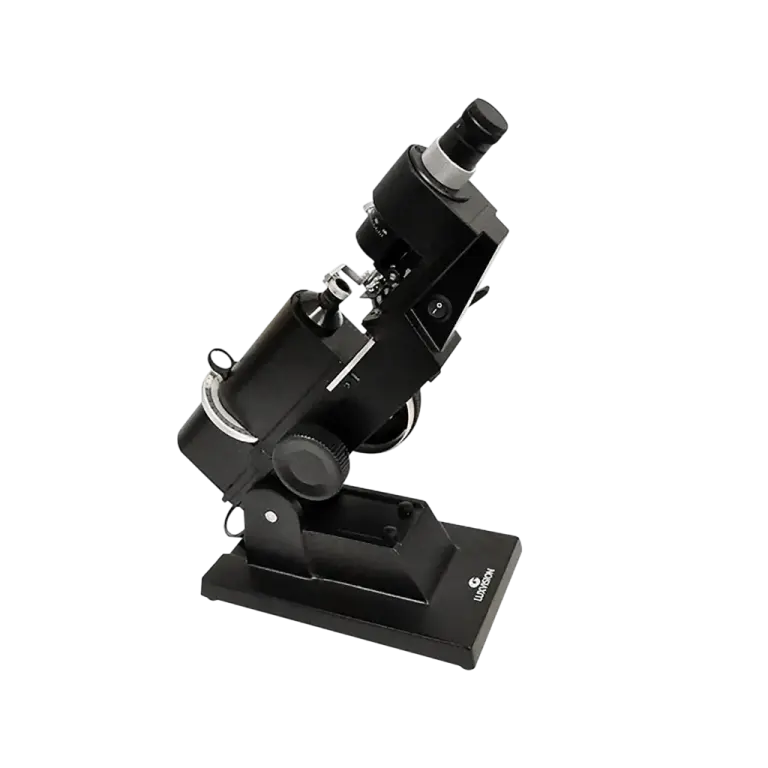
A manual lensmeter — also called a lensometer or focimeter — is the benchtop instrument opticians, optometrists, and lab technicians use to read the true power of a finished spectacle or contact lens. By optically neutralizing the lens, it reveals sphere, cylinder, and axis, locates and marks the optical center, and measures add power in bifocals, trifocals, and progressives, along with any prescribed or unwanted prism. Manual lensometry remains the trusted reference method for neutralizing eyewear and confirming that a finished job matches the prescription before it reaches the patient.
Every manual lensmeter in this collection is selected for the daily realities of a working dispensary or optical lab: clean eyepiece optics, steady illumination, honest calibration, and controls built to hold up to years of use. As a US-based ophthalmic and optometric equipment provider — not a drop-ship reseller — we stand behind these instruments with our in-house technical and repair department, genuine spare parts, and US warranty and calibration support, so the lensmeter you depend on for quality control stays accurate and serviceable. Tell us your patient volume and the lens types you handle, and we will help you match the right model and turn it into a same-day Request-a-Quote.
How to choose a manual lensmeter
- Reading style: internal vs. external: External-reading models show sphere, cylinder, and axis on a dial or scale on the outside of the instrument; internal-reading models project those values into the eyepiece so the operator never looks away from the target. Internal reading is faster and more ergonomic for high-volume dispensing, while external reading is simple, dependable, and ideal for teaching lensometry fundamentals or lower-volume verification.
- Measurement range and prism: Confirm the sphere and cylinder range comfortably covers the prescriptions you dispense, and that the unit reads prism — verifying both prescribed and unwanted prism is a routine quality-control step, especially on multifocal and progressive jobs.
- Optics and illumination: Eyepiece clarity and a stable light source (halogen or LED) determine how quickly and confidently a technician can bring the target lines into focus. Better optics reduce eye strain across a full day of neutralizing and cut down on re-reads.
- Lens table and lens types: A generously sized lens table and a design rated for both spectacle and soft or hard contact lenses widen what a single instrument can verify. Confirm the model comfortably handles the multifocal and progressive work your lab or practice actually does.
- Build quality, calibration, and serviceability: A manual lensmeter is a long-term tool, so solid mechanics matter — but so does the provider behind it. Choosing one we can recalibrate, repair, and supply spare parts for is the difference between a quick fix and a replaced instrument.
Manual lensmeters we carry
These are the manual lensmeters most of our optical labs and practices choose from. The main decision comes down to reading style and lens-handling range, so we have grouped the lineup by how each unit fits real workflows.
| Model | Reading type | Best for |
| Luxvision LM-45 | External / portable | Mobile screenings, satellite offices, and entry-level Rx verification |
| Luxvision LM-190 | External reading | Value-focused practices and teaching lensometry fundamentals |
| Luxvision LM-200 | Internal reading | Busier dispensaries that want readings in the eyepiece for faster neutralizing |
| Luxvision LM-700 | External / deluxe | Full-service labs verifying spectacle and contact lenses on a large lens table |
Frequently asked questions
What does a manual lensmeter measure? It reads the sphere, cylinder, and axis of a finished lens, plus add power in bifocals, trifocals, and progressives, the location of the optical center, and any prescribed or unwanted prism. It works by neutralizing the lens so you can read its true power and confirm it matches the prescription.
What is the difference between internal-reading and external-reading manual lensmeters? External-reading models display the measurement on a dial or scale on the outside of the instrument, while internal-reading models project sphere, cylinder, and axis into the eyepiece so the operator reads without looking away from the target. Internal reading tends to be faster for high-volume work; external reading is straightforward and excellent for training.
Should I choose a manual or an automatic lensmeter? Manual lensometry is precise, needs no power, and is widely regarded as the reference method for neutralizing eyewear, and its lower cost and simple mechanics make it a dependable quality-control and teaching tool. Automatic units add speed and features such as digital readout at a higher price. Many labs keep a manual lensmeter as a reliable backup and calibration check even after adding an auto model. Tell us your volume, staff experience, and budget and we will help you weigh the two.
Can a manual lensmeter read progressive and multifocal lenses? Yes. A manual lensmeter measures add power in bifocals, trifocals, and progressives. Progressive verification takes a bit more operator skill because you locate the reference points marked by the manufacturer, so a model with clear optics and a stable lens table makes this work easier and more repeatable.
Do you service and warranty the manual lensmeters you sell? Yes. We are a US-based provider with an in-house technical and repair department and access to genuine spare parts, and our instruments carry US warranty and calibration support. That means your lensmeter can be recalibrated or repaired rather than discarded. Request a quote and we will confirm current warranty and service terms for the model you choose.
REQUEST QUOTE →