














Frame Warmers for Optical Dispensing: Hot-Air vs Bead Heaters and What to Look For
How to choose a frame warmer: hot-air vs salt and bead pans, frame materials, coating safety, and the Luxvision FH-6200, FH-6300 and FH-6500 compared.
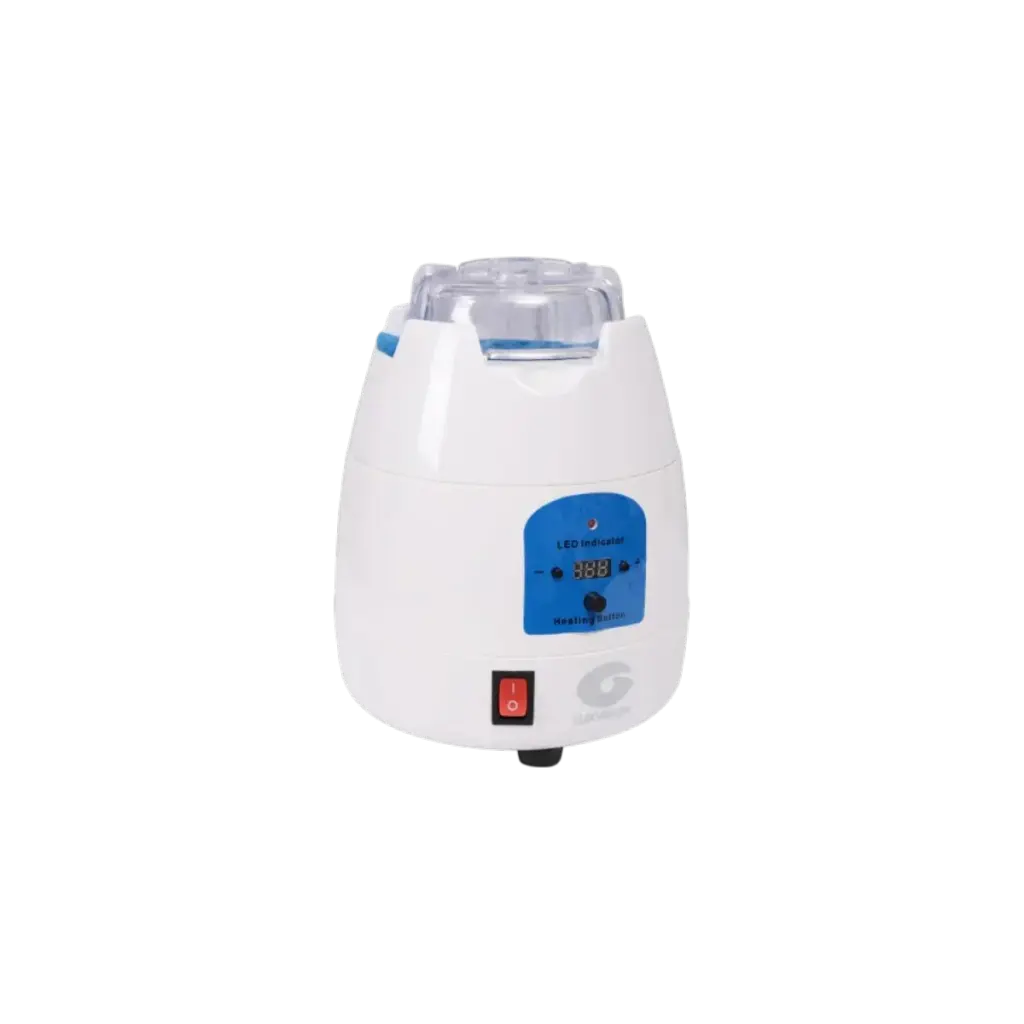
A frame warmer is the dispensing-bench tool that softens plastic eyewear so an optician can insert a lens, fit a temple tip or reshape a bridge without cracking the front. It looks like a minor purchase next to a lensmeter or an edger, but it touches nearly every plastic frame that leaves your dispensary, and a bad one blisters acetate, dulls finishes and chips coatings. This guide compares the two heater families in use today (hot-air blowers and salt or glass-bead pans), sets out a buying checklist, and explains how the three Luxvision optical frame warmers we carry differ.
If you are planning the whole finishing bench rather than one device, start with our in-office optical lab equipment guide; this article stays on the single heater decision.
Shopping for Browse frame heaters? US Ophthalmic is a direct provider of Browse frame heaters to eye care practices across the US. Tell us how your lane is set up and we will come back with the configurations that fit, plus current availability and lead times.
What a frame warmer actually has to do
Most plastic frames need heat before any adjustment. A 2025 Eyecare Business fundamentals column puts it bluntly: if the frame is plastic, it requires heat before adjustment “or there is a high risk of cracking the frame.” The same column lists adjusting acetate without warming it as a common cause of breakage or warping.
The job, then, is controlled softening: enough heat, in the right place, for long enough to make the material pliable, and no more. The 2012 Eyecare Business “Ask the Labs” column reduces the whole craft to two rules worth printing above the bench:
- Thickness drives the setting. The thinness of the frame material is the single most important factor in choosing a heat setting. Thin material heats fast.
- Use the lowest heat that does the job. Excess heat is an enemy of every frame material, and a properly heated frame should never turn rubbery or lose its shape.
Every feature on a heater spec sheet is really an answer to one question: how precisely does it let your staff follow those two rules on a busy Saturday?
Hot-air frame heaters vs salt and bead pans
There are two mainstream ways to heat a frame at the dispensing table. A hot-air frame heater (often called an eyeglass frame heater or blower) pushes heated air through an outlet grille. A salt pan or bead pan is a heating element under a shallow tray filled with fine salt or glass beads; the optician buries the part to be heated just beneath the surface.
| Factor | Hot-air frame heater | Salt or glass-bead pan |
|---|---|---|
| How heat reaches the frame | Directed air stream; most units let you focus heat on one area, which helps with bridge work | Contact with a heated granular bed; warms a whole temple or front more evenly |
| Best fit | Spot adjustments, lens insertion, temple tips, mixed frame materials | Thick acetate that has to soften through its full thickness |
| Mess and finish risk | No granules, so nothing to abrade a finish or lodge in a hinge | Salt can encrust a frame; fine media can work into crevices and spring hinges |
| Hot-spot risk | Cheap blowers can have hot spots in the air stream that blister plastic | Salt does not heat consistently through the pan and can create hot spots; beads are steadier |
| Lens and coating risk | Air can reach the lens; use a heater guard or shield the lens | Gentler, indirect heat at the lens, but deep dipping still heats it |
| Running cost and upkeep | Described by lab columnists as easier on the electric bill and far less messy | Media needs stirring before use and periodic replacement |
The 2004 Eyecare Business bench review called hot-air warmers “easily a second favorite” behind the pan for plastic frames, then noted their advantages: no salt-encrusted frame to pull out of the pan and no abrasion of delicate finishes. It also warned that “some less-expensive units are like glorified hair dryers” with hot spots that blister plastic. Its bottom line is still the honest one: you can get by with either a bead pan or an air warmer, but a serious dispensary keeps both.
Salt or glass beads?
If you do keep a pan, the media matters. Salt’s advantage is that it is inexpensive. Its drawback, per the 2012 lab column, is uneven heating through the pan. Glass beads come in fine and larger grades; the larger 2 mm to 3 mm beads are easier to work with because they stay out of small frame crevices and do not jam spring hinges. Whatever the medium, stir before every use and keep the frame moving just beneath the surface so it does not pick up pock marks.
A note on pan temperatures
The 2004 column reported that most offices keep a thermostatic bead pan at 300 to 325 °F, while high-volume mounting labs may run as high as 400 °F, a setting it warned can ruin most frames in seconds. Those figures describe the temperature of a granular bed, not the air at a blower outlet, so do not compare them directly with the maximum air temperature on a hot-air spec sheet. What they do show is that the useful working band is narrow, which is why temperature control sits at the top of the checklist below.
Frame materials: why one fixed setting is not enough
An optical frame warmer earns its keep on the materials that are easy to ruin. The 2012 lab column gives the most practical summary we found:
- Cellulose acetate (zyl): the most popular frame plastic and easy to overheat, especially in darker colors. A hot-air warmer at a moderate setting is recommended.
- Cellulose propionate: highly heat sensitive; it can stretch out of form when overheated.
- Optyl: warps if overheated, but can snap if under-heated. Heat only the area being adjusted and hold the frame until it cools.
- Nylon and carbon: very heat resistant and typically need high heat to adjust.
- Polyamide eyewires: the column advises never using heat to insert lenses into these, because heat shrinks the eyewire.
That spread, from heat-sensitive propionate to heat-resistant nylon, is the strongest argument for a heater with real temperature adjustment rather than a single fixed output. A dispensary that only sees thin acetate can live with less control; one that handles nylon sports frames and premium propionate in the same afternoon cannot.
Protecting lenses and coatings
Many adjustments happen with the lenses already mounted, so lens safety is part of the heater decision. The 2012 column recommends starting with the lowest possible heat on frames carrying AR lenses and raising it only as needed, noting that extreme heating and cooling can still crack or craze modern coatings. The 2025 fundamentals column adds that lenses must be kept away from direct heat, and suggests covering them with your hands while warming the frame.
For hot-air work, a frame heater guard (a foam or thick-plastic cover placed over the lenses) deflects the air stream from the lens. Lens.com’s explainer stresses that even a quick blast of hot air can damage some coatings, and that paper is too thin to protect a lens. Budget a guard alongside any hot-air frame heater; it is a small accessory that helps you avoid expensive remakes.
How to choose a frame warmer: an eight-point checklist
- Heating method. Hot air for most dispensaries (clean, focusable, coating-friendlier with a guard). Add a bead pan only if you regularly reshape thick acetate.
- Temperature adjustment. Look for a heater with multiple settings or continuous control, as the 2012 column advises. A digital readout makes the setting repeatable between staff.
- Maximum temperature. Enough headroom for heat-resistant nylon, but you will run most acetate jobs well below the top setting.
- Even air stream. Ask how uniform the output is. Hot spots, not peak temperature, are what blister frames.
- Outlet and footprint. A compact unit that sits at the dispensing table where the adjustment happens beats a bigger one parked in the back lab.
- Safety shut-down. A unit that cools itself before switching off protects the element and anyone who reaches past it.
- Status indicator. A power or ready light helps staff see at a glance whether the heater is on or still hot.
- Service and warranty. A heater runs dozens of short cycles a day. Buy from a provider that can support it and supply parts in the US.
Comparing the Luxvision FH-6200, FH-6300 and FH-6500
All three frame heaters in our frame heaters collection are Luxvision hot-air units. Their published specifications on our product pages are summarized here; each page also links the model’s manual.
| Model | Heating | Stated maximum | Control and display | Shut-down behavior |
|---|---|---|---|---|
| Luxvision FH-6200 | Hot air, fast and uniform | Up to 125 °C (257 °F) | Adjustable temperature | Cools for about 2 minutes, then switches off automatically |
| Luxvision FH-6300 | Hot air, fast and uniform | Up to 125 °C (257 °F) | Adjustable temperature | Cools for about 2 minutes, then switches off automatically |
| Luxvision FH-6500 | Digital hot air, fast and uniform | Up to 150 °C (302 °F) | Digital temperature control with LED power indicator | Cools for about 2 minutes, then switches off automatically |
Fahrenheit values are straight conversions of the published Celsius figures.
How we would match them to a practice:
- FH-6200 or FH-6300: a solid fit for a dispensary doing everyday acetate adjustments and lens insertion, where an adjustable hot-air heater with a safe cool-down covers the work. Both are described as compact and suited to conventional and more delicate frame materials.
- FH-6500: the pick when several opticians share one heater and you want a repeatable digital setting, a visible power indicator and the higher 150 °C ceiling for heat-resistant materials such as nylon.
None of these is a salt pan. If your lab reshapes a lot of thick acetate, a bead pan alongside the hot-air unit is the combination the trade press has recommended for two decades.
Where the frame warmer sits in the dispensing workflow
The heater is usually the last device a frame touches before it goes on the customer’s face. A typical fitting sequence: measure with a digital PD meter, verify the finished lenses, then warm and adjust the frame for fit. Put the warmer where that final adjustment happens, within reach of the adjusting pliers and a heater guard, and keep the pan (if you have one) away from coated work.
Setting up a new frame warmer on arrival
- Place it on a stable, heat-tolerant surface with clear space around the outlet.
- Run it through one full heat and cool-down cycle so staff see the automatic shut-down before the first customer.
- Agree on house settings for thin acetate, thick acetate and nylon, and label them at the bench.
- Keep a heater guard next to the unit and make guarding the lens the default habit.
- Read the model manual linked on the product page before first use.
Ready to spec your Browse frame heaters?
Send us your requirements and our equipment specialists will come back with a configuration built around how your practice actually works — including availability and lead time. US Ophthalmic is a direct provider to eye care practices nationwide.
Frequently asked questions
What is a frame warmer used for?
A frame warmer heats plastic eyewear so it softens enough for lens insertion, temple tip fitting and bridge or temple adjustments without cracking. Most plastic frames should be warmed before they are adjusted.
Is a hot-air frame heater better than a salt pan?
For most dispensaries, a hot-air heater is cleaner, avoids granules on frames and hinges, and lets you focus heat on one spot. A salt or bead pan heats thick acetate more evenly through its full thickness. Many experienced labs keep both.
Should I use salt or glass beads in a frame pan?
Salt is inexpensive but heats less consistently and can create hot spots. Larger glass beads (about 2 mm to 3 mm) stay out of frame crevices and spring hinges, which makes them easier to work with.
Can a frame heater damage lens coatings?
Yes. Direct hot air can damage some anti-reflective and other coatings, and extreme heating and cooling can crack or craze them. Start at the lowest effective setting, keep heat off the lens and use a frame heater guard with hot-air units.
Do nylon frames need a frame warmer?
Nylon is very heat resistant and typically needs high heat to adjust, which is one reason to choose a heater with adjustable temperature and enough maximum output, such as the 150 °C Luxvision FH-6500.
Do you sell refurbished or used frame warmers?
No. US Ophthalmic sells new equipment, not refurbished or used units. If budget is the concern, ask our team about open-box availability and financing when you request a quote.
Get a quote on a frame warmer
Tell us how many opticians share the bench and which frame materials you see most, and we will recommend the right Luxvision frame heater. US Ophthalmic is an ophthalmic equipment provider with US-based service and support. REQUEST QUOTE or browse the frame heaters collection.