












Skip to content
Search
+1 (888) 881-1122 REQUEST QUOTE

Clinical Areas:

Retina and Fundus

Glaucoma and Intraocular Pressure

Myopia Control

Cataract

Visual Field Analyzers & Perimeters

Visual field perimeters are essential devices in modern ophthalmology, used to accurately and reliably assess visual sensitivity and identify alterations in the patient’s field of vision. Fundamental for the early detection and monitoring of glaucoma, neurological conditions, and retinal disorders, these systems enable detailed analysis through static and kinetic perimetry examinations.

Featuring advanced technology, intelligent software, and automated protocols, perimeters offer greater diagnostic precision, patient comfort, and clinical efficiency, making them indispensable tools in offices, clinics, and specialized visual health centers.

REQUEST QUOTE
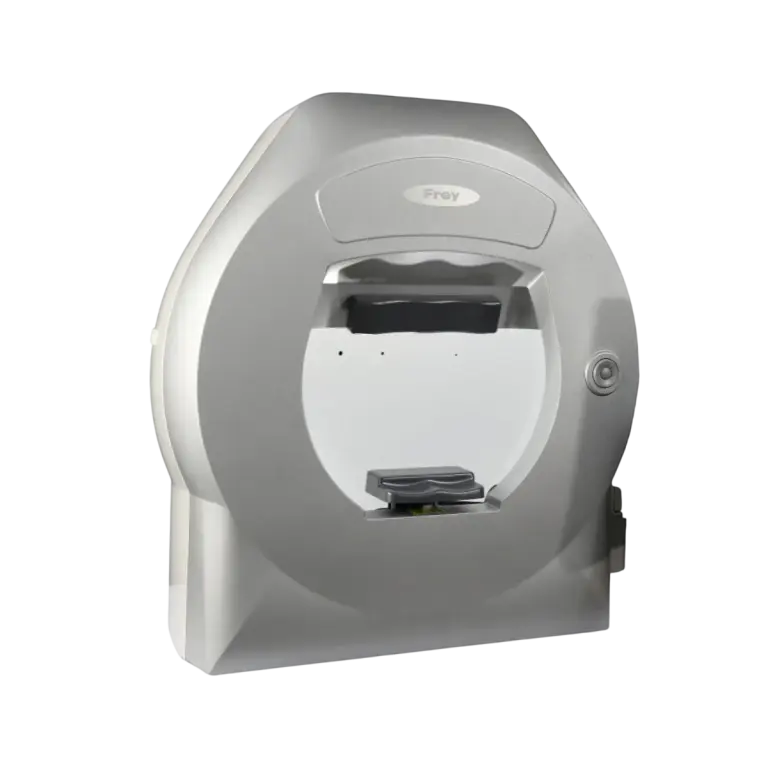
Frey Perimeter AP-600

Visual Field Analyzers (Automated Perimeters)

A visual field analyzer, or automated perimeter, measures how well a patient sees across the field of vision by presenting light stimuli at set points and recording which ones are seen. Visual field testing is a standard part of glaucoma care and is also used in neuro-ophthalmic, retinal and lid assessments.

This page brings together the visual field analyzers US Ophthalmic offers in the US: Frey automated perimeters, from compact static models to systems with both static and kinetic testing. US Ophthalmic is a US provider of ophthalmic equipment and backs every unit with an in-house technical department and spare-parts stock. Tell us which tests you run and we will recommend a model with a quote.

How to choose a visual field analyzer

  • Static, kinetic or both: Static threshold testing is the routine for glaucoma follow-up. Kinetic testing maps the outer boundaries of the field and is used in neuro-ophthalmic work; choose a model with both if you need it.
  • Test programs: Check that the threshold strategies, test patterns and screening programs you use are included, and how long a typical test takes.
  • Fixation monitoring: Reliable results depend on steady fixation; look at how the system monitors the patient's gaze and flags unreliable tests.
  • Footprint and setup: Check the space and lighting the perimeter needs, whether it has an embedded PC, and whether a monitor is included.
  • Reports and data: Confirm how results are printed, exported and compared over time, and whether reports can be sent to your EMR.
  • Service and parts: Ask who services the instrument in the US, how consumables and spare parts are supplied, and what the US warranty covers.

Browse visual field analyzers by type

Use the table to find the group that fits your practice, then open the model page for specifications.

TypeBest forModels
Static automated perimetersGlaucoma screening and follow-upFrey AP-50, AP-600L
Static and kinetic automated perimetersPractices that also need kinetic or neuro-ophthalmic testingFrey AP-250, AP-600

Frequently asked questions

What is a visual field analyzer used for? It maps a patient's field of vision to detect and follow conditions that cause field loss, such as glaucoma, and to assess neurological and lid-related field defects.

What is the difference between static and kinetic perimetry? Static perimetry measures sensitivity at fixed points by changing the stimulus brightness; kinetic perimetry moves a stimulus from the edge of the field inward to find where it is first seen.

Do you sell refurbished visual field analyzers? No. US Ophthalmic sells new equipment only. For a lower budget, contact us about open-box availability; open-box units are inspected and function-checked.

How do I get a quote? Request a quote with the models you are considering and how many lanes or rooms you are equipping, and we will come back with configurations, availability and lead times.

REQUEST QUOTE →

Not sure which equipment to choose?

Get personalized guidance to find the ideal technology for your clinic's needs.

REQUEST QUOTE