













Best Vision Screeners (Photoscreeners) in 2026: A Buyer’s Guide for Pediatric and Eye-Care Practices
Adaptica Kaleidos is our top vision screener for 2026. Compare it with Spot, plusoptiX S20, 2WIN, GoCheck Kids and Blinq on range, workflow and data.
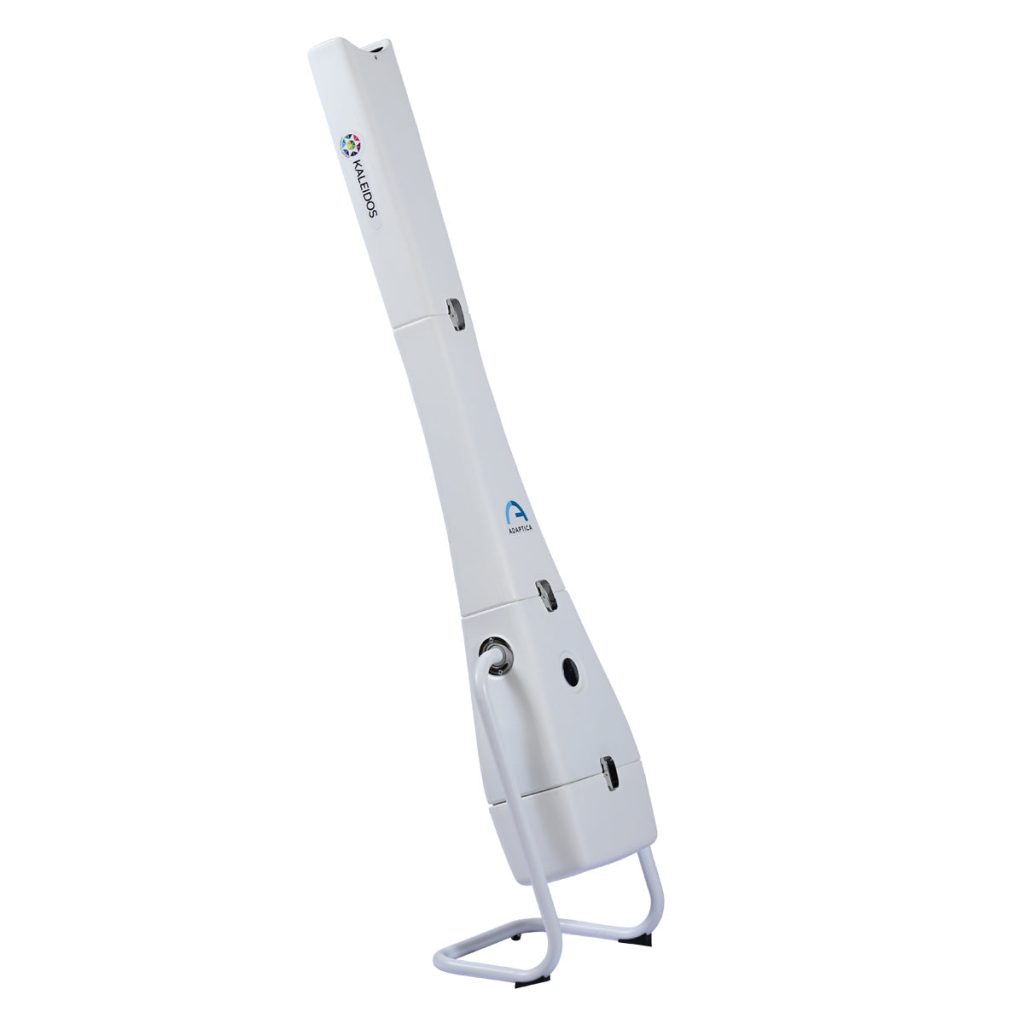
Our top pick for 2026 is the Adaptica Kaleidos. It measures both eyes at the same time across a sphere range of -15 D to +15 D, it sits inside an enclosed viewing tube that Adaptica designed to work in any room lighting, and it captures in under three seconds by Adaptica’s figures. For pediatric, optometry and school-screening programs that want real refraction data instead of only a pass/refer flag, it is the most capable screening station in this comparison, and US Ophthalmic has it in stock with in-house US technical support.
Vision screeners, often called photoscreeners or instrument-based screeners, look at both eyes from about one meter and flag amblyopia risk factors such as anisometropia, significant refractive error, strabismus and anisocoria in children who are too young or too uncooperative for an acuity chart. The category has split into three camps: binocular refractometers that report full sphere, cylinder and axis (Adaptica), handheld screeners built around a quick primary-care workflow (Welch Allyn Spot, plusoptiX, GoCheck Kids), and newer approaches such as Rebion’s Blinq that scan fixation directly instead of measuring refraction.
Below we rank seven devices on what matters to a practice owner: the output you actually get, measuring range, lighting and form factor, age range, EHR workflow, throughput and how the device is supported after the sale. Every spec quoted comes from the manufacturer’s own pages. We do not list prices; the Adaptica models are quoted on request.
Shopping for portable autorefractors? US Ophthalmic is a direct provider of portable autorefractors to eye care practices across the US. Tell us how your lane is set up and we will come back with the configurations that fit, plus current availability and lead times.
How to choose a vision screener
- Output: refraction values or pass/refer: Decide who reads the result. A medical assistant or school nurse needs a clear pass/refer or ‘exam recommended’ message. An optometrist or pediatric ophthalmologist usually wants sphere, cylinder, axis, pupil size and alignment data that can start a refraction or document anisometropia.
- Measuring range and binocular capture: Compare published ranges, not adjectives. Ranges in this group run from a spherical equivalent of -7.50 to +7.50 D (Spot) to -15 to +15 D sphere (Adaptica). Simultaneous binocular capture from about one meter is the norm for this category and is what lets you screen a child without a chin rest.
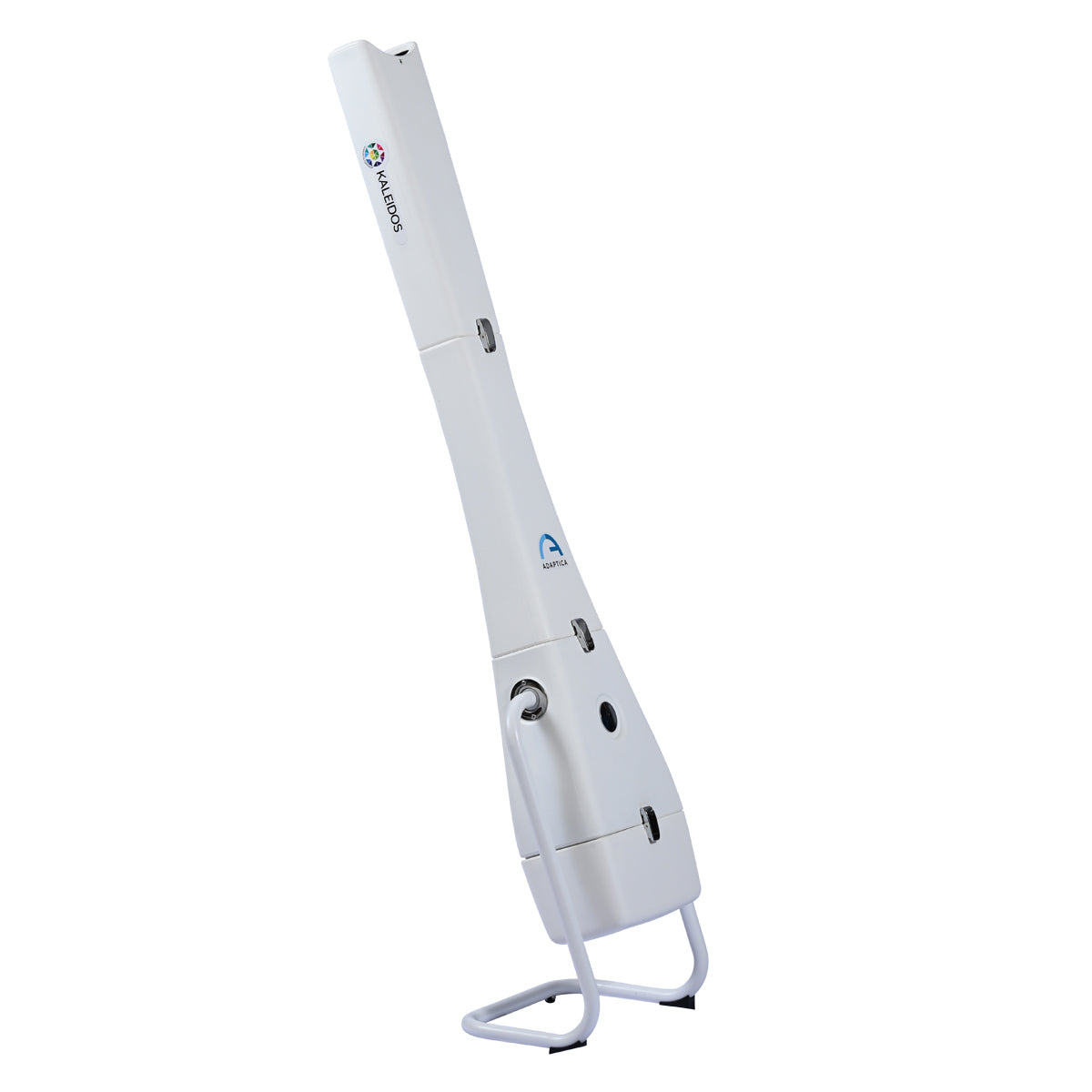
- Lighting and form factor: Handheld screeners go room to room but work best when pupils are reasonably large, so a dimmed room helps. An enclosed tube such as Kaleidos is built to screen in any lighting, at the cost of being a stand-mounted station rather than a pocket device.
- Age range and child engagement: Check the youngest age each manufacturer supports (Spot lists six months, GoCheck Kids one year) and what keeps a toddler looking at the device: fixation lights, sounds, animal masks or an enclosed tube.
- Data and EHR workflow: Ask how orders and results move. Options range from direct Epic or Cerner integration to tablet apps, CSV import and export, Wi-Fi printing and eFax. The right answer depends on whether you screen in a clinic on an EHR or in schools and outreach events.
- Throughput for mass screenings: Capture time, battery capacity, a dedicated screening mode and patient-list import all matter when you are screening a classroom or a health fair rather than one patient per visit.
- Ownership model and after-sale support: Most screeners are a capital purchase; at least one (GoCheck Kids) is a subscription. Ask who services the unit in the US, how software updates are delivered and whether recalibration is required.
#1 · Kaleidos (Adaptica)
Best overall: the widest measuring range here, any-light screening and full binocular refraction data in one walk-up station.
Kaleidos pairs Adaptica’s binocular vision-screening optics with an enclosed viewing tube that acts as a darkroom. The patient simply looks into the tube and the system measures both eyes at once, in under three seconds by Adaptica’s figures, in any room lighting. For a busy pediatric office or school program that means no dimming the room and no chasing a moving child with a handheld camera. Adaptica now lists this stand-alone configuration as the 2WIN-S, and its Kaleidos product page redirects there. Objective refraction runs from -15 D to +15 D sphere (0.25 D steps to ±7 D, 0.50 D steps beyond) with up to ±5 D cylinder, and pupil size (4 to 11 mm) and pupil distance (30 to 120 mm) are detected automatically. The system also reports phorias and tropias in prism diopters, head tilt and direction of gaze, and the Kaleidos App adds a dedicated screening mode for high-volume days. Control, reporting and sharing run through an Android tablet app, with Wi-Fi and email printing, and disposable hygienic masks are included. It is a stand-mounted station rather than a handheld, so it fits a fixed screening spot better than room-to-room use.
Pros: Widest sphere range in this comparison (-15 to +15 D) plus ±5 D cylinder · Enclosed tube is designed to screen in any room lighting · Full refraction values plus phoria/tropia, pupil, head-tilt and gaze data · Kaleidos App screening mode for mass screenings · In stock at US Ophthalmic with US warranty and in-house technical service
Considerations: Stand-mounted tube, not a grab-and-go handheld · Runs from an Android tablet that you keep charged and updated · Adaptica does not list direct Epic or Cerner integration
Best for: Pediatric, optometry and school-screening programs that want a fixed, any-light screening station with full refraction data.
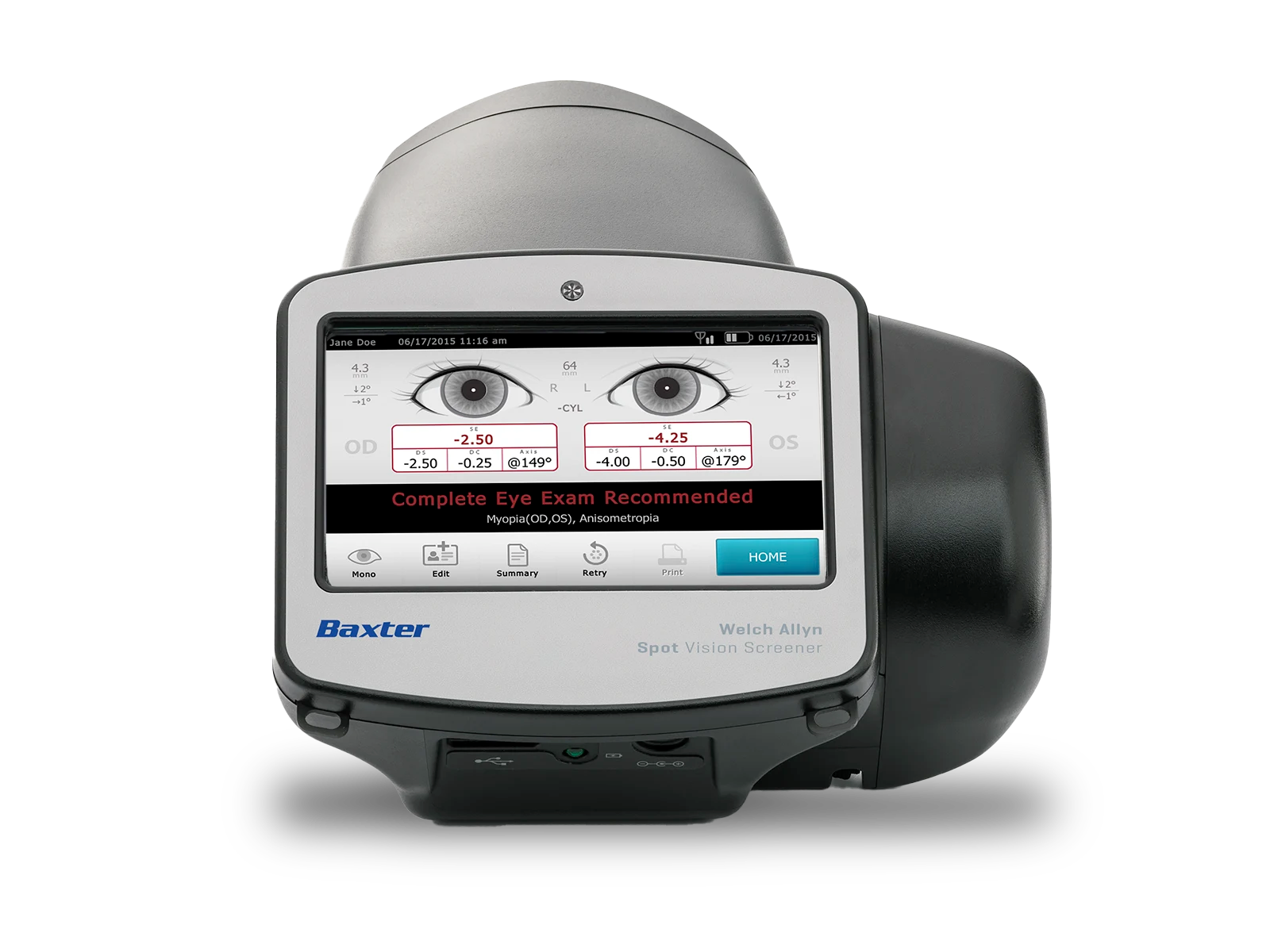
#2 · Spot Vision Screener (VS100) (Welch Allyn (Baxter))
The familiar handheld standard in US pediatric and primary-care offices, with the strongest EHR integration story.
The Spot Vision Screener is the handheld, point-and-shoot device many US pediatric and family practices already know. Now sold by Baxter, which owns Hillrom and Welch Allyn, it auto-captures both eyes from 3.3 feet (1 m ± 5 cm) and screens for six amblyopia risk factors: myopia, hyperopia, astigmatism, anisometropia, strabismus and anisocoria, in patients as young as six months. Results display as either a complete eye exam recommended or all measurements in range, backed by a spherical equivalent range of -7.50 D to +7.50 D, cylinder to ±3.00 D, pupil size from 3.0 to 9.0 mm and gaze measurement up to 20 degrees. Workflow is where Spot stands out: the SpotConnect application exchanges orders and results with Epic and Cerner, summary reports can be exported wirelessly or by USB, and driverless wireless printing is built in. Lights and sounds help hold a child’s attention. At about 2.55 lb (1157 g) it travels well to school and community events. Its narrower range than the Adaptica devices matters little for pass/refer screening, but more if you hope to use readings as a refraction starting point.
Pros: Direct Epic and Cerner integration through SpotConnect · Handheld point-and-shoot auto capture · Screens six amblyopia risk factors from six months of age · Built-in driverless wireless printing
Considerations: Narrower range: spherical equivalent -7.50 to +7.50 D, cylinder ±3.00 D · Heavier than the handheld 2WIN (about 1157 g versus 840 g) · Not carried by US Ophthalmic, so service runs through Baxter
Best for: Pediatric and family-medicine offices on Epic or Cerner that want a familiar handheld screener.
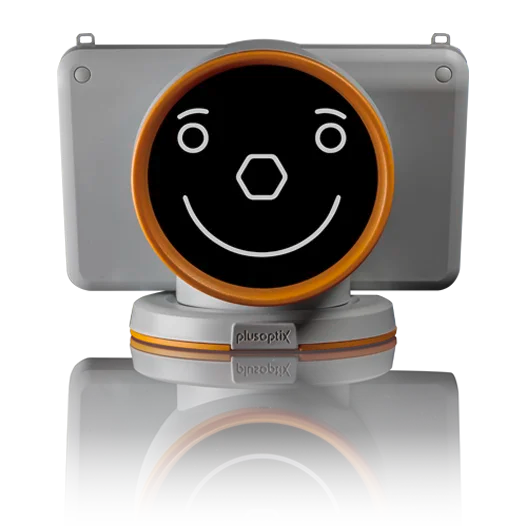
#3 · plusoptiX S20 (Plusoptix)
A fast German-built handheld with a large touchscreen, EMR transfer and a clear Pass/Refer result.
Plusoptix has developed and built binocular photorefraction devices in Nuremberg, Germany, since 2001. Its current vision-screener lineup is the S20 and the lower-cost S12R, which drops direct EMR connection; the S20 is the model to compare here. It screens both eyes simultaneously from 3.3 feet (1 m) in less than one second and returns an instant Pass or Refer result, which suits medical assistants and school nurses who should not be interpreting raw refraction numbers. A 7-inch touchscreen, automatic distance measurement to help find the right position, and a pupil-zoom feature for an enhanced red reflex (Bruckner) view round out the hardware. Results can go to the EMR or to paper, and a CSV interface supports automated patient import, export and report printing. Plusoptix states that its instruments need neither regular service nor annual recalibration, and it offers free software updates through the product life cycle. Plusoptix does not publish the S20’s measuring range on its screener page, so request the datasheet if you plan to use readings beyond pass/refer. A separate binocular autorefractor line (A20 and A12R) is aimed at eye-care professionals.
Pros: Binocular capture from 1 m in under one second · Simple Pass/Refer output for non-specialist staff · EMR transfer plus CSV import and export · No regular service or annual recalibration required, per Plusoptix
Considerations: Measuring range not published on Plusoptix’s screener page · Pass/Refer focus is less useful as a refraction starting point · Not carried by US Ophthalmic
Best for: Pediatric practices that want a quick pass/refer handheld with EMR transfer.
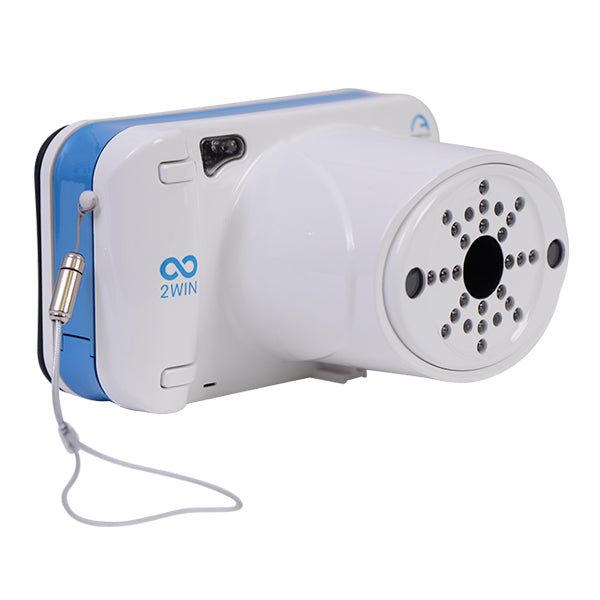
#4 · 2WIN (Adaptica)
The handheld version of our top pick, with the same ±15 D range and optional clinical apps.
The 2WIN is the handheld core of the Adaptica system: the same binocular optics, -15 to +15 D sphere and ±5 D cylinder range as Kaleidos, in an 840 g (30 oz) unit with its own 3.5-inch display. It measures both eyes at once from 1 m ± 5 cm in natural viewing conditions; Adaptica points out that this evaluates refraction and binocular cooperation without cycloplegia and without dissociating the eyes, unlike monocular autorefractors. Our product page notes a full binocular evaluation in under 15 seconds. Beyond refraction it reports pupil size and distance, head tilt, direction of gaze, phorias and tropias, and it can check a patient’s current spectacle correction. Optional apps, sold separately, add corneal-reflex analysis, dynamic pupillometry, a 66 cm intermediate-vision test for screen users and lens centering, and the 2WINNY animal-mask kit helps hold a young child’s attention. Data moves by Wi-Fi, USB or microSD card, with USB or infrared printing. Because the handheld 2WIN measures in natural mydriasis, plan on a dimmed room; the Kaleidos tube is what removes that requirement. Stock varies, so check current availability with US Ophthalmic.
Pros: Same -15 to +15 D sphere and ±5 D cylinder range as Kaleidos · Light 840 g handheld with built-in display · Optional apps for corneal reflexes, pupillometry, intermediate vision and lens centering · Wi-Fi, USB and microSD data options
Considerations: Currently out of stock at US Ophthalmic; ask about lead time · Works best in a dimmed room without the Kaleidos tube · Advanced apps are sold separately
Best for: Optometrists and pediatric eye-care practices that want binocular refraction data in a handheld that moves between rooms.
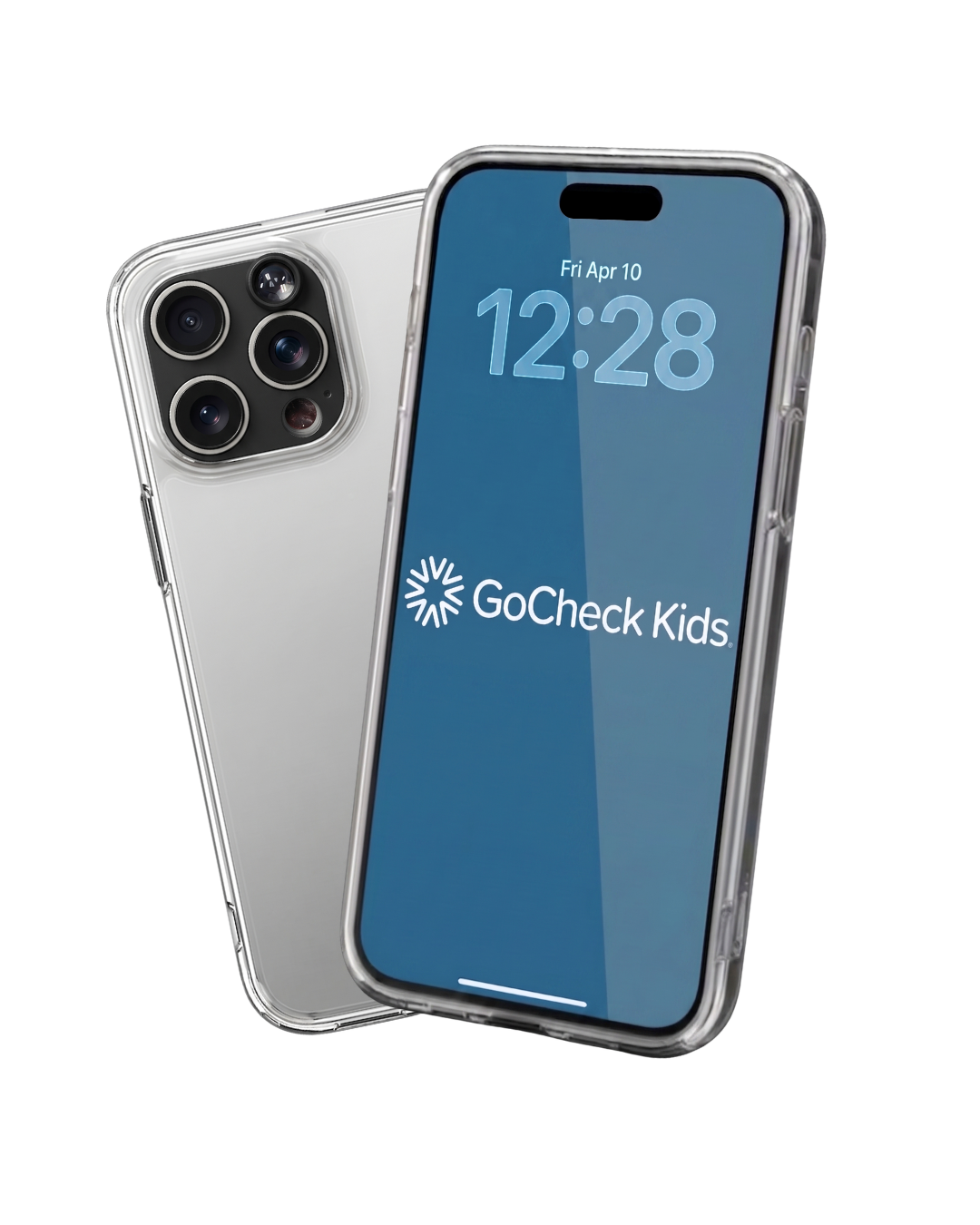
#5 · GoCheck MultiScreener (GoCheck Kids)
A subscription-based, smartphone-style screener for pediatric primary care that also covers acuity and hearing.
GoCheck Kids takes a different commercial and technical approach. Its MultiScreener is a configured, smartphone-based medical device that the company ships to the practice; the screening apps are not offered for personal phones. For photoscreening the child is positioned 40 inches away, staff follow guided on-screen steps with optional lights and sounds, and results are immediate. GoCheck says its photoscreener is validated for children one year and older and detects hyperopia, myopia and anisometropia as amblyopia risk factors, while alerting the clinician to possible ocular misalignment. The same device also runs visual acuity testing (ages 3 and up, with 10 feet between screener and patient) and pure-tone audiometry (ages 4 and up) through supplied headphones. Results, recommendations and the captured photo post to the chart through bi-directional integrations with Epic, athenahealth, Office Practicum and Azalea Health, or by eFax for other systems. Pricing is an annual subscription with no upfront equipment cost, which turns a capital purchase into an operating expense. GoCheck’s materials describe risk-factor results rather than full refraction values, so eye-care practices wanting sphere, cylinder or phoria data will get more from a binocular refractometer.
Pros: Photoscreening, visual acuity and audiometry on one device · Bi-directional Epic, athenahealth, Office Practicum and Azalea Health integrations · Subscription model with no upfront equipment cost · Dedicated customer success manager and training plan
Considerations: Ongoing subscription rather than an owned asset · Validated from age one, not infancy · Results framed as risk factors, not full refraction values
Best for: Pediatric primary-care groups, health systems, FQHCs and Head Start programs that want screening as a service.
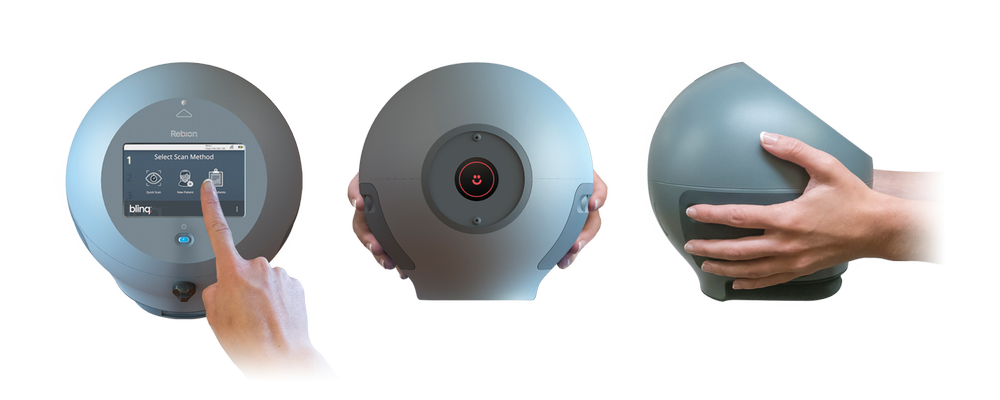
#6 · Blinq (Rebion)
A different technology: it looks for amblyopia and strabismus directly instead of measuring refraction.
Blinq is not a photoscreener in the classic sense. Rebion’s handheld scanner uses what the company calls Neural Performance Scanning, a brief scan of the fovea that evaluates how the two eyes fixate together, to detect amblyopia and strabismus directly rather than estimating refractive risk factors. Rebion says it can pick up binocularity changes associated with as little as 1 degree of misalignment, and the device shows a definitive Pass or Refer for amblyopia, refractive amblyopia, micro-strabismus and strabismus in about three seconds. Screening staff do not have to interpret refractive numbers or apply referral criteria by hand, which is the appeal for schools, community screeners and grassroots programs such as Lions Clubs. Data handling is encrypted, patient lists can be pushed to the device and results pulled back wirelessly, and web tools handle reporting. The trade-off is the flip side of that simplicity: Blinq gives no sphere, cylinder, pupil or gaze values, so it does not help an eye-care office start a refraction or document how large an anisometropia is. In an eye-care setting, treat it as a complement to a refractive screener rather than a replacement.
Pros: Direct Pass/Refer for amblyopia and strabismus · Result on the device in about three seconds · No refractive data to interpret, which suits lay screeners · Wireless patient-list push and results pull
Considerations: No refraction, pupil or gaze values · Less useful as a starting point for refraction in an eye-care office · Not carried by US Ophthalmic
Best for: School, community and lay-screener programs focused on catching amblyopia and strabismus.
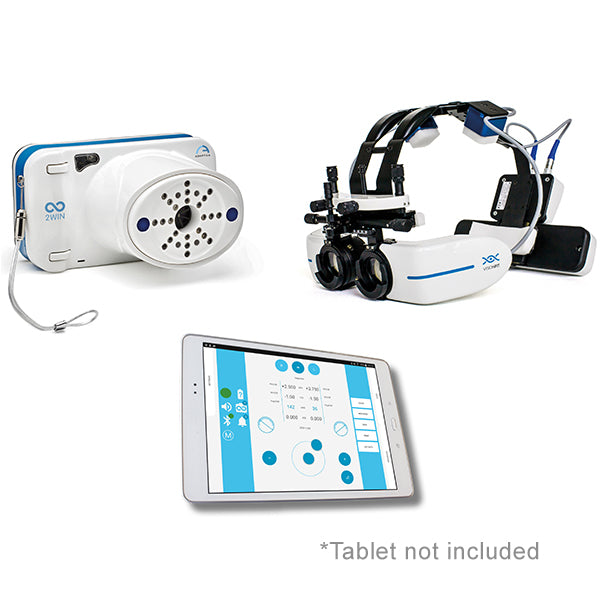
#7 · MWRS (Mobile Wireless Refraction System) (Adaptica)
Not a pure screener: a mobile refraction kit that screens with the 2WIN and refines with VisionFit.
The Mobile Wireless Refraction System is best understood as a portable refraction lane, not a screener. It combines the 2WIN binocular refractometer with VisionFit, an electronic, tunable, wearable lens system that fits like a trial frame and replaces trial lenses and phoropter functions for subjective refraction, with step resolution down to 0.05 D. The 2WIN captures the objective refraction and sends it to the Android tablet controlling VisionFit, which sets itself to those values to begin the subjective exam. The components communicate over Wi-Fi and Bluetooth, the refracting distance can be as short as 1 meter, a replaceable battery pack provides a two- to three-day charge, and the kit travels in one carrying case with the electronic trial frame, headband and manual. For a practice that only needs pass/refer screening, it is more system than you need. For mobile eye care, nursing-home visits, school programs that refract on site or outreach clinics, it lets one clinician screen a patient and then complete a refraction without a phoropter. Stock varies, so check current availability with US Ophthalmic.
Pros: Screens and refracts: the objective 2WIN result feeds VisionFit subjective refraction · Wearable VisionFit replaces trial lenses and phoropter functions · Works with as little as 1 m of refracting distance · Entire kit fits in a single carrying case
Considerations: More system than a pass/refer screening program needs · Currently out of stock at US Ophthalmic; ask about lead time · Requires an Android tablet for control
Best for: Mobile optometry, outreach and nursing-home programs that screen and refract on site.
View the MWRS (Mobile Wireless Refraction System) & request a quote →
Feature comparison
| Model | Type | Output | Working distance | Sphere range | Cylinder range | Data / EHR | Carried by US Ophthalmic |
|---|---|---|---|---|---|---|---|
| Adaptica Kaleidos | Stand-mounted tube, tablet-controlled | Sphere, cylinder, axis; pupils; phorias/tropias | Over 1 m patient to operator | -15 to +15 D | ±5 D | Android app, Wi-Fi, microSD, Wi-Fi/email printing | Yes (in stock) |
| Welch Allyn Spot Vision Screener (VS100) | Handheld, about 1157 g | Exam recommended or all in range, with SE, cylinder, axis | 3.3 ft ± 2 in (1 m ± 5 cm) | SE -7.50 to +7.50 D | ±3.00 D | SpotConnect (Epic, Cerner), Wi-Fi, USB, driverless printing | No |
| plusoptiX S20 | Handheld, 7-inch touchscreen | Pass / Refer | 3.3 ft (1 m) | — | — | EMR transfer, CSV interface | No |
| Adaptica 2WIN | Handheld, 840 g, 3.5-inch display | Sphere, cylinder, axis; pupils; phorias/tropias | 1 m ± 5 cm | -15 to +15 D | ±5 D | Wi-Fi, USB, microSD; USB/IrDA printing | Yes (check availability) |
| GoCheck Kids MultiScreener | Smartphone-based device, subscription | Amblyopia risk factors with captured photo | 40 in | — | — | Epic, athenahealth, Office Practicum, Azalea Health; eFax | No |
| Rebion Blinq | Handheld scanner | Pass / Refer for amblyopia and strabismus | — | Not applicable | Not applicable | Wireless patient lists and results; web reporting | No |
| Adaptica MWRS (2WIN + VisionFit) | Portable refraction kit in carry case | Objective plus subjective refraction | As short as 1 m | -15 to +15 D (2WIN) | ±5 D (2WIN) | Wi-Fi, Bluetooth, Android tablet | Yes (check availability) |
Why it’s our top pick
US Ophthalmic is a US ophthalmic-equipment provider. We manufacture our own EZER line and carry Adaptica alongside brands such as Neitz, Kowa, Frey and Luxvision. When you buy Kaleidos, 2WIN or MWRS from us, you get new equipment with a US warranty, backed by our in-house technical and repair department and a dedicated spare-parts department, so setup questions, software updates and repairs start with a US team. If a screening referral leads to a full in-office workup, our EZER autorefractor-keratometers, such as the ERK-BH, cover the next step.
We will be straightforward about fit. If your practice is committed to an Epic- or Cerner-integrated handheld and only needs a pass/refer flag, the Spot or plusoptiX S20 may suit your workflow, and we would rather tell you that. Where Adaptica wins is range and depth of data: -15 to +15 D, binocular capture in natural viewing conditions, phoria and pupil data, and, with Kaleidos, screening in any lighting. Pricing is quote-based, and budget-conscious buyers can also check our open-box section, where inventory changes often.
Ready to spec your portable autorefractors?
Send us your requirements and our equipment specialists will come back with a configuration built around how your practice actually works — including availability and lead time. US Ophthalmic is a direct provider to eye care practices nationwide.
Frequently asked questions
What is the best vision screener for a pediatric or optometry practice in 2026? For most eye-care and pediatric practices that want more than a pass/refer flag, we recommend the Adaptica Kaleidos: it measures both eyes at once from -15 to +15 D, reports cylinder, pupil and phoria data, and its enclosed tube is designed to work in any lighting. If you need a handheld, the Adaptica 2WIN uses the same optics. Practices whose priority is direct Epic or Cerner integration often choose the Welch Allyn Spot Vision Screener.
What is the difference between a photoscreener and an autorefractor? A photoscreener or binocular vision screener captures both eyes at the same time from about one meter while the patient looks at a target, so it works with infants, toddlers and uncooperative patients. A conventional tabletop autorefractor measures one eye at a time with the patient at a chin rest. Adaptica notes that its 2WIN evaluates refraction and binocular cooperation without cycloplegia and without dissociating the eyes, which monocular autorefractors cannot do. Some screeners (Spot, plusoptiX S20, Blinq) are built around a pass/refer result; the Adaptica devices report full refraction values.
How does the Spot Vision Screener compare with the Adaptica Kaleidos? Both screen both eyes from about one meter. Spot is a handheld that reports a spherical equivalent range of -7.50 to +7.50 D and cylinder to ±3.00 D, with SpotConnect integration for Epic and Cerner. Kaleidos is a stand-mounted tube with a -15 to +15 D sphere range, ±5 D cylinder, phoria and tropia measurement, and any-light operation, controlled from an Android tablet app. Choose Spot for handheld portability and EHR integration; choose Kaleidos for wider range, richer data and a fixed screening station.
At what age can children be screened with these devices? It depends on the device and what the manufacturer has validated. Baxter lists the Spot Vision Screener for patients as young as six months. GoCheck Kids says its photoscreener is validated from one year. Adaptica lists refraction and vision analysis of infants from 0 to 3 years among the 2WIN’s main applications. Rebion positions Blinq for preschool vision screening. Always follow the manufacturer’s labeling and your own referral protocol.
Can practices bill for instrument-based vision screening? Instrument-based ocular screening has its own CPT codes: 99177 for bilateral screening with on-site analysis and 99174 for bilateral screening with remote analysis. Welch Allyn and GoCheck Kids both reference these codes in their materials. Coverage depends on payer rules, state regulations and patient eligibility, so confirm with your billing team before building a screening program around reimbursement.
Do I need to dim the room or use dilating drops? Adaptica lists ‘no drops required’ for the 2WIN and the Kaleidos configuration. Lighting is the bigger practical issue: screeners list a minimum pupil size (Spot from 3.0 mm, Adaptica from 4 mm), so a dimmed room helps handheld devices in bright clinics. The Kaleidos tube is designed as a darkroom so that the exam can be performed in any light condition.
Should I choose a handheld or a stand-mounted vision screener? Choose a handheld (2WIN, Spot, plusoptiX S20, Blinq) if one device has to move between exam rooms or travel to schools in a bag. Choose a stand-mounted station like Kaleidos if you screen in one place, want consistent results regardless of room lighting, or want staff to run a walk-up line during mass screenings. Some practices use both: a fixed station for screening days and a handheld for exam rooms.
The verdict
For eye-care and pediatric programs that want more than a pass/refer flag, the Adaptica Kaleidos is the best vision screener of 2026: the widest measuring range in this group, binocular capture in any lighting, and phoria, pupil and gaze data alongside the refraction. If you need to carry a screener room to room, the handheld Adaptica 2WIN gives you the same optics and range, and if you want to screen and then refract in the field, the MWRS adds VisionFit subjective refraction.
The competitors each have a clear lane. Primary-care groups tied to Epic or Cerner will find the Welch Allyn Spot’s integration hard to beat, the plusoptiX S20 is a fast pass/refer handheld, GoCheck Kids suits practices that prefer a subscription with acuity and hearing on one device, and Blinq is a focused amblyopia and strabismus detector for lay screeners. Match the output to the person who will read it, then ask US Ophthalmic for a quote on the Adaptica models.