















Best Pupillometers (PD Meters) in 2026
The Ezer EPD-1800 is our top PD meter for 2026. Compare 7 pupillometers on PD range, accuracy, vertex, power and support for optical dispensing.
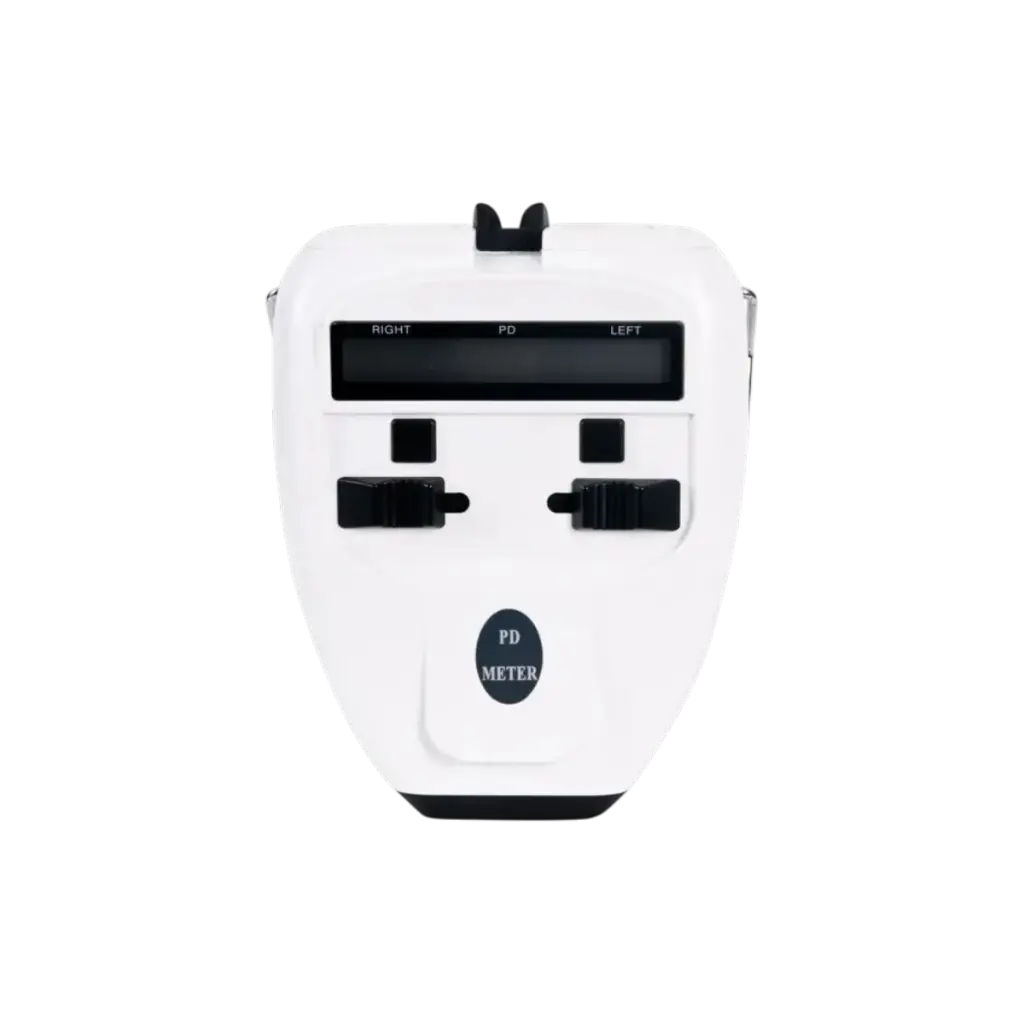
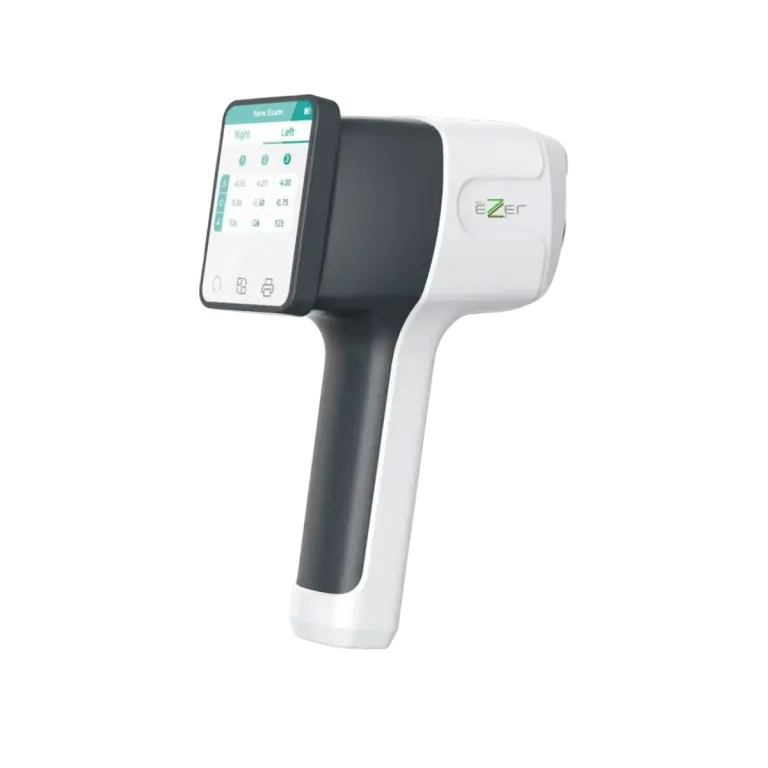
Our top pick for 2026 is the Ezer EPD-1800, a lightweight digital corneal-reflection PD meter that measures binocular PD from 45 to 82 mm and monocular PD from 22.5 to 41 mm, with an adjustable LED and a configurable auto-off. It is made by US Ophthalmic under its own Ezer brand and backed by an in-house US technical and spare-parts team, which is what most dispensaries actually need from an instrument they use dozens of times a day.
This guide covers optical and dispensing PD meters, the handheld instruments that measure pupillary distance for spectacle lens centration. It does not cover neurological or clinical pupillometers that measure pupil reactivity or size for neuro assessment. If your goal is accurate, repeatable PDs for single-vision, progressive and high-index orders, these are the tools to compare.
We ranked seven models: four we carry (two Ezer and two Luxvision) and three well-known alternatives from Nidek, Essilor and Good-Lite. Every spec below comes from the product or manufacturer page as published; where a figure was missing or inconsistent, we left it out rather than guess.
Shopping for pupillometers? US Ophthalmic is a direct provider of pupillometers to eye care practices across the US. Tell us how your lane is set up and we will come back with the configurations that fit, plus current availability and lead times.
How to choose a pupillometer (PD meter)
- Measurement range: Check the binocular and monocular PD range against your patient mix. Most digital units cover roughly mid-40s to low-80s mm binocular, which handles adults; pediatric-heavy practices should confirm the low end.
- Stated accuracy and readout resolution: Look for a published error figure (for example 0.5 mm) and the display increment. Finer increments help with progressive and high-power lenses, but only if the hairline and fixation make it easy to land on the corneal reflex.
- Viewing distance settings: A good PD meter lets you set or calculate PD for near, intermediate and distance (for example 30 or 35 cm to infinity). This matters for computer glasses, readers and occupational lenses.
- Monocular PD and vertex distance: Monocular PDs are essential for progressives and for faces that are not symmetrical. Some units also measure vertex distance, which is useful for higher prescriptions where back-vertex compensation matters.
- Illumination, fixation and ergonomics: An adjustable LED target, comfortable nose pad and a stable hold (forehead rest or ergonomic grip) reduce re-measures and patient fatigue, especially with less experienced staff.
- Power and battery behavior: Check battery type and the auto-off behavior. A unit that powers down quickly saves batteries, while a rechargeable option can lower running costs in a busy optical.
- Support, parts and service: A PD meter gets dropped, cleaned and handled constantly. Buy from a provider that can supply nose pads, parts and repairs quickly in the US.
#1 · EPD-1800 (Ezer)
Best overall: an accurate, lightweight digital PD meter with clear published specs and US provider support.
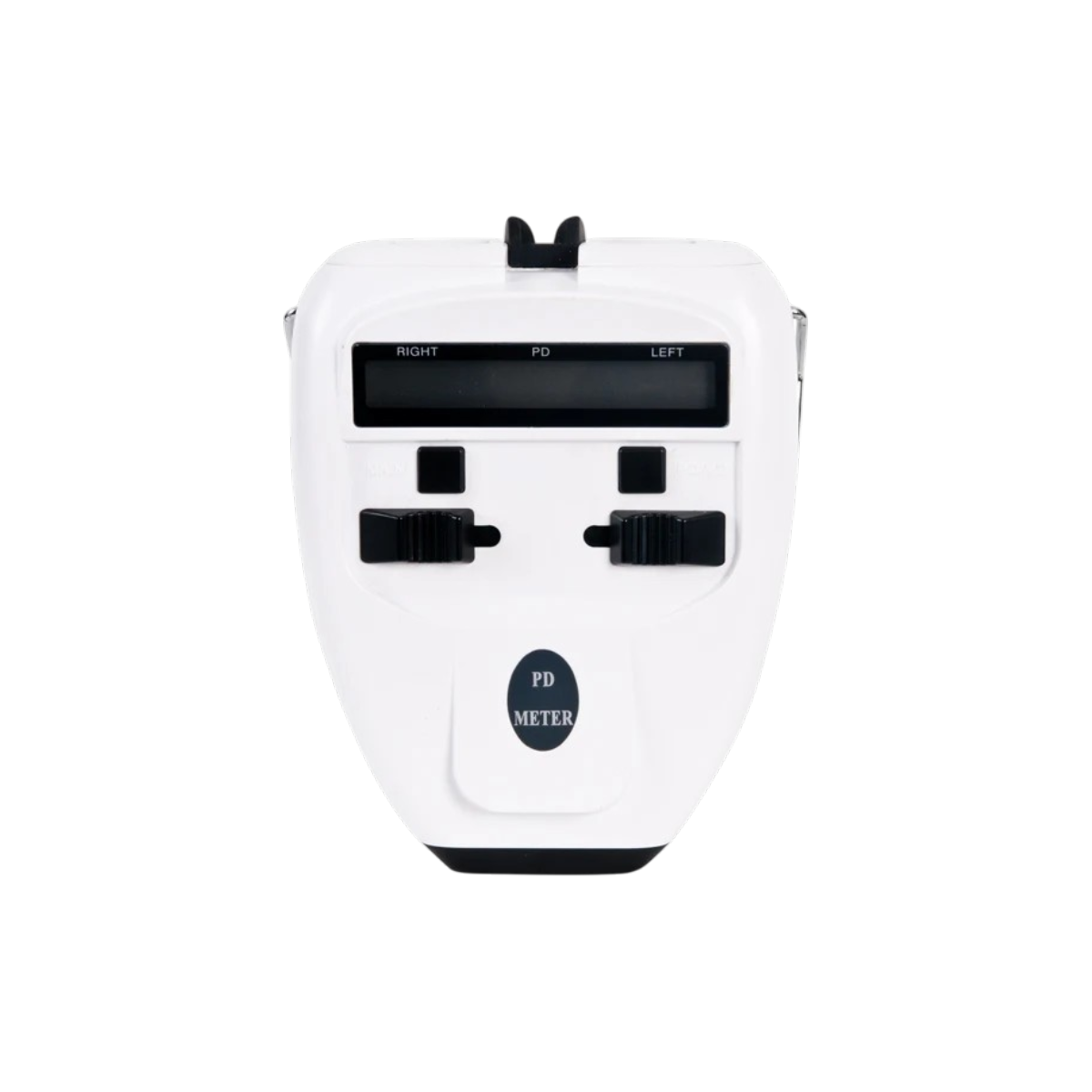
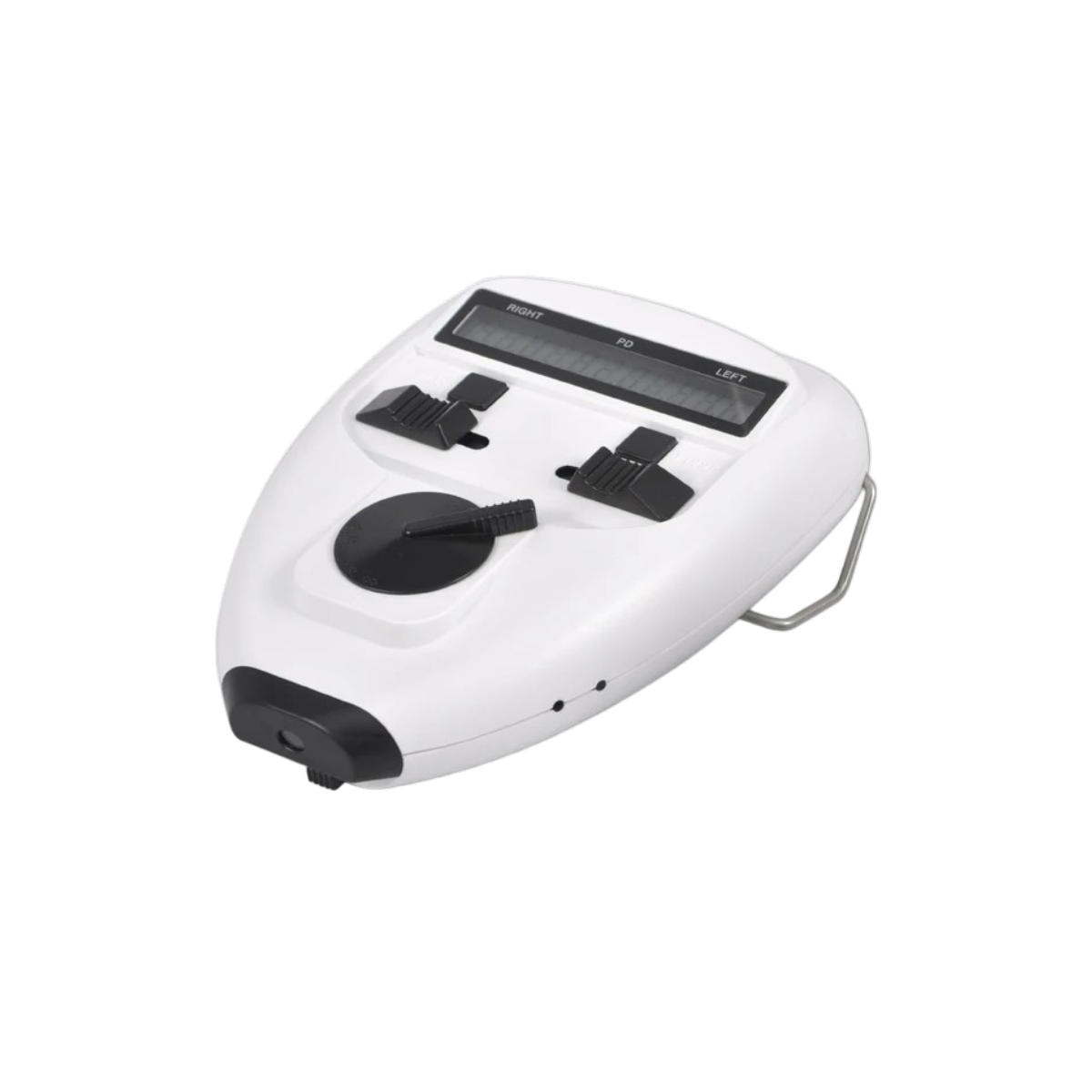
The Ezer EPD-1800 is a digital corneal-reflection pupillometer built for everyday dispensing. It measures binocular PD from 45 to 82 mm and left or right monocular PD from 22.5 to 41 mm, so staff can capture the monocular values progressive lenses need without a ruler, penlight or nasal-notch technique. The published indicated, asymmetric and rounding errors are each 0.5 mm or less, and the objective distance setting runs from 300 mm to infinity, which covers near, intermediate and distance orders. High-precision digital linear sensors drive the readout, and the LED can be adjusted to the operator's preferred brightness. It runs on a single battery, with auto power-off after about 30 seconds of inactivity (or manual shutdown), and the auto-off time can be set to extend battery life. At 0.53 kg (1.17 lb) and 221 x 167 x 62 mm, it is easy to hand around a busy optical. Because Ezer is US Ophthalmic's own house brand, parts and service come straight from the in-house technical and spare-parts departments, and new units ship with a US warranty.
Pros: Binocular 45–82 mm and monocular 22.5–41 mm range · Published 0.5 mm error figures · Objective distance 300 mm to infinity · Adjustable LED and configurable auto-off · Light at 0.53 kg · Ezer house brand with in-house US service and parts
Considerations: No vertex distance measurement (see EPD-2600) · Short default auto-off can surprise new users until it is adjusted
Best for: Most optical dispensaries and practices that want accurate monocular PDs with simple, reliable daily use.
#2 · EPD-2600 (Ezer)
Best for higher prescriptions: Ezer accuracy with added vertex distance measurement.
The Ezer EPD-2600 takes the same corneal-reflection approach as the EPD-1800 and adds vertex distance measurement, which is the main reason to choose it. For practices filling higher-power prescriptions, being able to check the distance from cornea to lens on the same instrument is a practical convenience. It measures binocular and monocular PD, and its published indicated, asymmetric and rounding errors are each 0.5 mm or less, with an objective distance setting from 300 mm to infinity. Like the EPD-1800, it uses high-precision digital linear sensors, an operator-adjustable LED and a settable auto-off timer; by default it powers down about 1 minute after use. It runs on one AA battery. It is slightly heavier at 0.68 kg (1.5 lb), with a 221 x 166 x 63 mm footprint. As an Ezer product, it is supported directly by US Ophthalmic's in-house technical and spare-parts departments and comes with a US warranty. If you rarely need vertex readings, the EPD-1800 is the simpler buy; if you do, the EPD-2600 saves reaching for a separate distometer.
Pros: Adds vertex distance measurement · Binocular and monocular PD · Published 0.5 mm error figures · Objective distance 300 mm to infinity · Adjustable LED, settable auto-off · Ezer house brand with in-house US service
Considerations: Heavier than the EPD-1800 (0.68 kg) · More capability than a basic single-vision optical needs
Best for: Practices dispensing higher prescriptions that want PD and vertex distance from one instrument.
#3 · PD Meter PM-700 (Nidek)
Strong alternative: fine hairline settings, a standard forehead arm and long battery life.
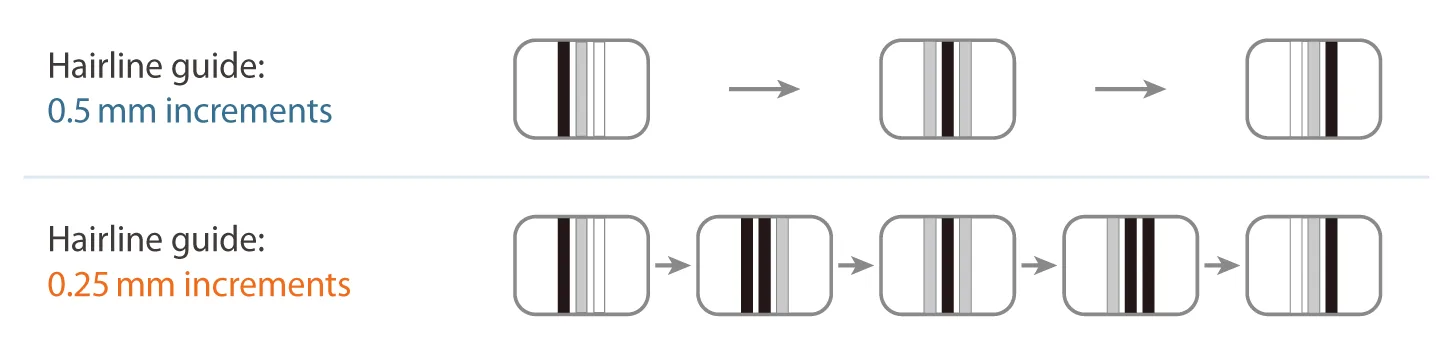
Nidek's PM-700 is a well-known PD meter and the successor to the PM-600. Nidek's product page highlights a hairline in 0.25 mm increments that makes it easier to match the corneal reflection point, switchable back to 0.5 mm steps like the earlier model. PD is calculated automatically for a viewing point distance from 30 cm to infinity with one measurement, displayed in 0.1 mm increments, or 0.5 mm increments if preferred. A forehead arm is fitted as standard to keep the body from moving during measurement, and the grip was redesigned for ergonomics, with the measurement-type switch centered and a hand strap included (a neck strap is optional). Nidek states running time is about three times longer than the PM-600 and that the unit supports rechargeable batteries. It is a capable, well-built instrument. Nidek's page we read did not list a PD range or vertex function, so compare those directly with Nidek before buying.
Pros: 0.25 mm hairline increments (0.5 mm selectable) · Auto PD calculation from 30 cm to infinity · 0.1 mm display increments · Forehead arm standard · Long battery life, rechargeable battery support
Considerations: PD range not listed on the product page we reviewed · No vertex distance mentioned · Service runs through Nidek's own sales and service channels
Best for: Opticals that want fine hairline control and a stabilized hold for very repeatable readings.
#4 · X81705 Pupillometer (Essilor)
Familiar manual-control option from a big lens brand, with a 0.5 mm digital readout.
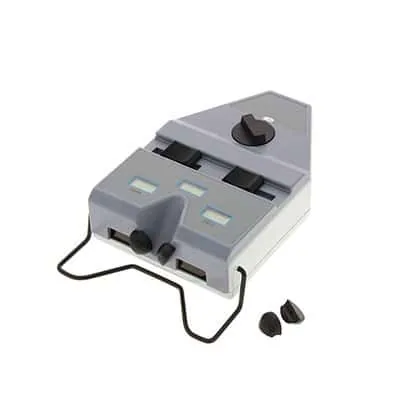
The Essilor Digital CRP was long a fixture in US dispensaries, but we could not find it on Essilor Instruments USA's current site; the pupillometer listed there today is the X81705, so that is the model we review. Essilor describes it as offering precision measurements with manual control. It has a digital readout with measurements to 0.5 mm, monocular and binocular measurement, a manual occluder, and manual adjustment of vision distance from 35 cm to infinity. It switches on and off automatically. Essilor lists its dimensions as 8.25 x 5.5 in, and notes the case is not included. The X81705 suits staff who like a hands-on, manual workflow and want the Essilor name on the counter. It does not publish a stated error tolerance or a measurement range on the pages we read, and it reads to 0.5 mm rather than finer steps. Practices already standardized on Essilor finishing or lens programs may find it convenient to keep instruments under one vendor.
Pros: Monocular and binocular PD · Manual occluder · Vision distance 35 cm to infinity · Automatic on/off · Widely known brand
Considerations: Readout to 0.5 mm only · No published range or error tolerance on the pages we read · Case sold separately
Best for: Opticians who prefer manual control and practices already invested in Essilor equipment.
#5 · Digital Pupilometer with Vertex Distance (170060) (Good-Lite)
A solid digital PD meter with vertex distance, sold by a long-standing US vision-testing supplier.
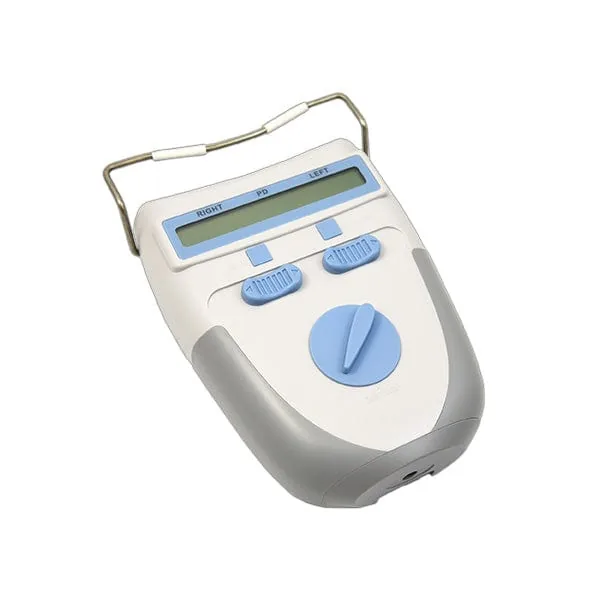
Good-Lite's Digital Pupilometer with Vertex Distance uses the corneal reflection light coincidence method: the operator aligns luminous points on the pupils with the measuring line, and results appear on a wide-angle LCD. It gives three readings (right, right plus left, and left), measuring binocular PD from 46 to 82 mm and monocular PD from 23 to 41 mm. It reads PD for infinity and calculates intermediate and near PD internally, from 30 cm to infinity. Good-Lite states results are accurate to within 0.5 mm. Like the Ezer EPD-2600, it can also measure the distance from the top of the cornea to the lens or frame, so vertex checks do not need a separate tool. It goes into automatic standby after 2 minutes of non-use and runs on 4 AA batteries, which are not included. It is a sensible choice for practices that already buy screening and testing supplies from Good-Lite. Compared with the Ezer EPD-2600, the feature set is similar; the main differences are battery count and who supports the instrument after the sale.
Pros: Binocular 46–82 mm, monocular 23–41 mm · Vertex distance measurement · Near and intermediate PD calculated, 30 cm to infinity · Accuracy within 0.5 mm · Wide-angle LCD
Considerations: Needs 4 AA batteries (not included) · Weight and dimensions not listed on the product page
Best for: Practices that want vertex distance and already source testing supplies from Good-Lite.
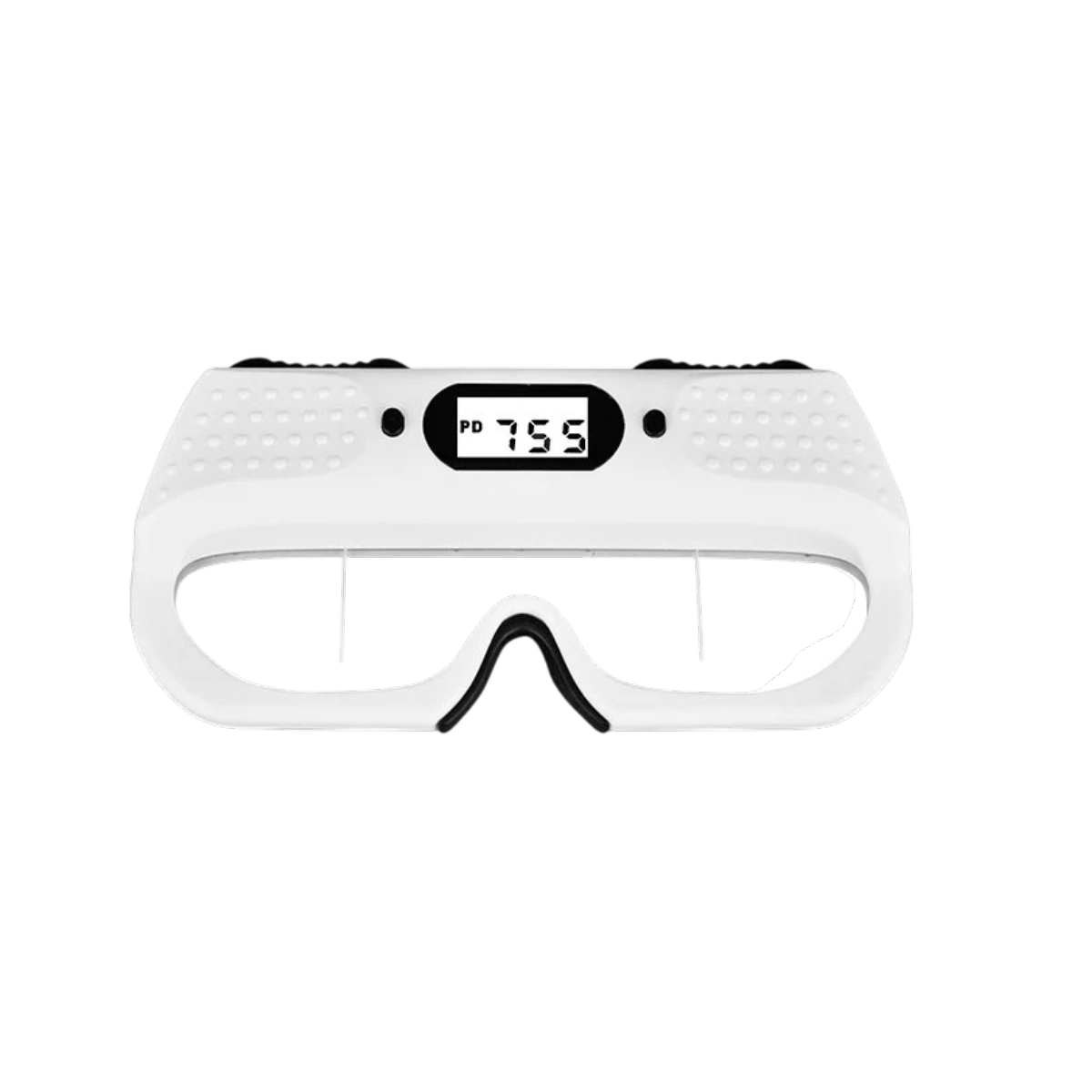
#6 · PM-100 (Luxvision)
Compact digital PD meter with a comfortable nose pad and automatic battery-saving shutoff.
The Luxvision PM-100 is a compact digital pupillometer for measuring the distance between the pupils during spectacle fitting. It integrates optical, mechanical, electrical and microcomputer technologies in one unit, and its digital readout replaces the time-consuming ruler-and-penlight routine. Patients appreciate the high-tech look, and the PM-100 adds a comfortable nose pad to improve the experience at the dispensing table. The unit shuts itself off automatically to preserve battery life. It runs on a 23A 12V battery, and its packaging measures 215 x 122 x 44 mm (8.46 x 4.8 x 1.73 in), which tells you it is a smaller, handheld unit than the Ezer models. The PM-100 page does not publish a PD range, error figure or viewing distance settings, so it is best viewed as a straightforward, entry-level digital PD meter rather than a precision-spec instrument. US Ophthalmic carries Luxvision and supports it through its in-house technical and spare-parts departments, with a US warranty on new units. If you need published accuracy figures or monocular range for progressive work, step up to the Ezer EPD-1800.
Pros: Compact digital design · Comfortable nose pad · Automatic shutoff saves battery · Supported by US Ophthalmic's in-house service
Considerations: No published PD range, accuracy or viewing distances · Uses a less common 23A 12V battery
Best for: Smaller opticals or satellite offices that want a simple digital PD meter.
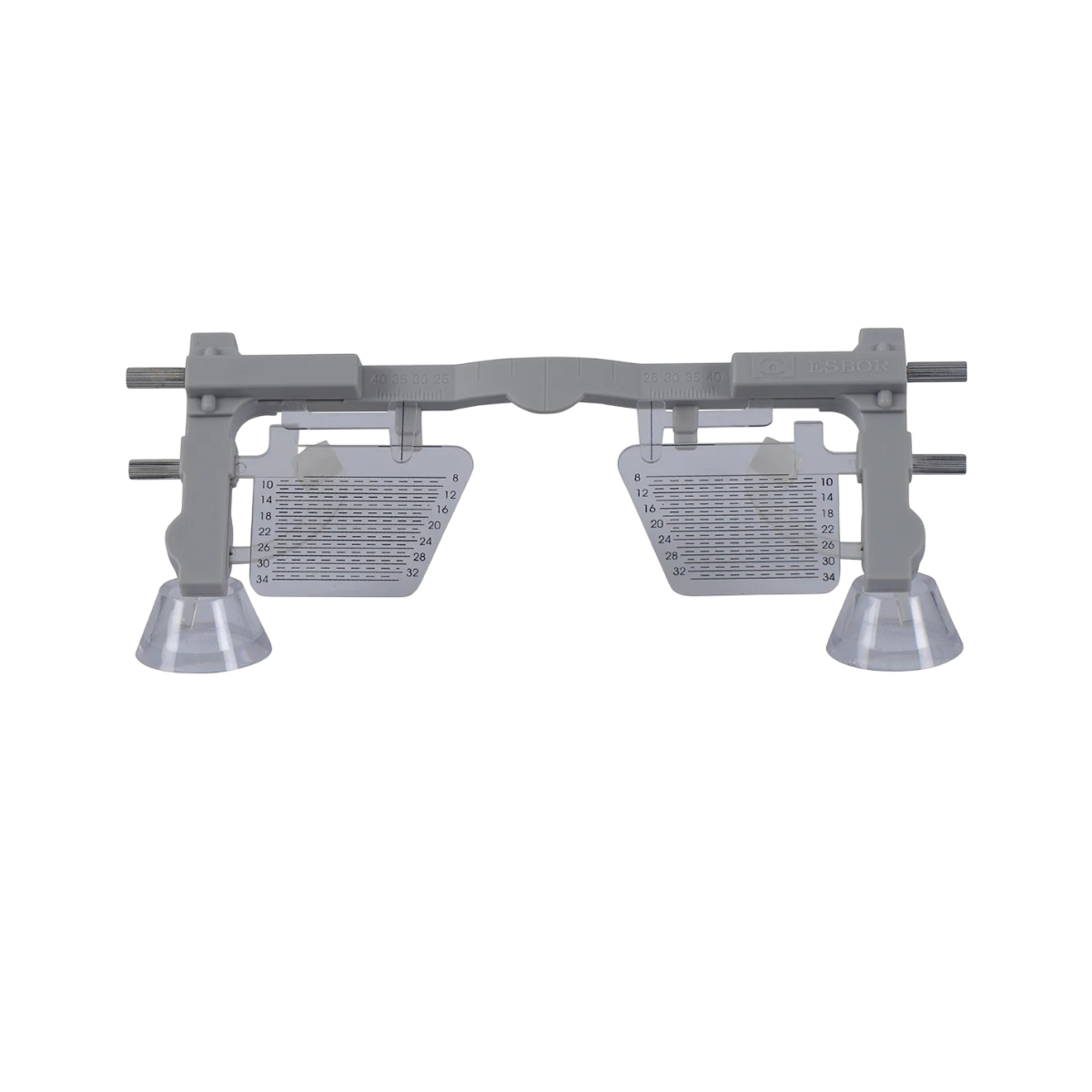
#7 · PM-120 (PD and PH meter) (Luxvision)
A simple two-knob tool for pupillary distance and pupillary height.
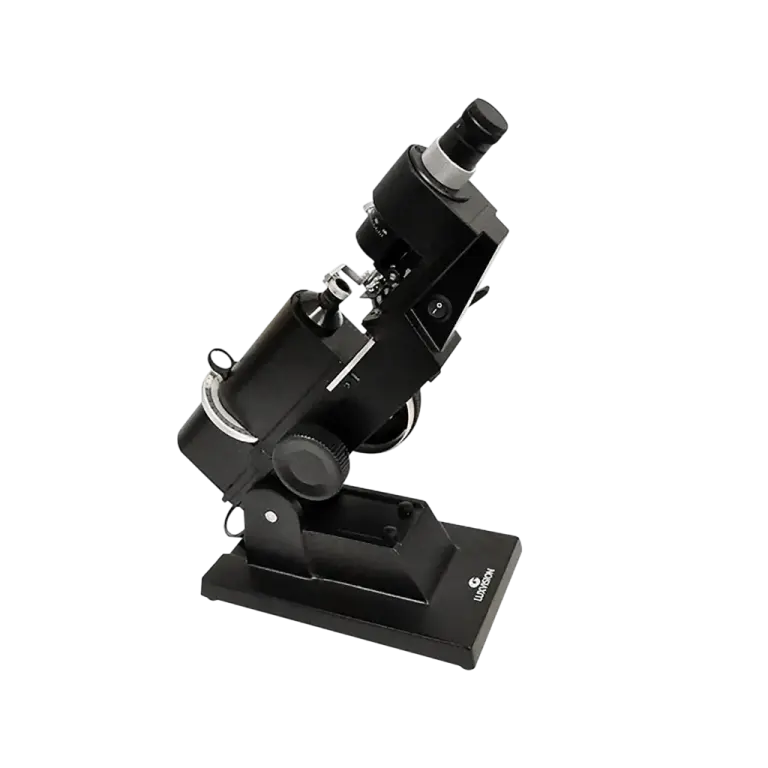
The Luxvision PM-120 is a different kind of instrument from the digital corneal-reflection units above. It is a PD and PH meter: the first knob adjusts PD (pupillary distance) and the second adjusts PH (pupillary height). Pupillary height is the vertical fitting value that matters for progressives, bifocals and other segment lenses, so this tool can be a practical complement to a PD meter in an optical that fits many multifocals. Its design is intuitive, with a dedicated control for each function. The published dimensions are 250 x 100 x 50 mm, and it weighs 2 lb. The page does not list a measurement range, accuracy figure or power source, so we do not rank it against the digital pupillometers on precision. Think of it as a convenient, purpose-built fitting aid rather than a replacement for a digital PD meter. As with all equipment US Ophthalmic carries, it is supported by the in-house technical and spare-parts departments, and new units include a US warranty.
Pros: Measures both PD and pupillary height · Simple two-knob operation · Useful for multifocal fitting
Considerations: No published range or accuracy figures · Not a digital corneal-reflection pupillometer · Bulkier than handheld digital units
Best for: Opticals fitting many progressives or bifocals that want a dedicated PD and fitting-height tool.
Feature comparison
| Rank | Model | Brand | Type | Binocular PD range | Monocular PD range | Stated accuracy / readout | Viewing distance | Vertex distance | Power | Weight |
|---|---|---|---|---|---|---|---|---|---|---|
| 1 | EPD-1800 | Ezer | Digital corneal reflection | 45–82 mm | 22.5–41 mm | ≤0.5 mm error | 300 mm to infinity | No | 1 battery; auto-off ~30 s (adjustable) | 0.53 kg (1.17 lb) |
| 2 | EPD-2600 | Ezer | Digital corneal reflection | — | — | ≤0.5 mm error | 300 mm to infinity | Yes | 1 AA battery; auto-off ~1 min (adjustable) | 0.68 kg (1.5 lb) |
| 3 | PD Meter PM-700 | Nidek | Digital corneal reflection | — | Yes (range not listed) | 0.1 mm display; 0.25 mm hairline | 30 cm to infinity | — | Rechargeable battery supported | — |
| 4 | X81705 Pupillometer | Essilor | Digital readout, manual control | — | Yes (range not listed) | Readout to 0.5 mm | 35 cm to infinity | — | Automatic on/off | — |
| 5 | Digital Pupilometer with Vertex Distance (170060) | Good-Lite | Digital corneal reflection | 46–82 mm | 23–41 mm | Within 0.5 mm | 30 cm to infinity | Yes | 4 AA; standby after 2 min | — |
| 6 | PM-100 | Luxvision | Digital | — | — | — | — | — | 23A 12V battery; auto shutoff | — |
| 7 | PM-120 | Luxvision | PD and pupillary height meter | — | — | — | — | — | — | 2 lb |
Why it’s our top pick
US Ophthalmic is a US equipment provider that manufactures its own Ezer line, so the EPD-1800 and EPD-2600 are supported by the same company that stands behind them. Our in-house technical department handles repairs and our spare-parts department stocks the small items a PD meter goes through, so you are not waiting on an overseas manufacturer or a third-party service chain. New equipment comes with a US warranty.
We also carry Luxvision instruments like the PM-100 and PM-120, which lets a practice pair a precision digital PD meter with a simpler backup or a pupillary-height tool from one provider. Pricing is quote-based: tell us how many lanes and dispensing stations you are equipping and we will put together options, including financing with simple terms.
Ready to spec your pupillometers?
Send us your requirements and our equipment specialists will come back with a configuration built around how your practice actually works — including availability and lead time. US Ophthalmic is a direct provider to eye care practices nationwide.
Frequently asked questions
What is the best pupillometer for an optical dispensary in 2026? For most dispensaries, we recommend the Ezer EPD-1800. It measures binocular PD from 45 to 82 mm and monocular PD from 22.5 to 41 mm, publishes error figures of 0.5 mm or less, and is light and easy for staff to use. If you also need vertex distance, look at the Ezer EPD-2600.
Is a PD meter the same as a pupillometer? In optical dispensing, yes: a PD meter (digital pupillometer) measures pupillary distance for lens centration. That is different from neurological or clinical pupillometers, which measure pupil size and reactivity. This guide covers only PD meters.
Is a digital pupillometer more accurate than a PD ruler? Measuring PD consistently with a millimeter ruler takes a refined technique, a nasal notch for monocular PDs and a penlight for the corneal reflex. A corneal-reflection pupillometer reduces that skill dependence and variability, which is why most opticals use one for progressive and high-power orders.
Do I need monocular PD or is binocular enough? Binocular PD can work for basic single-vision lenses, but monocular PD is the standard for progressives and for patients whose eyes are not equally spaced from the nose. All the digital units in this guide measure monocular PD.
When does vertex distance measurement matter? Vertex distance becomes important with higher-power prescriptions, where the distance from cornea to lens changes the effective power. The Ezer EPD-2600 and the Good-Lite 170060 can measure it; the EPD-1800 focuses on PD only.
What viewing distance should I set for near PD? Set the instrument to the patient's working distance. Units like the EPD-1800 and EPD-2600 cover 300 mm to infinity, so you can take a distance PD and a reading or computer PD from the same device.
How much does a pupillometer cost from US Ophthalmic? Pricing is quote-based and depends on the model and how many units you need. Request a quote on the product page or call (888) 881-1122, and ask about financing options.
The verdict
For most practices, the Ezer EPD-1800 is the pupillometer to buy in 2026: clear published range and accuracy, near-to-distance settings, an adjustable LED and US-based service and parts behind it. Choose the Ezer EPD-2600 if you want vertex distance on the same instrument.
Nidek's PM-700 is a strong alternative for opticians who value fine hairline control and a forehead arm, and Good-Lite's 170060 is a reasonable vertex-capable option. Essilor's X81705 suits teams that prefer manual control. For a simple backup, the Luxvision PM-100 is a compact digital choice, and the PM-120 is a handy add-on for fitting heights on multifocals.