












90D vs 78D vs 20D Lens: Choosing Ezer Lenses for the Slit Lamp and BIO
90D vs 78D vs 20D lens compared with Ezer specs: magnification, field of view, working distance, slit lamp vs BIO use, and a lens kit by practice type.
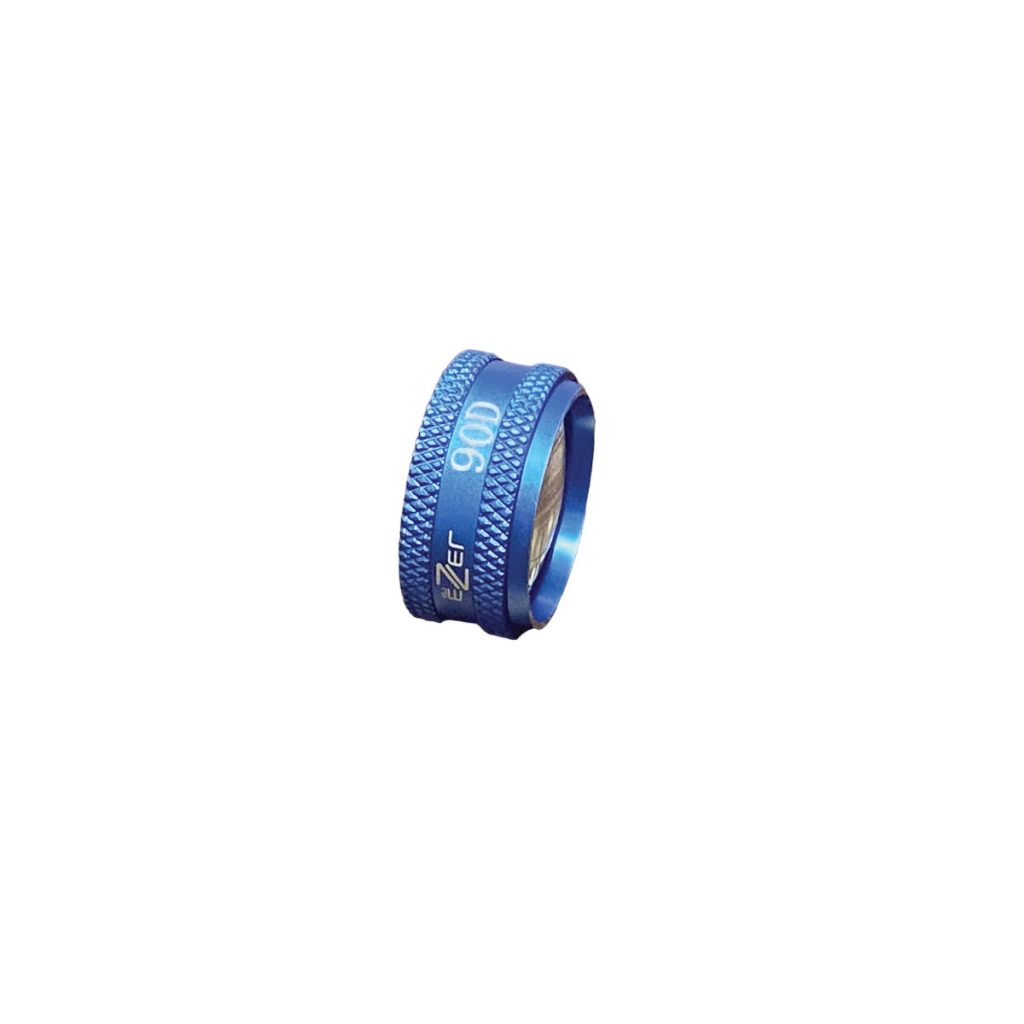
A 90D lens is the first thing most practices buy for fundus viewing at the slit lamp, and for good reason. But the 90D is one of three powers that keep coming up on equipment quotes, alongside the 78D for the slit lamp and the 20D for binocular indirect ophthalmoscopy (BIO). This guide compares the 90D vs 78D vs 20D lens using the published specs of our own Ezer line, explains why spec sheets from different makers rarely agree, and shows how to put together a lens kit that fits the way your practice actually works.
All four lenses we carry sit in one place: the Ezer lenses collection. The specs below come from each lens’s product page; the reference figures come from Volk, Ocular Instruments, EyeWiki and Community Eye Health, cited inline.
Shopping for Browse Ezer lenses? US Ophthalmic is a direct provider of Browse Ezer lenses to eye care practices across the US. Tell us how your lane is set up and we will come back with the configurations that fit, plus current availability and lead times.
The short answer: which lens does which job
- 90D (Ezer EDL-90D): the general-purpose slit lamp lens. Ezer describes it as “indispensable for fundus examinations at the slit lamp biomicroscope” and “exceptionally well-suited for examining patients with small pupils.”
- 78D (Ezer EDL-78D): the slit lamp lens to add when you want more image magnification. Ezer positions it for “Slit Lamp and Surgical Microscope” use and as “the perfect balance between magnification and field of view.”
- 20D (Ezer EDL-20D): the hand-held condensing lens for a head-worn BIO. Ezer’s page says it works “at the slit lamp or with a headband BIO.”
- Three-mirror (Ezer EDL-3M): a contact lens, not a condensing lens. It is the one to add if you need views of the anterior chamber angle and the peripheral fundus at the slit lamp.
If you only buy one lens for a single slit lamp lane, it is usually the 90D. If you run a BIO, the 20D is the other half of that instrument. Everything else depends on your caseload.
Ezer 90D, 78D and 20D specs side by side
These are the figures published on each Ezer product page. Use them to compare the three Ezer lenses with each other. Comparing them line by line against another maker’s sheet is less reliable, for reasons covered in the next section.
| Spec (Ezer product page) | EDL-90D | EDL-78D | EDL-20D |
|---|---|---|---|
| Used with | Slit lamp | Slit lamp, surgical microscope | Headband BIO, slit lamp |
| Image magnification | 0.65x | 0.93x | 2.11x |
| Field of view | 72° | 78° | 50° |
| Working distance | 0.4 in (10 mm) | 0.4 in (10 mm) | 1.85 in (47 mm) |
| Focal length | 0.5 in (12.5 mm) | 0.6 in (16.1 mm) | 2.04 in (52 mm) |
| Clear / free aperture | 0.7 in (18 mm) | 1.02 in (26 mm) | 1.9 in (48 mm) |
| Lens diameter | 0.8 in (21 mm) | 1.1 in (28 mm) | 1.96 in (50 mm) |
All three share the same construction story on their product pages: a computer-optimized aspheric design, high-transmittance glass and a small retention ring. Every Ezer page also describes the same viewing principle: the returning light passes back through the lens “to form a real, inverted image of the fundus between the lens and the examiner.”
The one rule that explains every spec sheet
Volk, the reference brand most clinicians trained on, puts the trade-off plainly in its BIO lens FAQ: “As a general rule of thumb, as the dioptric power of the lens increases, the field of view increases, magnification decreases and the working distance decreases.” EyeWiki states the same relationship for BIO lenses and adds that the magnification of a BIO lens “is crudely determined by 60/the power of lens.”
The Ezer numbers follow that rule for magnification and working distance. The 20D gives the most magnification (2.11x) and by far the longest working distance (47 mm), and the 90D gives the least magnification (0.65x).
Field of view is where buyers get tripped up. On the Ezer sheet the 78D lists a wider field (78°) than the 90D (72°). Volk’s own figures show the same pattern: 81° to 97° for its 78D and 74° to 89° for its 90D. The reason is that field of view depends on lens diameter and on how the maker measures it, not just dioptric power. Makers also measure it differently. Volk publishes two numbers per lens. Ocular Instruments labels its two numbers “Static” and “Dynamic” and lists 94° and 153° for its MaxField Standard 90D. Ezer publishes a single figure.
Buyer’s takeaway: compare field of view only within one maker’s sheet. If you are lining up an Ezer quote against another brand, ask how each field-of-view number was measured before you read a few degrees as a real difference.
90D vs 78D at the slit lamp
This is the comparison most practices are actually making, because both lenses do the same job at the same instrument.
Choose the 90D when…
- Pupils are often small or undilated. Ezer calls the EDL-90D “ideal for small pupils.” Volk says its 90D “can even get through small pupils.”
- You want easy handling in the orbit. The EDL-90D is the smaller lens: a 21 mm diameter against 28 mm for the EDL-78D. Ezer notes its “small-diameter ring that is ideal for dynamic funduscopy.”
- You are training new staff or residents. Volk describes its 90D as “an ideal training lens for new students and residents.” That is a reasonable reason to keep a 90D in every lane, whatever else you add.
Choose (or add) the 78D when…
- You want more image magnification. On the Ezer sheet, the EDL-78D magnifies 0.93x against 0.65x for the EDL-90D.
- Dilated posterior-pole viewing is routine. EyeWiki notes that 78D lenses “provide a good balance of magnification and field of view” and “better stereopsis than the 90D lenses,” but adds that “pupil dilation is typically required.”
- The lens will also go under a surgical microscope. Ezer lists that use for the EDL-78D, not for the EDL-90D.
A note on laser work
If a slit lamp lens will also be used with a laser delivery system, ask for its laser spot magnification factor. Volk publishes 1.32x for its 90D and 1.08x for its 78D. Its instructions say “the laser spot setting should be multiplied by the appropriate Laser Magnification Factor.” The Ezer product pages do not list this figure, so request it in writing with your quote.
Where the 20D fits: the other half of a BIO
A 20D lens belongs to a different workflow. You hold it in front of the patient’s eye while you wear a binocular indirect ophthalmoscope. EyeWiki calls the “+20D lens … the most commonly used lens for BIO in adults,” and Community Eye Health calls it “the standard lens for general examination,” with about 3x magnification and a field of view of roughly 45°.
The Ezer EDL-20D lists 2.11x magnification, a 50° field and a 47 mm working distance. That is close to EyeWiki’s guidance to hold the lens “approximately 2 inches from the patient’s eye.” Ezer also rates the EDL-20D for slit lamp use, but most practices buy it as the condensing lens for their BIO.
Higher-power BIO lenses trade magnification for field. EyeWiki notes that for patients with small pupils “a more high-powered lens is preferred,” and Volk lists its 28D at 2.27x and 33 mm against 3.13x and 50 mm for its 20D. We do not list a 28D in the Ezer range today. If you are choosing the headset itself, our guide to binocular indirect ophthalmoscopes covers which lens powers to keep in the drawer and the 20D vs 28D question.
The three-mirror lens: a different tool for a different view
The EDL-3M is a three-mirror contact lens. According to its product page, it lets you view “the central and peripheral fundus, along with the anterior chamber angle.” Its central portion “provides direct observation of the central part of the posterior pole,” and its mirror layout gives “a better view of all quadrants of the anterior chamber angle, with significantly less lens rotation” than a single-mirror lens.
Mirror angles differ by maker. EyeWiki lists 60°, 66° and 76° for the common Goldmann-type design. Ocular Instruments lists 59°, 67° and 73° for its Three Mirror Universal. The Ezer page does not publish its angles, so ask if your workflow depends on a specific mirror.
Because it touches the eye, a contact lens needs a different cleaning and disinfection routine from the non-contact lenses above. Build that into your protocol before the lens arrives.
Building a lens kit by practice type
| Practice setup | Starting kit | Why |
|---|---|---|
| Primary-care optometry, one or two slit lamp lanes, no BIO | EDL-90D per slit lamp | Handles small or undilated pupils and is easy for every team member to learn. |
| Optometry practice running dilated exams with a BIO | EDL-90D per slit lamp + EDL-20D per BIO | Covers both workflows: slit lamp viewing plus the condensing lens the BIO needs. |
| Practice with a heavy dilated posterior-pole caseload | Add EDL-78D to the 90D | More magnification and better stereopsis when the pupil is dilated. |
| Ophthalmology practice that needs angle and peripheral views at the slit lamp | Add EDL-3M | A three-mirror view without repeatedly rotating a single-mirror lens. |
| Multi-lane practice or teaching clinic | One lens per lane, plus a spare 90D | Lenses get dropped, scratched and borrowed. A spare keeps lanes running. |
If you are also equipping the slit lamp itself, start with our slit lamps and our step-by-step guide on how to use a slit lamp. That guide is a good onboarding document to hand new staff alongside a new 90D.
Care, cleaning and cost of ownership
A condensing lens has no moving parts, so its working life depends mostly on how it is cleaned and stored. Follow the instructions supplied with your Ezer lens. For reference, here is how Volk tells users to handle non-contact lenses:
- Clean gently. Volk’s FAQ: “You can clean non-contact lenses with lukewarm or distilled water and gentle soap. Dry with a lint-free cotton cloth, moving in a clockwise direction to avoid loosening the lens ring. Avoid high water pressure and microfiber cloths.”
- Never heat-sterilize. Volk’s instructions for use: “NEVER AUTOCLAVE OR BOIL LENSES OR ADAPTERS,” and “Do not sterilize lenses within standard lens cases.”
- Store it cased. Volk says devices “should be stored at room temperature.” Community Eye Health advises keeping BIO equipment “in its case when not in use.”
- Expect more cleaning on short-working-distance lenses. EyeWiki notes that shorter working distance lenses need “more frequent cleaning due to build up of oils from proximity to patient eyelashes.” This applies to slit lamp lenses more than to a 20D held about 2 inches away.
In practice, the cost of ownership comes down to replacing scratched or dropped lenses. That is why a spare 90D and a case at every station cost less than a lane sitting idle.
New, open-box or refurbished?
US Ophthalmic sells new equipment and does not sell refurbished or used lenses. If budget is the constraint, ask our team whether an open-box unit is available. We also offer financing on larger equipment orders. Because we build the Ezer line ourselves, we can quote the full kit (slit lamp lens, BIO lens, three-mirror lens and the instruments they pair with) on a single quote, backed by our in-house tech and service team.
REQUEST QUOTE for the Ezer lenses you need, or browse the full Ezer lens range.
Ready to spec your Browse Ezer lenses?
Send us your requirements and our equipment specialists will come back with a configuration built around how your practice actually works — including availability and lead time. US Ophthalmic is a direct provider to eye care practices nationwide.
Frequently asked questions
Which is better, a 78D or a 90D lens?
Neither is better overall. They suit different exams. On the Ezer sheet the 90D is the smaller lens (21 mm) with 0.65x magnification and suits small or undilated pupils. The 78D magnifies more (0.93x), and EyeWiki notes it gives better stereopsis but typically needs a dilated pupil. Many practices keep a 90D in every lane and add a 78D where dilated posterior-pole viewing is routine.
Can a 20D lens be used at the slit lamp?
Ezer rates the EDL-20D for use “at the slit lamp or with a headband BIO.” Most practices buy it as the condensing lens for a binocular indirect ophthalmoscope, where EyeWiki calls it the most commonly used BIO lens for adults.
What lens do I need for a binocular indirect ophthalmoscope?
The 20D is the standard starting lens for a BIO. Higher powers such as the 28D trade some magnification for a wider field and a shorter working distance. EyeWiki notes they are preferred for small pupils.
Why do 90D lens spec sheets list different field-of-view numbers?
Makers measure field of view differently. Volk publishes two figures per lens, Ocular Instruments labels its figures static and dynamic, and Ezer publishes one figure. Compare field of view within one maker’s sheet, and ask how each number was measured before comparing across brands.
How do I clean a 90D lens?
Follow the instructions supplied with your lens. As a reference, Volk recommends lukewarm or distilled water with gentle soap and drying with a lint-free cotton cloth in a clockwise direction. It warns never to autoclave or boil lenses.
Should I buy a refurbished 90D lens?
US Ophthalmic sells new lenses and does not sell refurbished or used equipment. If budget matters, ask our team about open-box availability and financing when you request a quote.
Sources
- US Ophthalmic product pages: Ezer EDL-90D, EDL-78D, EDL-20D, EDL-3M (specifications and descriptions).
- Volk Optical: Non-Contact 90D and 78D product pages; BIO lenses collection page and FAQ; Instructions for Use IM-007 (Non-Contact Slit Lamp Lenses) and IM-009 (Non-Contact BIO Lenses).
- Ocular Instruments: MaxField Standard 90D, MaxField High Mag 78D, Three Mirror Universal 18mm product pages.
- EyeWiki: “Binocular Indirect Ophthalmoscopy” and “Ophthalmic Exam Lenses.”
- Community Eye Health Journal: “Understanding and caring for an indirect ophthalmoscope” (PMC5340107).