















Pinhole Occluders and Hand Occluders: How to Choose Exam-Lane Occluders
How to choose a pinhole occluder: single vs multi-pinhole, solid paddles, frosted, double-ended, clip-on and trial-frame styles, plus a lane checklist.
A pinhole occluder is one of the cheapest tools in the refraction lane and one of the most used. Every acuity check, every monocular subjective and every pinhole check runs through an occluder of some kind, so the style you buy decides how quickly a technician can cover an eye, flip to a pinhole and move on. This guide sorts the styles on the market — solid paddles, single-pinhole and multi-pinhole occluders, frosted occluders, combination double-ended paddles, clip-ons and trial-frame discs — and gives you a checklist for equipping each lane.
It is written for the people who stock the exam lane: ODs, practice owners, technicians, school and outreach screening programs, and clinic buyers. It covers equipment choice and workflow, not clinical interpretation.
Shopping for Browse diagnostic aids? US Ophthalmic is a direct provider of Browse diagnostic aids to eye care practices across the US. Tell us how your lane is set up and we will come back with the configurations that fit, plus current availability and lead times.
The short answer
- Every lane needs a solid hand occluder for covering one eye during acuity testing — that is the workhorse.
- Every lane also needs a pinhole, either as a separate handheld pinhole occluder, as the second end of a double-ended paddle, or as a disc in the trial lens tray. The phoropter’s auxiliary dial has one too, but it only works with the refractor head in front of the patient.
- Add a frosted (translucent) occluder if you see children or patients for whom full occlusion is a problem, and a trial-frame occluder disc for every trial-frame refraction.
- Buy more than one of each. Occluders go from patient to patient all day; a spare set lets one be cleaned while the other is in use.
What an occluder and a pinhole occluder actually do
A plain occluder simply blocks one eye so the other can be tested on its own. A pinhole occluder is different: it is, in the standard definition, “an opaque disk with one or more small holes through it, used by ophthalmologists, orthoptists and optometrists to test visual acuity” (Wikipedia, Pinhole occluder). Because only a narrow beam of light gets through, the effect of refractive error is temporarily taken out of the picture. The same reference explains the practical use: it can separate reduced acuity caused by refractive error, which improves through the pinhole, from other causes, which do not.
The optics are the same as pinhole glasses: each perforation “allows only a very narrow beam of light to enter the eye which reduces the size of the circle of confusion on the retina and increases depth of field” (Wikipedia, Pinhole glasses). The same source notes the trade-off — pinholes also cut brightness and peripheral view — which is why the room lighting and chart illumination matter when you take a pinhole reading.
The result is recorded in a standard shorthand. In acuity notation, “PH” is followed by the acuity measured with a pinhole occluder, and “PHNI” means no improvement with the pinhole (Wikipedia, Visual acuity). Whatever style you buy, make sure your technicians record which eye, which chart and whether the pinhole was single or multiple, so the next examiner can repeat the test the same way.
The occluder styles, side by side
Good-Lite’s clinical guide to trial frames and occluders names four main occluder types — opaque, translucent (frosted), pinhole and the fogging lens — and its catalogue shows how each is packaged. The table below sorts the hand-held and frame-mounted formats you will be choosing between.
| Style | What it is | Where it fits |
|---|---|---|
| Solid hand occluder (paddle) | An opaque round paddle on a handle. Blocks all vision in the covered eye. | Every acuity lane; the default for monocular testing and cover tests. |
| Single-pinhole occluder | An opaque paddle or disc with one small central hole. Good-Lite lists a 1 mm pinhole on its trial-lens occluder. | Lanes where the patient can hold steady fixation through one aperture. |
| Multi-pinhole occluder | The same idea with a pattern of holes. Good-Lite sells single, 17-pinhole and 49-pinhole configurations of the same handle. | Screening, children and anyone who struggles to line up with a single hole. |
| Frosted (translucent) occluder | Blurs the covered eye instead of blacking it out, and lets the examiner see the eye behind it. | Pediatric and special-needs lanes; the specific cases where full occlusion is a problem (see below). |
| Combination double-ended | Two working ends on one handle — solid + pinhole, or Maddox + pinhole. | Busy lanes where one tool in the hand beats two on the counter. |
| Clip-on / spectacle occluders | Clips onto the patient’s own frame, or a lorgnette or pinhole glasses worn like spectacles. | Hands-free testing, screening lines, testing over the patient’s glasses. |
| Trial-frame occluder disc | An opaque, pinhole or frosted disc sized for a trial-frame cell. | Every trial-frame refraction and over-refraction. |
How to choose a pinhole occluder
1. Single hole or many
Both do the same optical job. A single pinhole asks the patient to find and hold one small aperture; a multi-pinhole occluder gives several holes in a pattern, so the eye does not have to land on one exact point. That is why multi-pinhole versions are common in screening kits and pediatric lanes, and why many practices keep one of each. Good-Lite sells its double-ended, short-handle and long-handle occluders in single, 17-pinhole and 49-pinhole versions, so you can standardise on one handle and choose the hole pattern per lane.
2. Hand-held, double-ended or in the trial tray
A separate pinhole paddle is the most flexible: it works at distance, at near, over the patient’s own glasses and over a trial frame. A double-ended paddle (solid on one end, pinhole on the other) means the technician never puts the occluder down to pick up a pinhole. A trial-lens pinhole disc sits in a trial-frame cell — useful, but only when a frame is on. Good-Lite’s trial-frame guidance describes a usable frame as having “a minimum of three cells: one for a spherical lens, one for a cylindrical lens, and one for accessories such as an occluder, pinhole, or filter.”
3. Handle length and grip
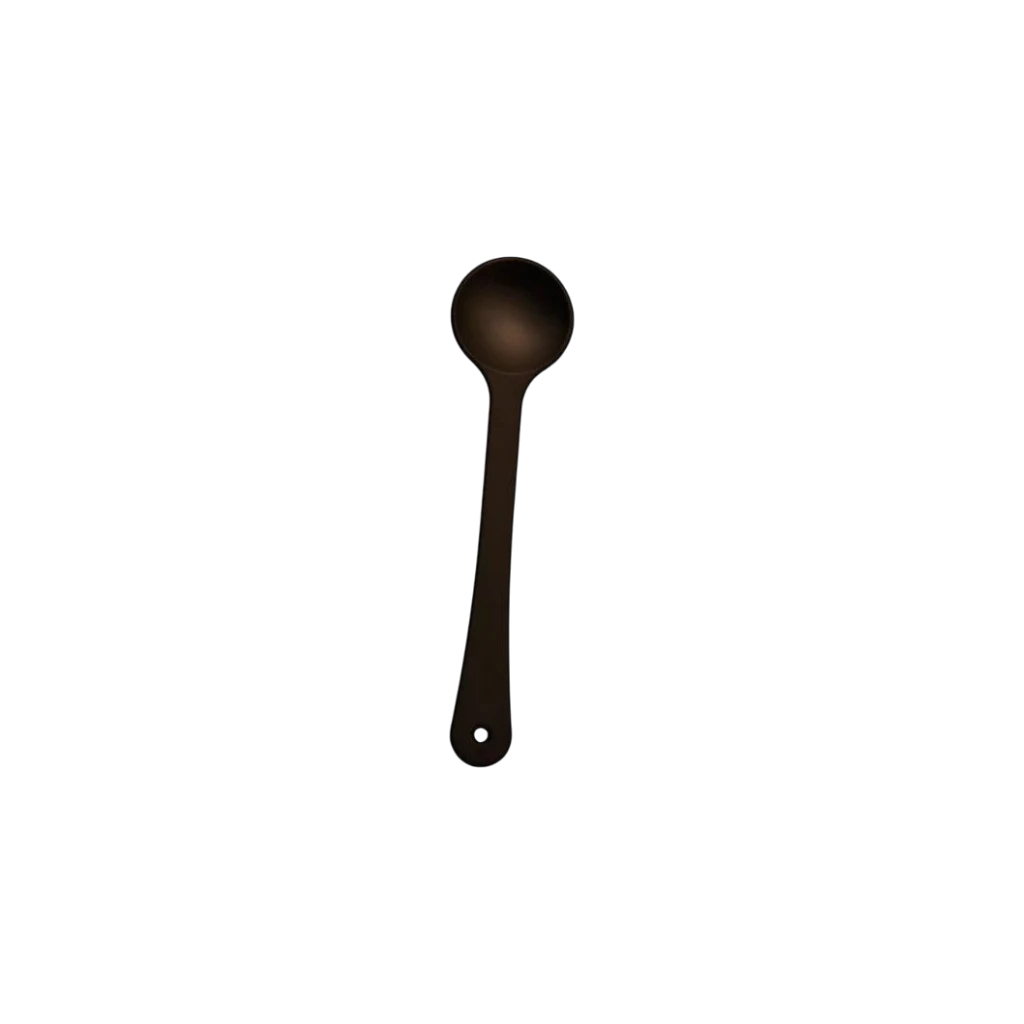
Handle length is a real ergonomic choice, not a detail. Published examples run from short handles to Good-Lite’s long-handle pinhole occluder with an 8.75” (22 cm) handle and its Maddox + pinhole combination at 9.5” (24 cm). The black hand occluder in our catalogue, the CT4712A, lists a 63 mm paddle diameter and 245 mm overall length. A longer handle keeps the examiner’s hand out of the patient’s face and lets a parent or patient hold it; a short handle packs into a screening case.
4. Paddle size and opacity
The paddle has to cover the eye fully without the patient peeking round it. Check the stated diameter against your patient mix (adult lanes versus small faces) and look at the material: a solid occluder should be genuinely opaque, and a frosted one should blur, not block.
5. Cleaning between patients
An occluder touches or comes close to a new face every few minutes. Prefer smooth, sealed plastic surfaces without textured grips that trap residue, check that the manufacturer lists a cleaning method compatible with the products your practice already uses, and buy enough units to rotate. Several of the Good-Lite listings call their occluders “easy to clean” — ask for the same assurance in writing for anything you buy, and follow the manufacturer’s cleaning instructions and your own infection-control policy.
6. Colour and labelling
Black is standard for solid occluders because it blocks light cleanly. Combination tools often come in colours — Good-Lite’s Maddox + pinhole combination is offered in red or green — which makes it easier to grab the right end. If your lanes share tools, a consistent colour per tool type saves time.
When the frosted occluder earns its place
The translucent occluder is the one practices most often forget to buy. Good-Lite’s guide describes it as blurring “the fellow eye without fully occluding it” and calls it essential for patients with latent nystagmus, where an opaque occluder can make accurate measurement impossible. Its “See the Eye” frosted occluder (2.38” × 8.75”) is designed so the examiner can watch the eye movement behind it. If your practice sees children, low-vision or special-needs patients, put one in the lane; the clinical decision about when to use it stays with the examiner.
Pinhole occluder vs the phoropter’s pinhole
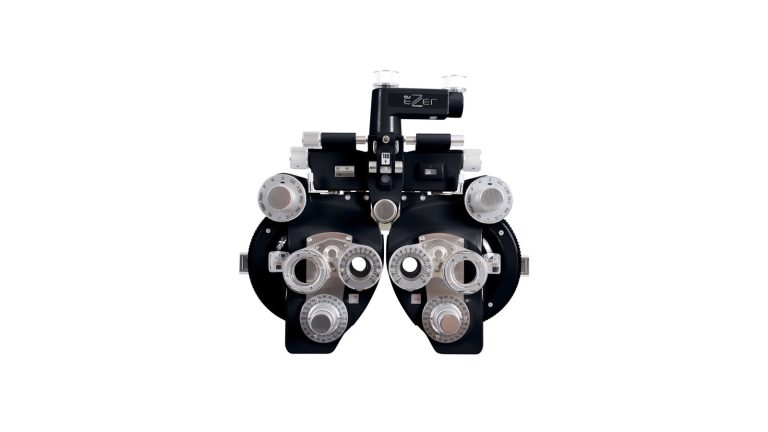
Most refractor heads carry an occluder (OC) and a pinhole (PH) on the auxiliary lens dial, and our phoropter how-to guide walks through that dial. The built-in versions are convenient, but they only exist while the patient is behind the refractor. Entering acuities, pre-tests, testing at a separate chart, checking over the patient’s own glasses, screening events and trial-frame work all need hand-held tools. A lane with a phoropter still needs a hand occluder and a pinhole occluder.
The cross cylinder that belongs next to them
The hand-held Jackson cross cylinder lives in the same drawer and is used in the same trial-frame and free-space workflow when the refractor head is out of the picture. Our Cross Cylinder Test is listed in several powers — check the product page for the options and confirm the power you need when you ask for a quote. For handling and powers inside the phoropter, see the JCC step in the phoropter guide.
Equipping a lane: a practical checklist
- General optometry lane: two solid hand occluders (one in use, one being cleaned), one pinhole or double-ended solid/pinhole occluder, and the pinhole and occluder discs in the trial lens tray.
- Pediatric or binocular-vision lane: add a multi-pinhole occluder, a frosted occluder, and a longer handle a parent can hold. Pair them with the prism tools in our prism bar vs loose prism set guide.
- Screening and outreach kits: multi-pinhole and clip-on or spectacle-style occluders that work hands-free, in quantity, in a case that keeps clean and used tools apart.
- Trial-frame refraction station: occluder and pinhole discs sized for your frame’s cells — our trial lens set and trial frame guide lists what to confirm in the accessory tray.
The occluders we supply
US Ophthalmic stocks exam-lane accessories alongside the refraction equipment we build and service, so the small tools arrive with the rest of the lane. In our exam-lane accessories collection you will find:
- Luxvision Occluder CPA-102 — a hand occluder placed in front of one eye to cover it while the other eye is examined.
- Black Hand Occluder CT4712A — a black paddle occluder; listed at 63 mm diameter and 245 mm length.
- Cross Cylinder Test — the hand-held cross cylinder for trial-frame work.
Need pinhole, multi-pinhole or frosted occluders as part of a lane order, or quantities for a screening program? REQUEST QUOTE and tell us how many lanes you are equipping; we will confirm what is available and bundle it with the rest of your refraction equipment.
What to check when the box arrives
- The paddle is fully opaque (hold it up to a light) and the frosted occluder blurs evenly.
- Pinholes are clean-edged and clear of molding flash; on multi-pinhole versions, every hole is open.
- Handles are straight, with no sharp seams where they meet the paddle.
- Trial-frame discs drop into your frame’s cells and sit flat.
- Count and label: one set per lane plus spares for rotation.
Ready to spec your Browse diagnostic aids?
Send us your requirements and our equipment specialists will come back with a configuration built around how your practice actually works — including availability and lead time. US Ophthalmic is a direct provider to eye care practices nationwide.
Frequently asked questions
What is a pinhole occluder used for?
It is an opaque disc or paddle with one or more small holes. Looking through it temporarily removes the effect of refractive error, so an examiner can see whether reduced acuity improves through the pinhole. The result is recorded as PH (or PHNI when there is no improvement).
Should I buy a single-pinhole or a multi-pinhole occluder?
Many practices keep both. A single pinhole is the classic format; a multi-pinhole occluder (17 or 49 holes are common configurations) does not require the eye to line up with one exact aperture, which helps in screenings and with children.
What is the difference between a hand occluder and a pinhole occluder?
A solid hand occluder blocks one eye completely so the other can be tested. A pinhole occluder lets light through one or more small holes. Double-ended paddles combine both on one handle.
Do I need a frosted occluder?
If you see children, low-vision or special-needs patients, yes. Good-Lite’s guidance describes the translucent occluder as blurring the covered eye without fully occluding it, and as essential for patients with latent nystagmus.
Can the phoropter’s pinhole replace a hand-held pinhole occluder?
Not fully. The auxiliary dial’s pinhole and occluder only work while the patient is behind the refractor head. Entering acuities, trial-frame work, testing over glasses and screenings still need hand-held occluders.
How should occluders be cleaned between patients?
Follow the manufacturer’s cleaning instructions and your practice’s infection-control policy, choose smooth surfaces that are easy to wipe, and keep enough units to rotate so a cleaned occluder is always ready.