














Best Surgical Loupes in 2026
Our top surgical loupe for 2026 is the Neitz NTZ-BLS-3 (2.5X-3.0X). Compare Galilean and prismatic loupes from Neitz, Zeiss, Heine, SurgiTel and DFV.
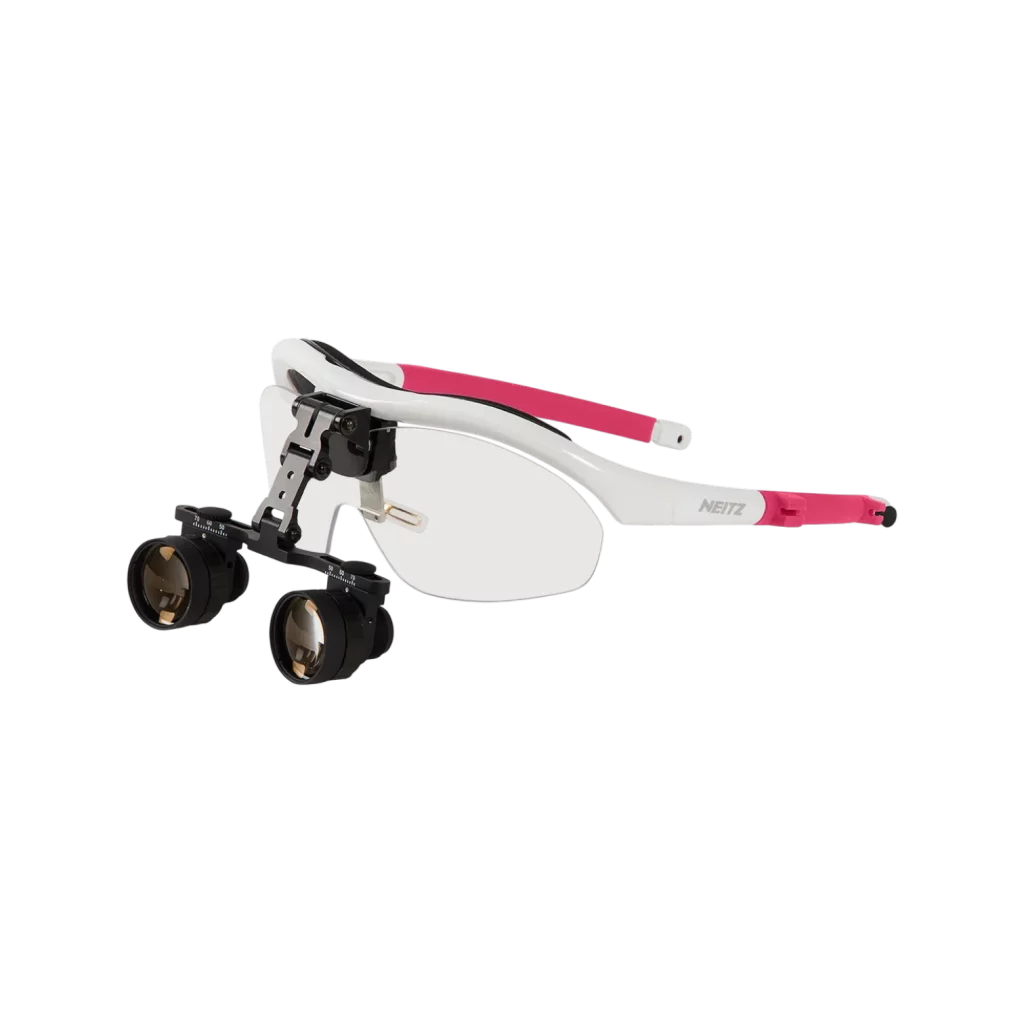
Our top pick for most ophthalmic and oculoplastic work in 2026 is the Neitz NTZ-BLS-3, a Galilean loupe made in Japan that covers 2.5X to 3.0X magnification with a 350 to 550 mm working range and a 78 to 38 mm field of view. It sits in the magnification band many eye surgeons and clinicians use for lid, adnexal and general anterior-segment work, it fits a 71 g NEO frame or a headband, and it is supported in the US by US Ophthalmic's in-house technical and spare-parts departments.
Choosing a loupe comes down to a few trade-offs: higher magnification narrows the field of view and depth of field, Galilean optics are lighter and simpler while prismatic (Kepler) optics reach higher power, and the working distance has to match your posture at the table or slit lamp. This guide compares three Neitz BL-series loupes we carry with four well-known alternatives from Zeiss, Heine, SurgiTel and Designs for Vision, using only specifications published by each manufacturer.
Every spec below was checked against the manufacturer's own page. Where a figure was not published, we left it out rather than guess. Pricing for all models is quote-based, so contact the supplier for current configurations.
Shopping for binocularloupes? US Ophthalmic is a direct provider of binocularloupes to eye care practices across the US. Tell us how your lane is set up and we will come back with the configurations that fit, plus current availability and lead times.
How to choose surgical loupes for eye care
- Magnification for the task: Roughly 2.0X to 3.0X suits general surgical and examination use with a wide view; 3.5X and above is for fine detail work. Higher power always shrinks the field of view and depth of field, so buy the lowest magnification that shows what you need.
- Optical design: Galilean vs prismatic: Galilean loupes are compact and light and typically top out around 3.0X. Prismatic (Kepler) loupes use a prism path to reach higher magnification with a sharper, flatter image, but they are longer and heavier on the face.
- Working distance and posture: The working distance should match the eye-to-tissue distance in your natural upright posture, seated or standing. An adjustable focus range, like the 350 to 550 mm range on the Neitz BL series, gives room for different tables and patient heights.
- Field of view and depth of field: A wider field makes it easier to keep instruments and anatomy in view; depth of field determines how much you can move before the image goes soft. Compare these at the working distance you will actually use.
- Mounting: flip-up, TTL, frame or headband: Flip-up loupes adjust and lift out of the line of sight; through-the-lens (TTL) loupes are custom-built into the lens. Headband mounts take weight off the nose and suit long cases or users who prefer not to wear a frame.
- Adjustability and prescription compatibility: Look for independent left/right adjustment, interpupillary distance alignment and a declination (tilt-down) angle. If you wear glasses, confirm whether the system works over your own frames or needs prescription inserts.
- Accessories, service and support: Check whether a headlight or camera can be added later and who services the loupe in the US. Spare parts and local technical support matter more than a minor spec difference over years of daily use.

#1 · Neitz NTZ-BLS-3 (2.5X-3.0X) (Neitz)
Best overall surgical loupe for eye-care clinicians: versatile Galilean magnification, light frame and Japanese optics.
The NTZ-BLS-3 is the highest-magnification Galilean loupe in Neitz's BL series, offering 2.5X to 3.0X with an adjustable working range of 350 to 550 mm (13.78 to 21.65 in) and a field of view of 78 to 38 mm. Neitz lists ophthalmology, plastic surgery, orthopedics and cardiovascular surgery among its uses, which makes it a sensible single loupe for an oculoplastic or comprehensive ophthalmology practice.
The optics are made in Japan, and each lens can be adjusted independently for the user's facial structure and interpupillary distance. The lenses tilt downward so you can work with a straighter back and neck. You can order it on the NEO frame, which weighs 71 g and spreads load across the forehead, nose and strap, in four color combinations, or on a headband for a more secure fit during long cases. The modular design is built to work with personal eyeglass frames or safety glasses.
A front light is sold separately, and a version bundled with a headlight is also listed. Because US Ophthalmic carries Neitz with an in-house technical and spare-parts department and a US warranty, support is local rather than overseas.
Pros: 2.5X-3.0X Galilean range suits a wide spread of eye-care tasks · Adjustable 350-550 mm working range · 71 g NEO frame or headband option · Independent lens adjustment and tilt-down angle · Made in Japan; US-based service and parts through US Ophthalmic
Considerations: Galilean design tops out at 3.0X · Headlight is a separate purchase on the standard version · Field narrows to 38 mm at the top of the range
Best for: Ophthalmologists, oculoplastic surgeons and clinicians who want one versatile, lightweight loupe for daily procedures.
#2 · Neitz NTZ-BLP-4 (4.0X-4.5X) (Neitz)
Best step-up prismatic loupe for finer detail work at a comfortable working distance.
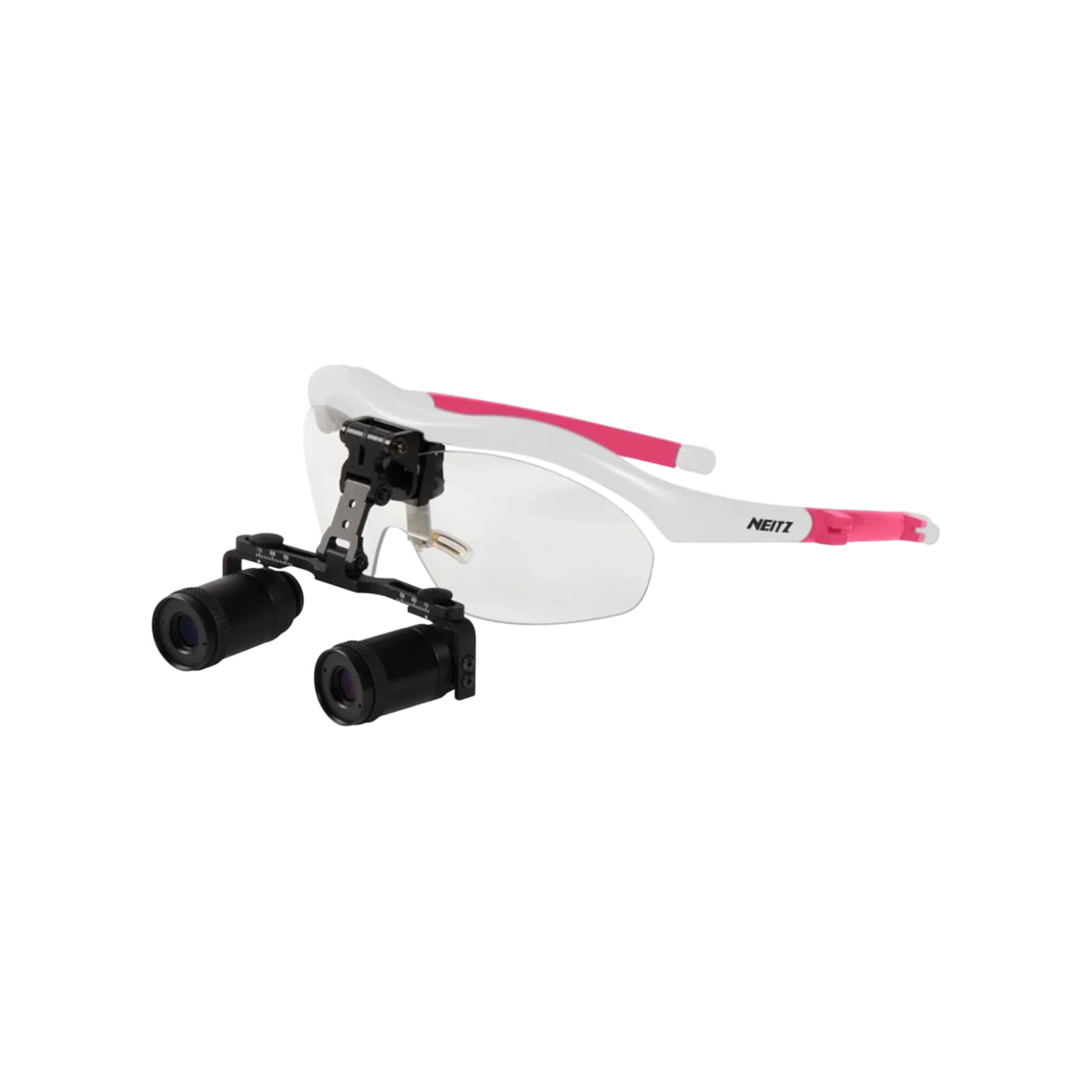
The NTZ-BLP-4 is a prismatic loupe in the Neitz BL series with 4.0X to 4.5X magnification. Neitz positions it for ultra-precise procedures and names ophthalmology alongside brain, hand, foot and breast surgery. It keeps the same 350 to 550 mm (13.78 to 21.65 in) working range as the Galilean BL models, so moving up in power does not force you into a closer, more hunched posture.
Like the rest of the series, the optics are made in Japan, the lenses are independently adjustable, and the eyepieces tilt down so you can stay upright and look down through them. It comes on the 71 g NEO frame in four color options or on a headband. The kit includes NEO nose and forehead pads, a protector, lens cloth, carrying case and screwdrivers.
It is compatible with the Neitz SC-1 camera for image and video documentation (sold separately), and a front light can be added. A headlight bundle is also listed. For surgeons who already use 2.5X to 3.0X and want more detail without changing working distance, this is the natural next step.
Pros: 4.0X-4.5X prismatic optics for fine detail · Same 350-550 mm working range as lower-power BL models · NEO frame or headband · Compatible with Neitz SC-1 camera · Made in Japan with US-based support
Considerations: Heavier and longer than a Galilean loupe · Narrower field than 2.5X-3.0X models · Camera and light are extra
Best for: Surgeons who need more magnification than a Galilean loupe offers but want to keep a long, upright working distance.
#3 · ZEISS EyeMag Pro S (ZEISS)
A strong headband-mounted Kepler loupe with a wide choice of magnification and working-distance combinations.
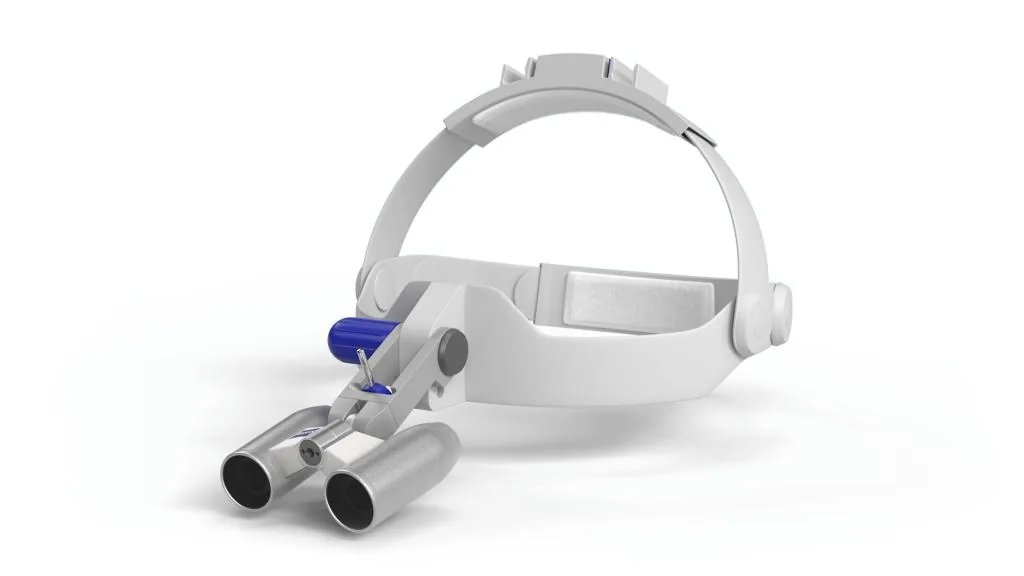
The ZEISS EyeMag Pro S is the headband version of ZEISS's Kepler (prismatic) loupe line; the EyeMag Pro F is the frame-mounted equivalent. ZEISS offers it in magnifications from 3.2x to 6.0x and describes the Kepler optics as giving high-contrast stereoscopic images for detail recognition.
Its strength is configurability. ZEISS publishes specific magnification and working-distance pairings for the Pro F/S, from 300 mm to 550 mm, with fields of view ranging from 44 mm (5.0x at 300 mm) up to 115 mm (3.2x at 500 mm). For example, 4.0x is available at 300, 450, 500 and 550 mm. The flip-up system lets you reposition the eyepieces with a single adjustment or lift them out of the way for direct eye contact with a patient.
The trade-off is that each unit is built around a fixed magnification and working distance you choose up front, so it pays to measure your posture carefully before ordering. It can be paired with the ZEISS EyeMag Light II. For surgeons who want a headband rather than a spectacle frame and need higher magnification, it is a well-regarded option.
Pros: 3.2x-6.0x Kepler optics · Headband mount takes weight off the nose · Many published magnification and working-distance pairings · Flip-up system for quick transitions
Considerations: Each configuration is fixed at the chosen magnification and distance · Prismatic optics are bulkier than Galilean designs · Light is a separate component
Best for: Surgeons who prefer a headband and want a higher-magnification prismatic loupe matched to a specific working distance.
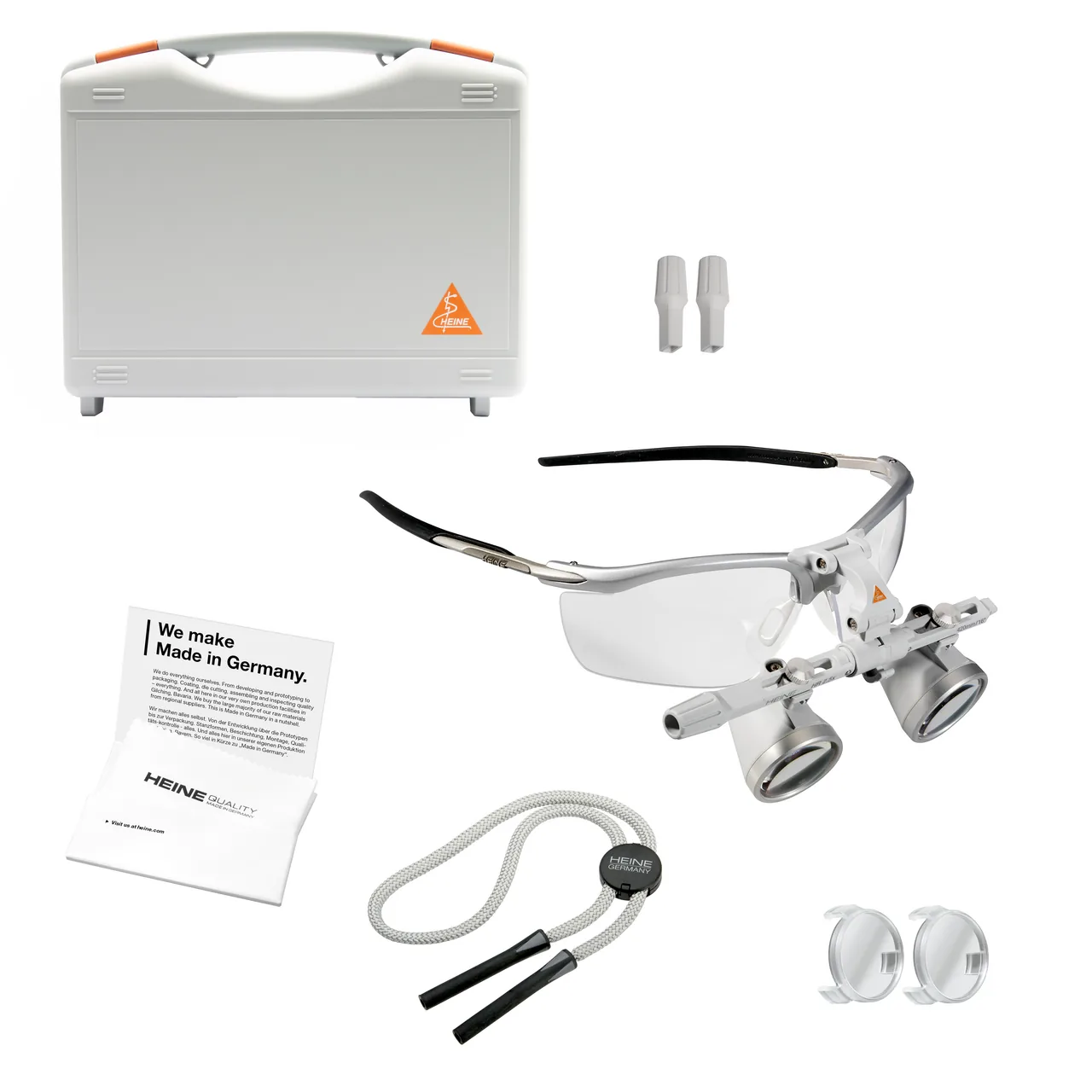
#4 · HEINE HR 2.5x High Resolution Binocular Loupes (HEINE)
A light, well-documented 2.5x loupe with a generous field of view at three working distances.
HEINE's HR 2.5x is a flip-up binocular loupe built on achromatic optics for color-corrected images. The optics with the i-View loupe mount weigh 51 g, are water-resistant, and allow independent adjustment of the left and right sides for pupillary distance alignment. The i-View mount provides a range of viewing angles and flips the optics up when you do not need them.
HEINE publishes clear numbers for each working distance: at 340 mm the field of view is 90 mm with 110 mm depth of field; at 420 mm, 130 mm field and 180 mm depth; at 520 mm, 180 mm field and 260 mm depth. Those are wide fields for a 2.5x loupe, which helps when you want to keep the whole operative area in view.
It is offered on HEINE's S-FRAME or a Professional L Headband. The limitation is fixed magnification: if you later need more than 2.5x, you would move to HEINE's separate HRP prismatic line. For clinicians who want a simple, light 2.5x loupe with published depth-of-field data, it is a solid choice.
Pros: Achromatic optics; 51 g optics with i-View mount · Wide published field of view and depth of field · Flip-up i-View mount with independent left/right adjustment · Frame or headband carrier
Considerations: Fixed 2.5x magnification · Working distance chosen at purchase (340, 420 or 520 mm) · Higher magnification requires a different product line
Best for: Clinicians who want a light, wide-field 2.5x flip-up loupe and value published depth-of-field figures.
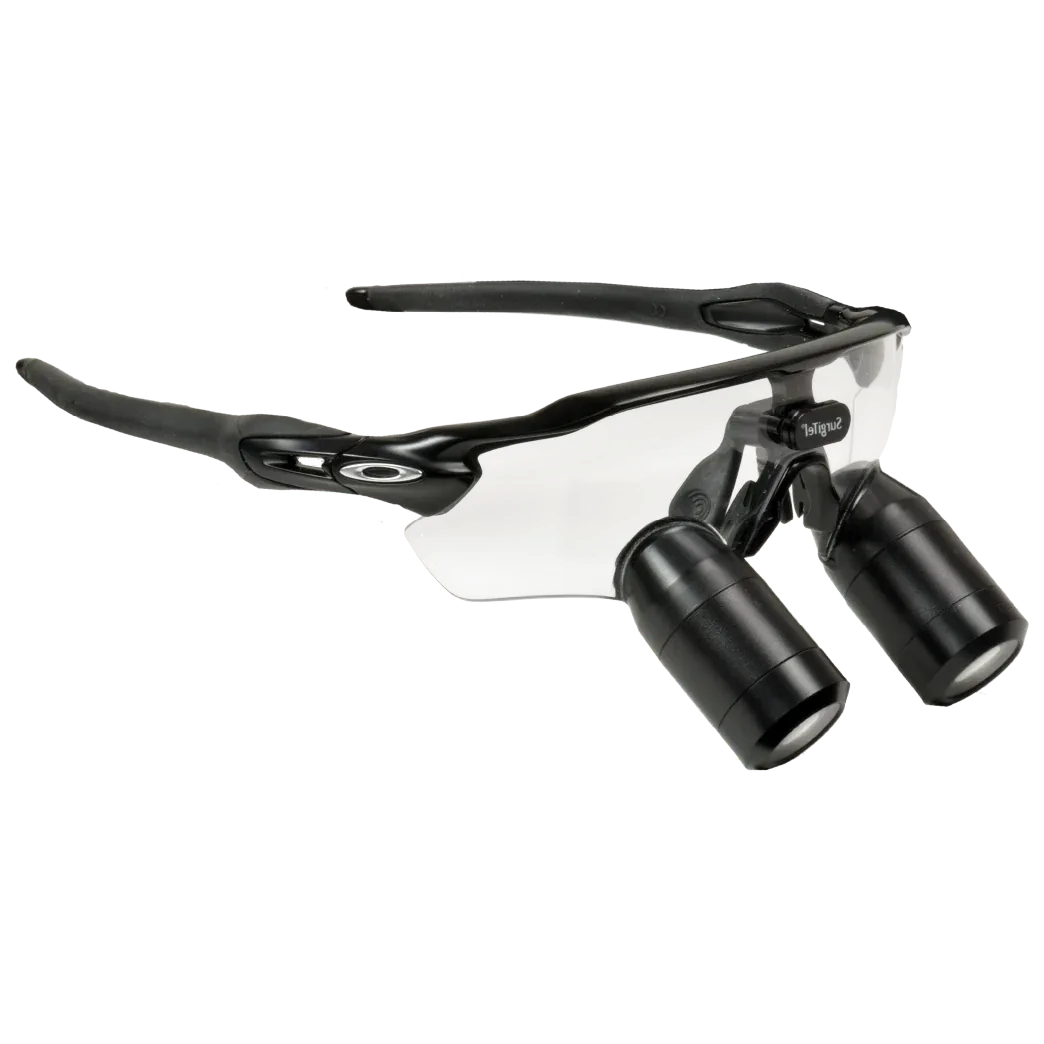
#5 · SurgiTel UltiView Pro Loupes (3.5x-10.0x) (SurgiTel)
The widest magnification range in this guide, for surgeons who need very high power.
SurgiTel calls the UltiView Pro its top prismatic loupe. It uses prism optics with oversized objective lenses and is offered from 3.5x up to 10.0x, in both through-the-lens (TTL) and flip-up (FLM) mounting. SurgiTel states the oculars are laser aligned to maintain the binocular view and use multi-layer anti-reflective coatings.
SurgiTel publishes field of view by working distance across four distances from 15 to 24 in (38.1 to 61.0 cm). At 3.5x, the field is 10.8 cm at 24 in and 6.8 cm at 15 in; at 4.5x, 8.7 cm and 5.4 cm; at 10.0x, it narrows to 4.0 cm and 2.5 cm. Those figures make the cost of higher magnification easy to see before you commit.
The very high magnification options push toward microsurgical territory, but they also mean a smaller field and less tolerance for head movement. For most eye-care work at 3.5x to 4.5x, compare it directly against the Neitz NTZ-BLP-4 and ZEISS EyeMag Pro S at your own working distance.
Pros: 3.5x to 10.0x magnification options · TTL and flip-up mounting · Laser-aligned oculars and multi-layer AR coatings · Published field of view at four working distances
Considerations: Field narrows sharply at higher powers · Prismatic optics add length and weight · Very high magnifications need steady positioning
Best for: Surgeons who need magnification beyond 6x or want a TTL prismatic loupe.
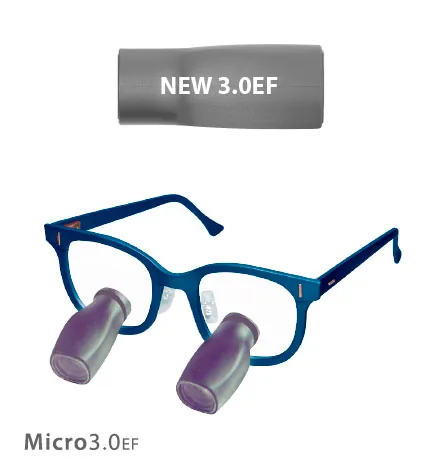
#6 · Designs for Vision MicroEF Scopes (Micro3.0EF / 3.5EF / 4.5EF) (Designs for Vision)
A compact expanded-field prismatic option from a long-established US loupe maker.
Designs for Vision's MicroEF Scopes are a prismatic design offered in three magnifications: 3.0x, 3.5x and 4.5x. Designs for Vision says they provide a 50% increase in field of view over its Standard Field telescopes of the same magnification, and describes the design as up to 50% smaller and up to 44% lighter. The optics are rectangular, which the company says maximizes peripheral vision.
The company positions the MicroEF as its lightest expanded-field scope and as a fit for long procedures where a wider side-to-side view helps. Designs for Vision is headquartered in Bohemia, New York, where it also has its manufacturing facility, and it offers through-the-lens telescopes and its own LED headlights across its range.
The company does not publish a working-distance and field-of-view table for the MicroEF on its product page, so buyers will need a fitting or rep consultation to confirm the exact numbers for their posture. If a wider view at 3.0x to 4.5x is your priority, it is worth a direct comparison with the Neitz NTZ-BLP-4.
Pros: Expanded field of view versus the maker's Standard Field scopes · Compact, lighter prismatic design · Rectangular optics for peripheral vision · 3.0x, 3.5x and 4.5x options
Considerations: Working distance and field-of-view figures not published on the product page · Requires a fitting to confirm configuration · Narrower magnification range than some prismatic lines
Best for: Surgeons who want a compact prismatic loupe with a wider-than-standard field at 3.0x to 4.5x.

#7 · Neitz NTZ-BLP-6 (5.5X-6.0X) (Neitz)
The highest-power Neitz BL loupe, for small-field detail work.
The NTZ-BLP-6 is the top-magnification model in the Neitz BL series, a prismatic loupe at 5.5X to 6.0X. Its field of view is deliberately narrow at 40 to 25 mm, which Neitz recommends for microsurgery, neurosurgery and ophthalmology, where you need to concentrate on a small area. The working range stays at 350 to 550 mm (13.78 to 21.65 in), the same as the rest of the series.
It shares the BL platform's features: Japanese optics, independently adjustable lenses, a downward tilt so you can stay upright, and the choice of the 71 g NEO frame in four color combinations or a headband. It is compatible with the Neitz SC-1 camera for documentation, sold separately, and a headlight bundle is listed.
At this power, small head movements shift the image, so it is best treated as a specialist second loupe rather than an everyday tool. Practices that already use a 2.5X to 3.0X loupe for general work can add the BLP-6 for the finest steps without changing working distance or frame system.
Pros: 5.5X-6.0X prismatic magnification · Same 350-550 mm working range as the BL series · NEO frame or headband · SC-1 camera compatible · US-based service and parts through US Ophthalmic
Considerations: Narrow 40-25 mm field · Less forgiving of head movement · Usually a second loupe, not a daily driver
Best for: Surgeons who need high magnification for small-field detail and already use a lower-power loupe for general work.
Feature comparison
| Model | Brand | Optical type | Magnification | Working distance | Field of view | Mounting options | Carried by US Ophthalmic |
|---|---|---|---|---|---|---|---|
| NTZ-BLS-3 | Neitz | Galilean | 2.5X-3.0X | 350-550 mm (adjustable) | 78-38 mm | NEO frame (71 g) or headband | Yes |
| NTZ-BLP-4 | Neitz | Prismatic | 4.0X-4.5X | 350-550 mm (adjustable) | — | NEO frame (71 g) or headband | Yes |
| EyeMag Pro S | ZEISS | Kepler (prismatic) | 3.2x-6.0x | 300-550 mm (by configuration) | 44-115 mm (by configuration) | Headband, flip-up | No |
| HR 2.5x | HEINE | Achromatic | 2.5x | 340, 420 or 520 mm | 90, 130 or 180 mm | S-FRAME or headband, flip-up | No |
| UltiView Pro | SurgiTel | Prismatic | 3.5x-10.0x | 15-24 in (38.1-61.0 cm) | 2.5-10.8 cm (by power and distance) | TTL or flip-up | No |
| MicroEF Scopes | Designs for Vision | Prismatic | 3.0x, 3.5x, 4.5x | — | — | — | No |
| NTZ-BLP-6 | Neitz | Prismatic | 5.5X-6.0X | 350-550 mm (adjustable) | 40-25 mm | NEO frame (71 g) or headband | Yes |
Why it’s our top pick
US Ophthalmic carries the full Neitz BL series, from Galilean models for everyday work to prismatic loupes up to 6.0X, all built on one platform with the same 350 to 550 mm working range and the same NEO frame and headband options. That makes it straightforward to start with an NTZ-BLS-3 and add a higher-power BLP model later without relearning a new frame or posture.
As a US equipment provider with an in-house technical department and a spare-parts department, we support the loupes we sell locally, and new equipment comes with a US warranty. Every model is quote-based, so we can help you choose the right magnification, mount and accessories, such as a headlight or the Neitz SC-1 camera, for how you actually work.
Ready to spec your binocularloupes?
Send us your requirements and our equipment specialists will come back with a configuration built around how your practice actually works — including availability and lead time. US Ophthalmic is a direct provider to eye care practices nationwide.
Frequently asked questions
What are the best surgical loupes for ophthalmology in 2026? For most eye-care clinicians, a 2.5X to 3.0X loupe is the most versatile starting point. Our top pick is the Neitz NTZ-BLS-3, which covers 2.5X to 3.0X with a 350 to 550 mm working range. Surgeons who need finer detail often add a prismatic loupe such as the Neitz NTZ-BLP-4, ZEISS EyeMag Pro S or SurgiTel UltiView Pro.
What magnification should I choose for surgical loupes? Choose the lowest power that shows the detail you need. Around 2.0X to 3.0X gives a wide field and good depth of field for general work; 3.5X to 4.5X suits finer steps; 5X and above is for very small fields. Every increase in magnification narrows the field of view.
What is the difference between Galilean and prismatic loupes? Galilean loupes use a simple two-lens design that is compact and light, usually up to about 3.0X. Prismatic (Kepler) loupes add a prism path to reach higher magnification with a sharper image, at the cost of length and weight.
How do I pick the right working distance? Sit or stand in your normal upright working posture and measure from your eyes to the tissue or device. Choose a loupe whose working distance matches that measurement. Adjustable designs, like the Neitz BL series at 350 to 550 mm, give extra flexibility.
Can I use surgical loupes if I wear glasses? Yes. Some loupes, including the Neitz BL series, are designed to work with personal eyeglass frames or safety glasses. Through-the-lens loupes can also be built with your prescription. Confirm the option with the supplier before ordering.
Should I choose a frame-mounted or headband loupe? A frame is lighter and quicker to put on; a headband spreads weight across the head, takes pressure off the nose and suits long procedures or higher-magnification optics. Neitz BL loupes are available in both versions.
Can I add a light or camera to my loupes? Many systems accept a headlight, and some accept a camera. The Neitz BLP-4 and BLP-6 are compatible with the Neitz SC-1 camera, and Neitz BL loupes can be paired with a front light, sold separately.
The verdict
For most ophthalmologists, oculoplastic surgeons and eye-care clinicians, the Neitz NTZ-BLS-3 is the best all-round surgical loupe in 2026: its 2.5X to 3.0X Galilean optics, adjustable 350 to 550 mm working range and 71 g NEO frame cover a wide range of daily procedures. If you need more detail, the Neitz NTZ-BLP-4 keeps the same working distance and frame system at 4.0X to 4.5X, and the NTZ-BLP-6 serves small-field work at up to 6.0X.
Among the alternatives, the ZEISS EyeMag Pro S stands out for headband users who want a configurable Kepler loupe, the HEINE HR 2.5x for a light wide-field 2.5x option, SurgiTel's UltiView Pro for the highest magnifications, and Designs for Vision's MicroEF for a compact expanded-field prismatic design. Request a quote from US Ophthalmic to compare Neitz configurations for your practice.