

















Telerefraction
Refraction is a fundamental component of a comprehensive eye examination, playing a critical role in diagnosing and correcting visual impairments. When this process is performed remotely through information and communication technologies—or when its results are transmitted for off-site evaluation—it is known as tele-refraction.
Uncorrected refractive errors remain the leading cause of vision care consultations worldwide, driving an increasing demand for accessible and efficient eye care solutions. In response, a growing number of providers are integrating tele-refraction into their services, expanding access to care beyond the traditional clinical setting. Despite this rapid adoption, there is still limited consolidated literature on how refractive error correction can be effectively managed through tele-eye care models, as well as on patient satisfaction and clinical outcomes.
Tele-refraction represents a natural evolution of traditional optometry. By leveraging digital technologies, cloud connectivity, and automated systems, it enables complete refractive examinations without requiring the physical presence of a specialist. This innovation redefines how vision care is delivered—introducing a more flexible, scalable, and efficient model that aligns with the evolving demands of modern healthcare systems.
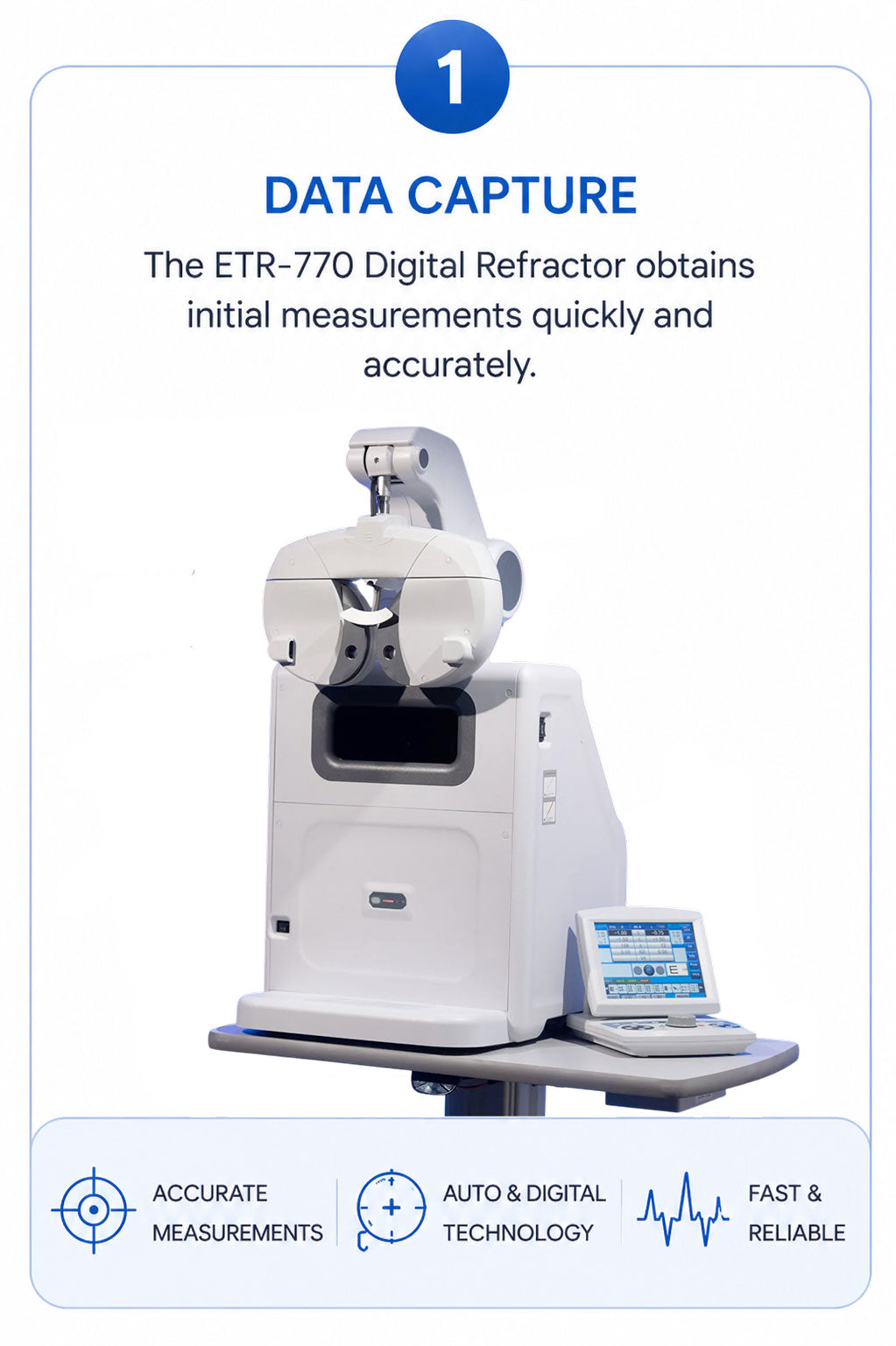
1. Data Capture
Devices such as autorefractors or digital refractors—like the ETR-770—collect initial measurements quickly and with high precision.
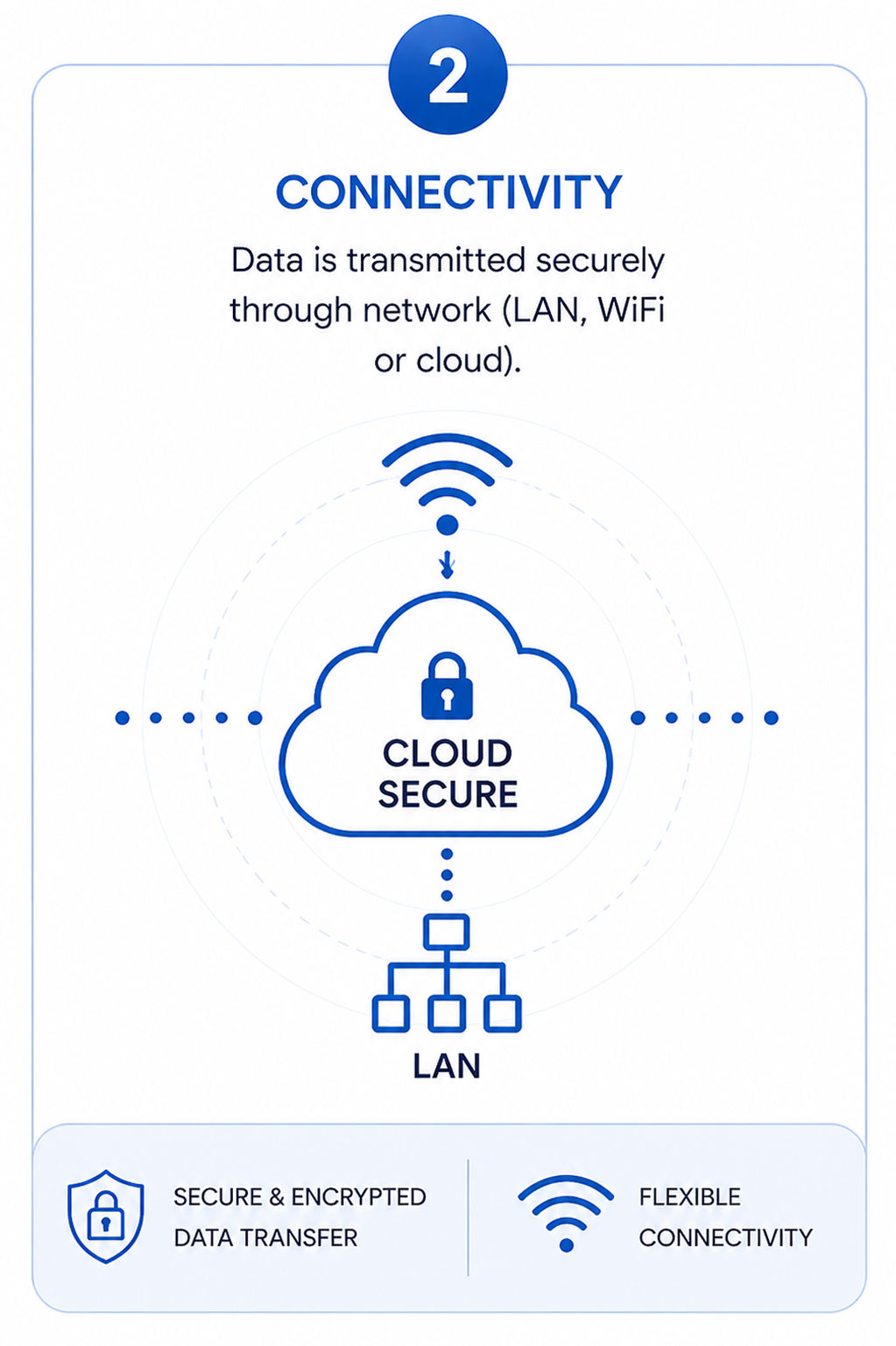
2. Connectivity
The captured data is transmitted securely through network connections, including LAN, WiFi, or cloud-based systems, ensuring reliable and continuous data flow.
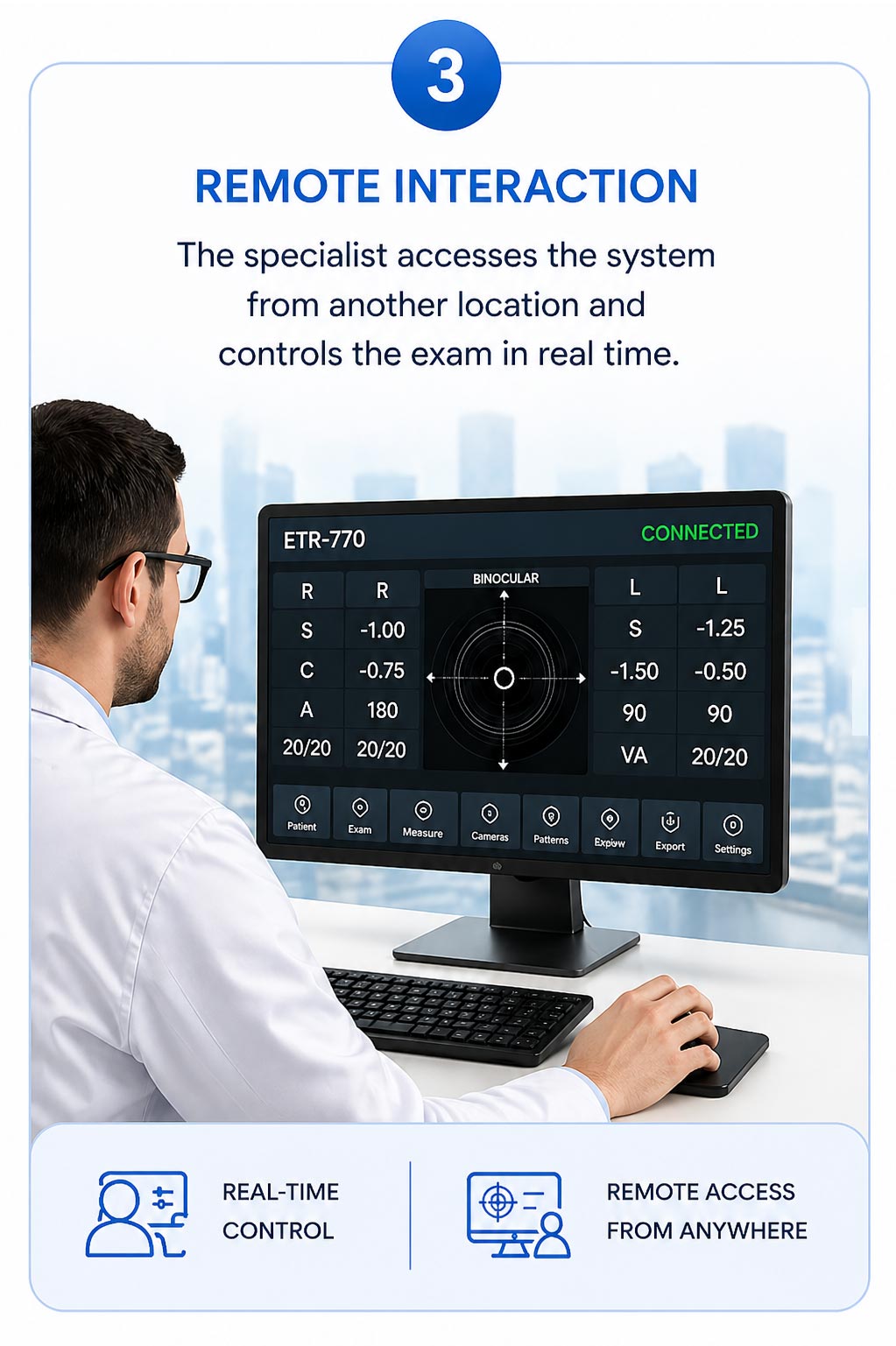
3. Remote Interaction
The specialist accesses the system from a different location, controlling the examination in real time and making adjustments as needed.
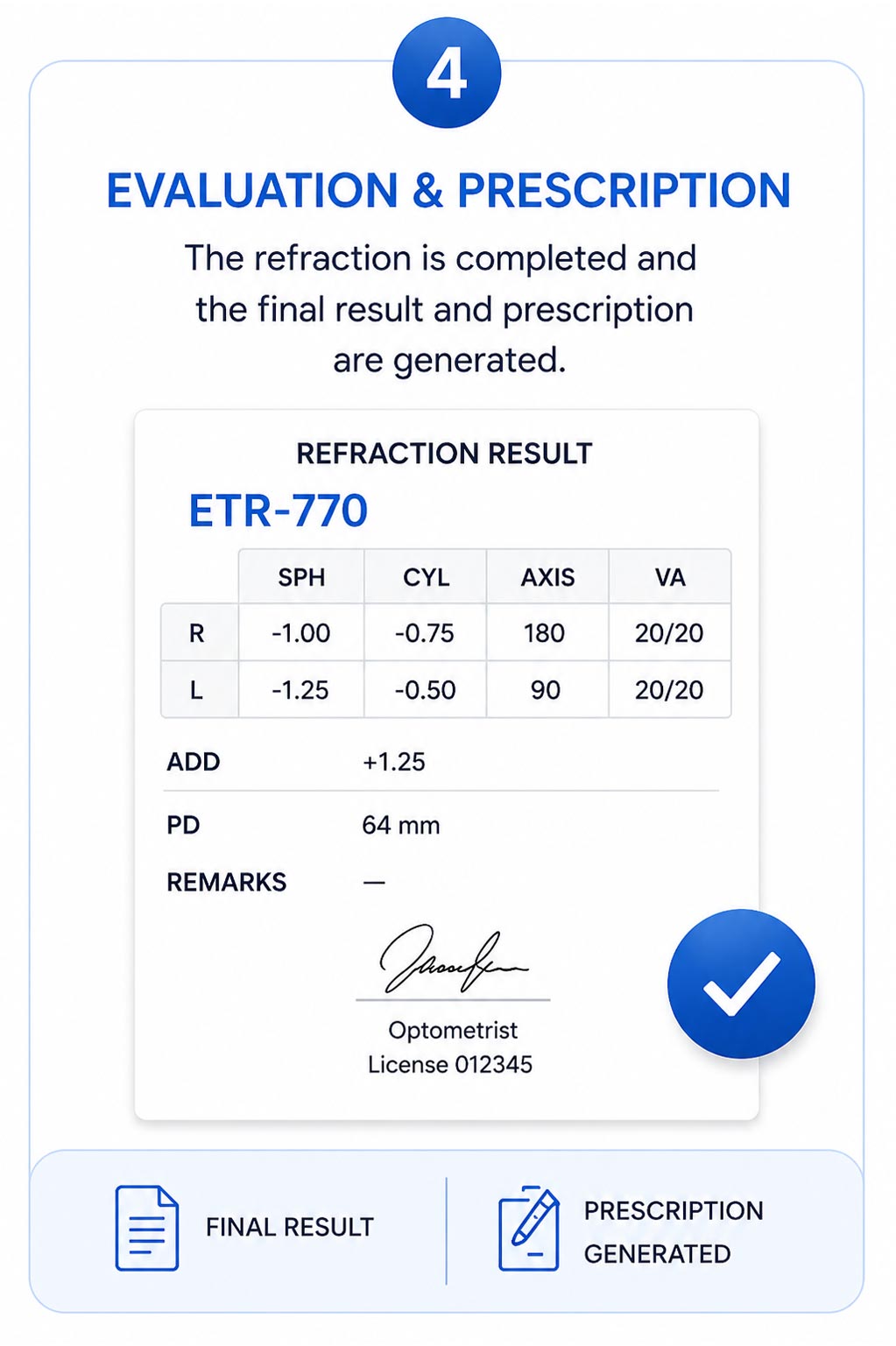
4. Evaluation & Prescription
The refraction process is completed, and the final results are generated, allowing the professional to issue an accurate prescription remotely.