
















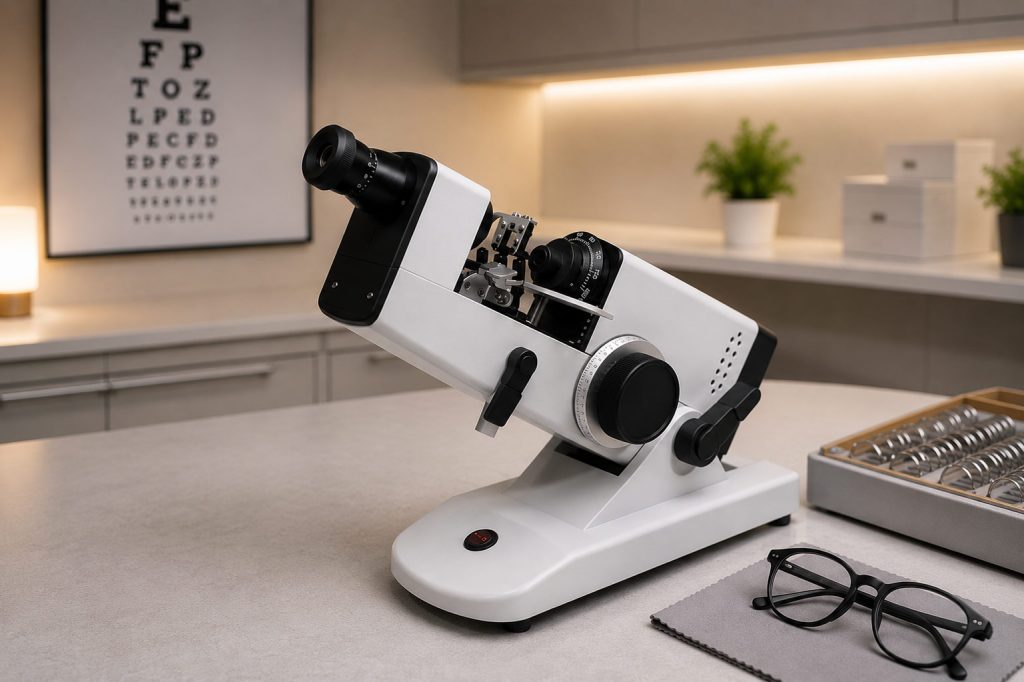
Luxvision LM-190 Manual Lensometer with External Reading. The ability to perform manual lensometry is essential in every vision care practice, laboratory, and optical shop. With the Luxvision LM-190, you can comfortably measure spherical, cylindrical, and prismatic powers with unmatched precision. This external lensometer displays the power reading on the outside of the unit. An enhanced lens marking device, prism compensator, soft lens pressure unit, tilt control, and more combine to make the LM-190 a smart choice.
Luxvision Manual Lensmeter with External Reading LM-190
REQUEST QUOTEor call toll-free (888) 881-1122Financing available — simple terms, no leasing. Ask about it in your quote request.

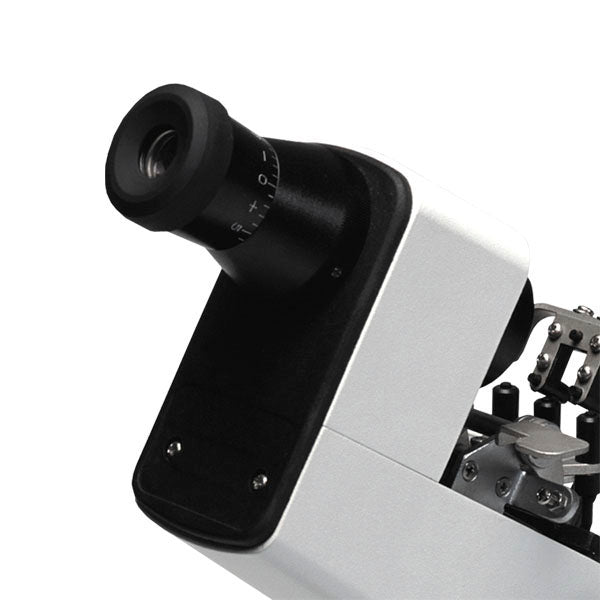
Advanced eyepiece system with spiral focus
Premium-grade eyepiece with spiral focusing mechanism, offering a ±5D range to accommodate each operator's individual needs. Ensures accurate and comfortable readings during manual lensometry.

Soft pressure unit to protect lenses
Three-leg plastic system with springs designed to apply adequate pressure without damaging the lenses. Minimizes the risk of breakage during measurement and ensures secure locking.

Integrated prism compensator for complex lenses
Allows neutralizing and accurately measuring lenses with high prismatic correction. Expands the diagnostic capabilities of the device for specialized cases.

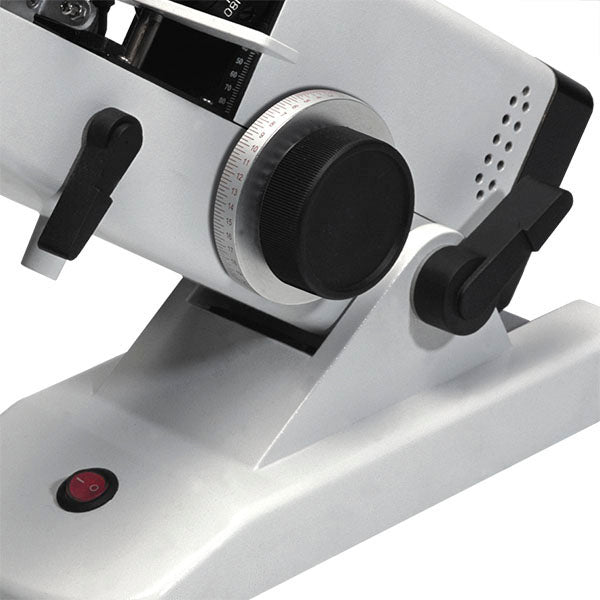
Adjustable ergonomic tilt control
Simple adjustment of the instrument tilt angle to suit each operator. Improves working posture and reduces fatigue during extended sessions.


The Luxvision LM-190 is available in two versions to meet the needs of each practice: with prism compensator and without prism compensator. The version with prism incorporates an integrated prism compensator that allows neutralizing and inspecting lenses with a high degree of prismatic correction, ideal for professionals who regularly work with complex prescriptions. The version without prism offers all the essential features of the LM-190 —precise measurement of spherical and cylindrical powers, lens marking, and advanced eyepiece system— in a more accessible solution. Both versions share the same optical quality, ergonomics, and ease of use that characterize the LM-190.
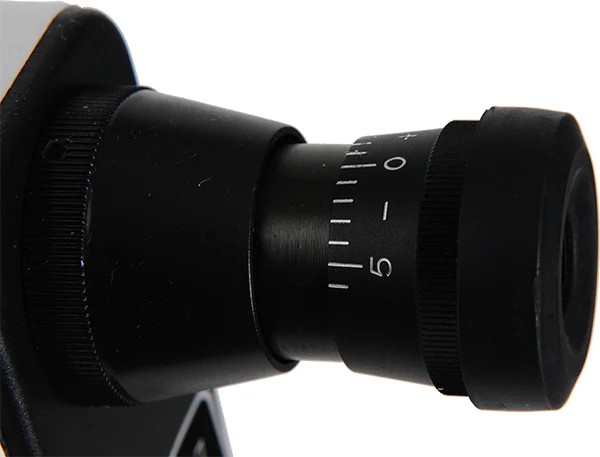
Advanced Eyepiece System
The eyepiece of a lensometer plays an important role in the accuracy of its readings. The spiral focusing unit of the LM-190 is manufactured to the highest standards and offers a range of ±5D to accommodate the operator’s needs.
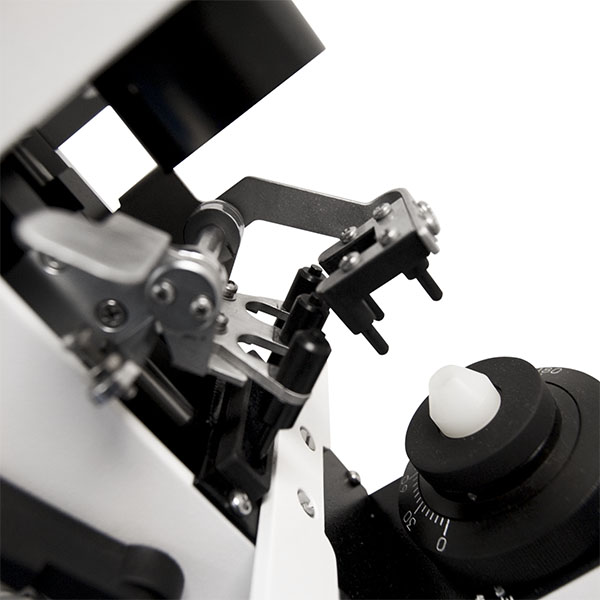
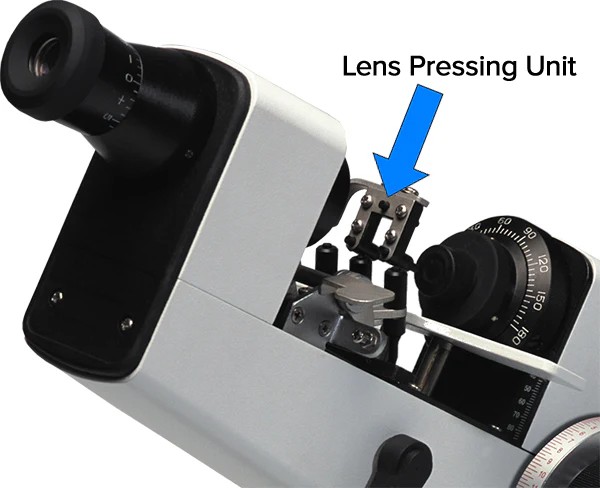
Soft Lens Pressure Unit
Worry less about damaging lenses with the LM-190. The unit features three plastic feet and a carefully designed spring system that makes it much easier to properly press the lens into place without breaking it. Once positioned, simply lock the unit to begin measurement.
Prism Compensator
This Luxvision model allows operators to neutralize prismatic power with an integrated prism compensator. Use the prism compensator device to inspect lenses with a high degree of prismatic correction.
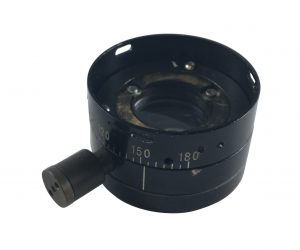
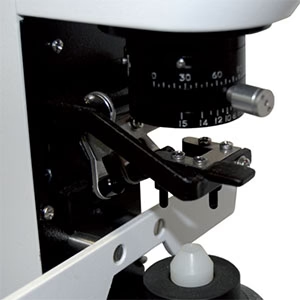
Enhanced Lens Marking
The LM-190 features three pens for marking the lens at the optical center or at the prism reference point, or for marking lenses as needed.
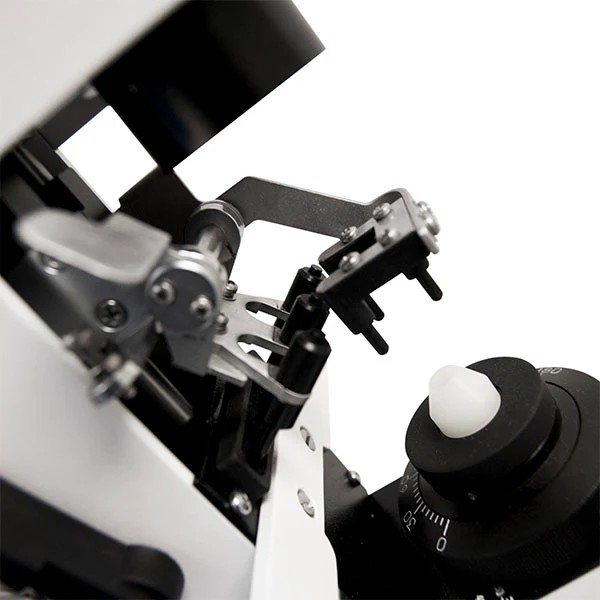
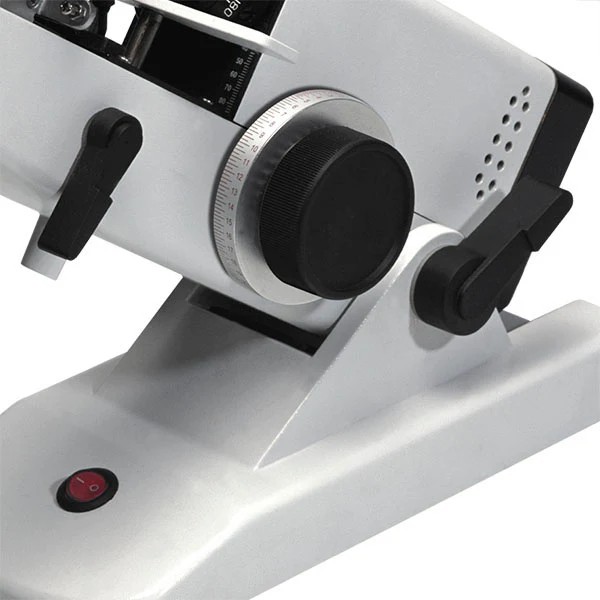
Ergonomic Tilt Control
You and your technicians can easily adjust the instrument’s tilt angle, allowing everyone in the office to work in their most comfortable posture.
Specifications
| Dioptric Measurement Ranges | 0 ~ ±25D |
|---|---|
| Minimum Scale Value | 0.125D at 0 ~ +5D 0.25D at ±5D ~ ±25D |
| Cylindrical Lens Astigmatism Axis | 0~180° |
| Minimum Scale Value | 1° |
| Standard Model Prism Diopters | 0 ~ 5Δ |
| Minimum Scale Value | 1Δ |
| Enhanced Mode | 0 ~ 20Δ |
| Minimum Scale Value | 1Δ |
| Base Prism Angle | 0-180° |
| Minimum Scale Value | 1° |
| Ocular Visibility Adjustment | ±5D |
| Lens Size | Φ0.63in ~ Φ0.70in (Φ16mm ~ Φ18mm) |
| General Device Dimensions | 10.8 x 5.12 x 18 in (275 x 130 x 455 mm) |
| Standard Model Weight | 12.32 lb (5.6 Kg) |
| Reinforced Model | 12.54 lb (5.7 Kg) |
| Light Source | LED |
| Illumination Lamp | 220V / 110V 15W |
| Designs and specifications are subject to change without notice for improvement purposes |